

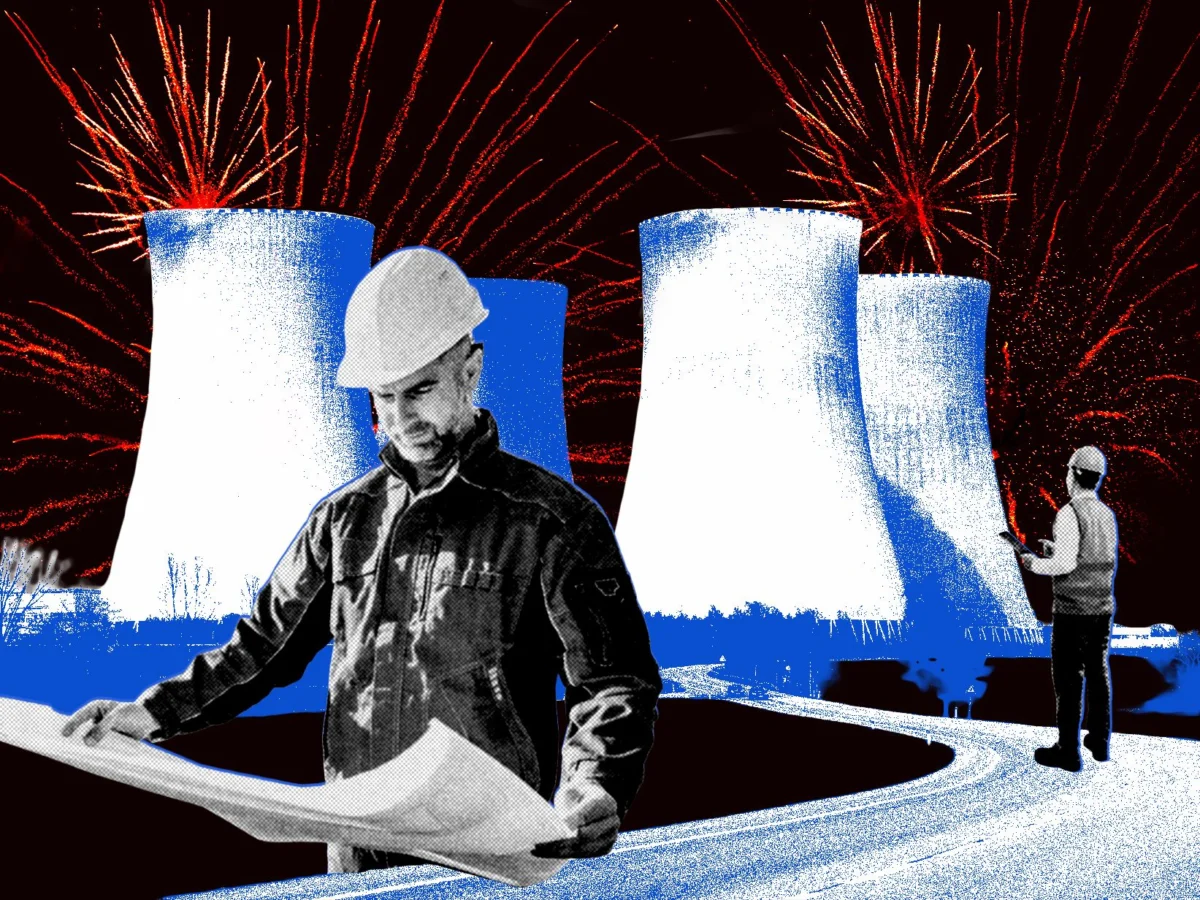
As the United States celebrated its 250th anniversary this past July 4, a quiet revolution reached a fever pitch deep within the halls of the Department of Energy (DOE) and at key national laboratory test sites. Three pioneering startups—Valar Atomics, Antares Nuclear, and Deployable Energy—successfully achieved "criticality," the moment a nuclear reactor sustains a self-supporting chain reaction.
This achievement marks a pivotal, albeit early, victory in what Energy Secretary Chris Wright has branded "America’s nuclear renaissance." The milestone, timed to coincide with a federal mandate issued by President Donald Trump, represents a radical departure from the decades of stagnation that have defined the American nuclear industry. Yet, as the industry pops champagne, experts warn that the transition from a laboratory test reactor to a commercial, grid-ready power source is a chasm that may prove far more difficult to cross than the initial ignition of the core.
The Chronology of a Regulatory Sprint
For half a century, the U.S. nuclear landscape remained largely frozen in time, dominated by massive, capital-intensive light-water reactors. These gargantuan projects often took over a decade to permit and construct, frequently finishing years behind schedule and billions over budget. The narrative that "a new reactor is always 10 years away" became a self-fulfilling prophecy, stifling innovation and deterring private investment.
The current shift began in earnest with a series of executive actions taken by the Trump administration in May 2025. Recognizing the insatiable energy demands of the burgeoning artificial intelligence sector—and the corresponding need for 24/7 carbon-free power for data centers—the White House issued an executive order setting an aggressive, non-negotiable deadline: at least three advanced reactors had to reach criticality by the nation’s semiquincentennial.
A Timeline of Accelerated Development:
- May 2025: President Trump signs an executive order prioritizing the deployment of small modular reactors (SMRs) and advanced reactor designs, mandating a July 4, 2026, milestone.
- February 2026: The Department of Energy announces a streamlined regulatory framework, effectively slashing environmental and safety oversight processes for reactors within its purview.
- Late 2025 – Early 2026: Valar Atomics makes history at Los Alamos National Laboratory, utilizing federal fuel and structural infrastructure to achieve the first successful criticality.
- June 2026: A secondary reactor at a state-funded facility in Utah hits the same milestone, signaling that the technology is replicable.
- July 4, 2026: Antares Nuclear and Deployable Energy officially join Valar Atomics in meeting the federal deadline, triggering a wave of optimism in the investment community.
Breaking the Red Tape: The DOE’s New Playbook
The speed of these startups is not solely the result of engineering brilliance; it is the product of a massive government-led effort to strip away administrative friction. By prioritizing these reactors as a matter of national security and economic competitiveness, the DOE transformed the regulatory landscape.
Matt Loszak, cofounder and CEO of Aalo Atomics, notes that the shift in bureaucratic culture has been seismic. "Before, you’d try to get a signature, and maybe it would sit on someone’s desk for five weeks," Loszak observes. "Now, it’s like, done the next day, because it’s a priority for the nation."
The "fast-tracking" involves a significant reduction in the time required for environmental impact statements and site-safety reviews. By utilizing national laboratories like Los Alamos, startups were able to bypass the prohibitive costs of constructing their own primary testing facilities, instead relying on existing government-funded cores and structural components. While effective for meeting a deadline, critics argue that this "lab-cozy" approach may not be scalable for the private sector, which will eventually need to navigate the more rigorous and independent oversight of the Nuclear Regulatory Commission (NRC).
The Gap Between Criticality and Commercial Reality
While the achievement of criticality is a significant scientific milestone, industry veterans are quick to provide a reality check. Adam Stein, director of the Nuclear Energy Innovation program at the Breakthrough Institute, notes that these prototypes serve a dual purpose: they are technological breakthroughs, but they are also marketing instruments.
"These prototypes mean everything and nothing," says Stein. "They do a lot for the companies reaching criticality, but even for those companies, they’re not commercial products. They’re test reactors."
The distinction is vital. A reactor can reach criticality—sustaining a fission chain reaction—without ever generating a single watt of electricity for the power grid. For example, some of the reactors in the pilot program are missing key components, such as the sodium cooling systems required for their final commercial iterations.
The first glimmer of true utility occurred just days before the holiday, when a Valar Atomics reactor design successfully powered an Nvidia chip during a brief demonstration. It was a symbolic "proof of concept" that sent waves of excitement through Silicon Valley. However, demonstrating the ability to power a single chip is a far cry from providing the megawatts required to keep a hyperscale data center running 24 hours a day, 365 days a year.
Implications for the Energy Grid and Investment
The push for "micro-reactors" is being driven by a specific set of players: Silicon Valley tech giants. As these companies face pressure to lower their carbon footprints while simultaneously powering the massive electricity needs of AI-driven computing, they have viewed nuclear power as the "holy grail."
However, Brett Rampal, senior director of nuclear and power strategy at Veriten, warns against the "golden age" rhetoric. "If you go back and you look at all the nuclear power plants we built throughout the country, on average, they were over cost and over budget," Rampal explains. He highlights that while the technology has moved forward, the economics of nuclear power remain fundamentally difficult.
Key Challenges Remaining:
- Fuel Supply Chains: The pilot program relied heavily on the DOE to provide nuclear fuel. Scaling this to hundreds of commercial units requires a robust, private-market supply chain that currently does not exist.
- Licensing Bottlenecks: The NRC is currently working on a "fast-track" licensing process, but there is significant tension between those who want maximum safety oversight and those who want maximum speed. A single safety-related failure could set the entire industry back by a decade.
- Capital Intensity: Even small reactors are capital-heavy assets. Investors, who have grown accustomed to the "software-as-a-service" speed of tech, may struggle with the long-term, high-risk, low-liquidity nature of heavy nuclear infrastructure.
Looking Forward: A Fragile Renaissance
The events of this past July 4 were a triumph of political will and engineering coordination. By creating a clear, urgent mandate, the Trump administration succeeded in moving the needle of an industry that had been stuck in neutral for decades.
Yet, the "renaissance" is currently contained within the protective walls of government laboratories. The real test will begin when these startups move to secure private land, navigate local zoning laws, manage the volatile economics of the energy market, and prove that their designs can operate safely without the intensive hand-holding of the Department of Energy.
The energy sector is clearly at a turning point. The successful ignition of these three reactors has changed the narrative, proving that the 10-year lead time is not a law of physics, but a result of policy choices. Whether this momentum can be sustained, however, depends on whether the industry can transition from the "pilot" phase to the "profit" phase without sacrificing the safety standards that have kept the American nuclear industry accident-free for generations.
As Secretary Wright noted in his address, the goal is to make nuclear energy the backbone of the American grid once again. The fireworks have been set off, but the actual work of building the infrastructure that will power the next century of American technology has only just begun.











