

By Editorial Staff
The world premiere of the family drama Hijamat at the 60th Karlovy Vary International Film Festival (KVIFF) on July 8 represents a watershed moment for Iranian filmmaker Nader Saeivar. Competing for the festival’s prestigious Crystal Globe, the film is a poignant exploration of identity, tradition, and the psychological barriers that define human existence. However, the celebration is tempered by a stark reality: Saeivar’s long-time creative partner, the legendary auteur Jafar Panahi, will be conspicuously absent.
The Shadow of Censorship
For Saeivar, whose previous works include The Witness, No End, and Namo, the journey to this premiere has been marked by a profound professional and personal transition. Hijamat—a title referring to the ancient therapeutic practice of "wet cupping" used to draw out toxins—is the first feature Saeivar has produced entirely outside of Iran.
The film was a collaborative labor of love with Panahi, who served as producer and editor. The duo previously co-wrote the 2025 Cannes Palme d’Or winner, It Was Just An Accident. While the pair had hoped to present their latest work together in the Czech Republic, those plans were dismantled by the Iranian judiciary. Following the conclusion of the Accident Oscar campaign, Panahi returned to his home country, only to have his passport seized by authorities. Currently, he faces the looming threat of a new prison term, having been found guilty of "propaganda against the regime."
"Unfortunately, he won’t be there," Saeivar says during a recent interview with The Hollywood Reporter, his voice carrying the weight of a collaborator separated by state-imposed borders. "He cannot leave Iran."

A Chronology of Artistic Defiance
The partnership between Saeivar and Panahi has evolved into one of the most resilient creative bonds in modern world cinema. Their history is defined by a shared commitment to exposing the cracks in societal facades.
- The Early Collaborations: Working in the shadow of Iranian restrictions, the two developed a shorthand for storytelling that bypassed traditional censorship by focusing on the intimate, often uncomfortable, truths of domestic life.
- The Global Recognition: The success of It Was Just An Accident at Cannes brought international acclaim but also drew further scrutiny from the Iranian state.
- The Departure: Mid-way through the production of Accident, the political environment in Tehran became untenable for Saeivar, who relocated to Berlin. This move marked the beginning of his transition to directing features in exile.
- The Making of Hijamat: Conceived as an exploration of internal rather than external conflict, the film moved away from the social activism of his earlier work to address the "roots" of personal and cultural rigidity.
Despite the thousands of miles between them, their dialogue remains constant. "I speak to him every day," Saeivar reveals. "We speak at least one hour per day because he is just getting bored in Iran. He can’t do anything. He is very busy with the judiciary, going to court and seeing a lawyer every day. Instead of spending his time on a new project, he has to spend all his time and energy on these issues."
Anatomy of the Film: Hijamat
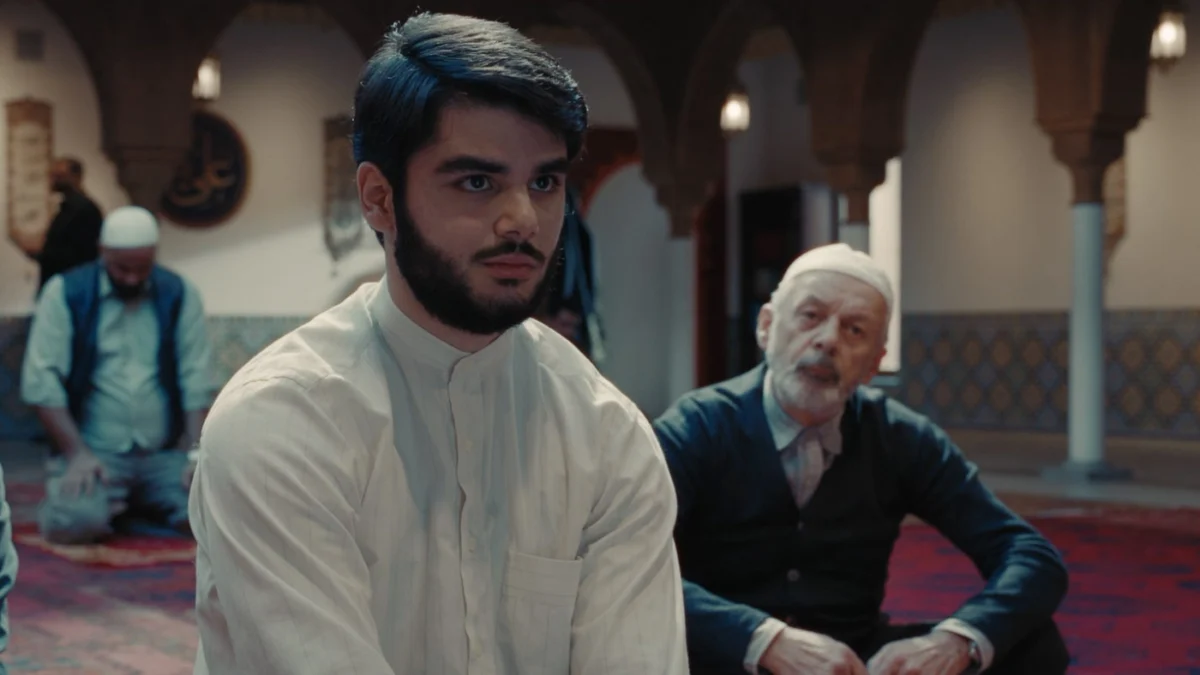
Set within the Turkish community of Berlin, Hijamat centers on Murad (played by Kida Khodr Ramadan), a man whose life is upended when he discovers his younger brother, Kerem (Jael Cem Ilhan), is gay. As the narrative unfolds, the film peels back layers of religious dogma and buried family secrets, mirroring the physical process of the film’s namesake—a medical procedure meant to purge the body of "dirty blood."
The film features an ensemble cast including Nicolette Krebitz, Aziz Capkurt, Moritz Bleibtreu, and Nastassja Kinski. However, the performance of Kida Khodr Ramadan serves as the film’s emotional anchor. Saeivar notes that his choice of lead actor was strategic. "We have a saying in Persian: ‘If you want to conquer a village, you have to see the mayor first,’" he explains. "Kida is like that mayor. I thought if I want to reach this community, it’s better if he talks, not me."
The film’s aesthetic and thematic depth caught the eye of Panahi during the editing process. "He was amazed by his work," Saeivar recalls. "He said, ‘Wow, what a good choice! This guy is really amazing.’"

Philosophical Implications: The Walls We Build
At its core, Hijamat is a treatise on the psychological architecture of oppression. Saeivar argues that political change is impossible without first addressing the internal "walls" that individuals construct around themselves.
"I believe that we have to really tackle the issues that are like a wall that we have built around ourselves," Saeivar tells THR. "Without that, we cannot change any political issues. It’s like the ‘dirty’ blood in the back of our bodies. If we don’t get rid of it, if we don’t tackle it, nothing changes."
This philosophy stems from Saeivar’s own life journey. Moving to Berlin at age 50 acted as a catalyst for a profound personal reassessment. Reflecting on his youth during the Iran-Iraq War, he recalls the fervent, almost desperate desire to become a martyr for a cause he later realized was driven by political machinations.
"I was a child, and I believed it strongly," he says. "I really wished to grow up fast to go to war and become a martyr. Just imagine what it was like when I later realized that all that war was due to political gains for some! Imagine how I felt. Where was God? Where was paradise?"
Universalizing the Local Struggle
While Hijamat is grounded in the specific cultural context of a Muslim family in Berlin, Saeivar emphasizes the universality of the struggle. He draws a sharp, provocative distinction between the nature of "walls" in the East and the West.

"In the East, we can say that this wall around us is formed by religion and religious beliefs, but in the West, the wall is built by memories of the past," he observes. "The Eastern person is broken under the weight of religion and rigid beliefs, but the Western person is broken or strangled by remembering the glorious past. Until you take this load off your shoulders, you will never reach real freedom."
This metaphor of the "load" is visualized in the film through the character of Murad, who is depicted in a haunting scene descending into the cellar of a building—a literal and figurative journey into the dark, neglected corners of the psyche.
The Road Ahead
The premiere at Karlovy Vary serves as a testament to the power of art to transcend physical confinement. While Panahi remains trapped by the very regime he has spent his life critiquing, his influence is woven into the fabric of Hijamat.
When asked about his bond with the director, Saeivar’s response is one of unwavering loyalty. "Every time I have a new idea, Jafar Panahi is the first person I speak with."
As Hijamat makes its debut, it stands as more than just a piece of cinema. It is a challenge to audiences everywhere to undergo their own form of "hijamat"—to purge the inherited, rigid beliefs that prevent progress. For Nader Saeivar, the film is his story in the present time, a declaration that even when the body is restricted, the mind and the artistic spirit can continue to dismantle the walls that keep us from the truth.

As the lights dim in Karlovy Vary, the message of the film resonates with chilling clarity: we are all carrying burdens that, if left unexamined, will continue to define our limitations. The question, for the characters on screen and for the audience in their seats, is whether we have the courage to bleed a little, to let go, and to finally be free.










