

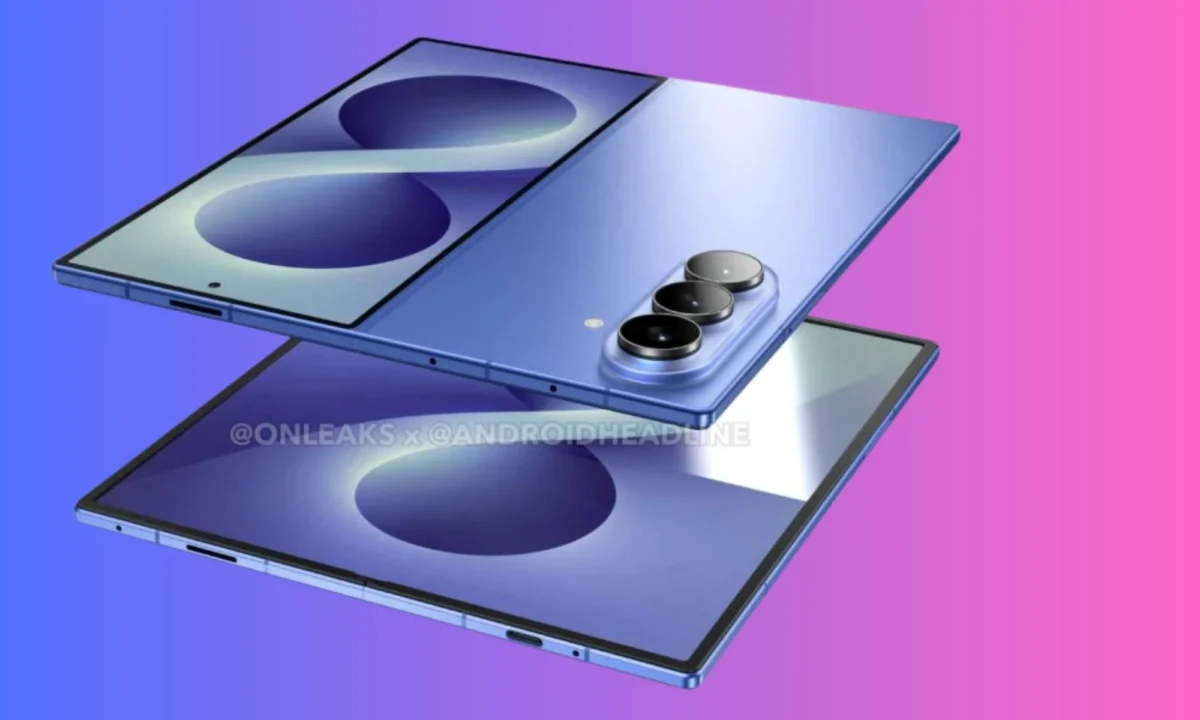
As the technology industry approaches the highly anticipated Galaxy Unpacked event scheduled for July 22, a sense of trepidation has begun to overshadow the excitement surrounding Samsung’s next generation of foldable devices. Industry analysts and consumers alike are bracing for what appears to be a significant upward shift in pricing, with leaked data suggesting that Samsung is preparing to move its flagship foldables and wearable ecosystem into an even more exclusive, and expensive, luxury bracket.
The leaks, brought to light by Roland Quandt of WinFuture—a source with a historically high degree of accuracy regarding Samsung’s internal product roadmaps—paint a picture of a company confident in its market dominance but perhaps testing the elasticity of its customer base. From the high-end Galaxy Z Fold 8 Ultra to the refreshed Galaxy Watch 9, the pricing strategy for the upcoming European market reveals a clear trend: premium hardware is becoming significantly costlier to own.
The Core Facts: A Broad Price Hike Across the Portfolio
The core of the report focuses on a comprehensive restructuring of the foldable lineup. Samsung is reportedly moving away from a singular flagship foldable strategy, opting instead to segment the market into standard and "Ultra" tiers.
The Galaxy Z Fold 8 Ultra, slated to be the new pinnacle of Samsung’s engineering, is expected to command a starting price of €2,199 (approximately $2,507 USD) for the 256GB storage model. This represents a tangible €100 ($114) increase over the previous generation’s entry-level pricing. However, the true shock lies in the high-storage variants. The 512GB model is projected to retail for €2,399, and the top-of-the-line 1TB model is expected to hit a staggering €2,799—an increase of nearly €300 compared to previous iterations.
Simultaneously, the popular Galaxy Z Flip 8—the company’s clamshell-style device—is also seeing a price hike. With a starting point of €1,299 for the 256GB model, the barrier to entry for Samsung’s "entry-level" foldable is rising, potentially alienating the younger demographic that typically gravitates toward the Flip series.
Chronology: The Evolution of the Foldable Premium
To understand why these price hikes are causing such a stir, one must look at the timeline of Samsung’s foldable journey. When the original Galaxy Fold launched in 2019, it was a "proof of concept" device—expensive, experimental, and prone to mechanical concerns. It was a luxury for early adopters willing to pay a premium for being first.

- 2019–2021: Samsung focused on durability and refining the hinge mechanism. Prices were high, but consumers accepted them as the cost of pioneering technology.
- 2022–2023: As the market matured, Samsung successfully scaled production, leading to more stable hardware and a wider adoption rate. During this period, prices remained relatively static or saw minor fluctuations as the company sought to achieve mass-market appeal.
- 2024–2025: A period of aggressive competition. Brands like Google (with the Pixel Fold), OnePlus, and Honor entered the market, often offering competitive hardware at lower price points or with more aggressive trade-in promotions.
- July 2026 (The Current Outlook): As we head into the Galaxy Unpacked event, the narrative has shifted. Samsung appears to be pivoting away from fighting on price. Instead, it is doubling down on "Ultra" branding, attempting to position its foldables as status symbols rather than mere functional productivity tools.
Supporting Data: Breaking Down the Costs
The leaked data provides a granular look at how these increases affect the entire product family. Beyond the foldables, the wearable ecosystem is also seeing a price recalibration.
The Smartphone Lineup (European Pricing)
- Galaxy Z Fold 8 (Standard): Starting at €1,999 (256GB), moving to €2,199 (512GB), and peaking at €2,599 (1TB).
- Galaxy Z Fold 8 Ultra: Starting at €2,199 (256GB), reaching €2,799 (1TB).
- Galaxy Z Flip 8: Starting at €1,299 (256GB) and €1,499 (512GB).
The Wearable Ecosystem
Samsung’s commitment to the ecosystem play is evidenced by the upward pricing of its smartwatches. The Galaxy Watch 9 is expected to start at €409 for the entry-level 40mm Bluetooth model. More notably, the Galaxy Watch Ultra 2 is tipped to launch at €749, a €50 increase over its predecessor.
These numbers, while specific to the European market, often act as a precursor to global pricing strategies. They suggest that Samsung is facing increased costs in component sourcing, specifically regarding high-end hinge materials, display substrates, and the specialized processing power required to run the latest AI-integrated software features.
Official Responses and Corporate Strategy
As of this writing, Samsung has maintained its standard policy of not commenting on "rumors or speculation." However, corporate silence at this stage of the pre-launch cycle is typical. The company is currently in the midst of a carefully orchestrated marketing rollout, and confirming these prices prematurely would disrupt their strategic announcement on July 22.
Industry analysts, however, interpret this price hike as a tactical move. Samsung is increasingly emphasizing "Samsung AI" and deep ecosystem integration. By bundling these services with more expensive hardware, the company is attempting to shift its revenue model from one-time device sales to a "premium service" experience. The creation of the "Ultra" tier suggests a strategy modeled after the success of the Galaxy S24 Ultra, which has proven that consumers are willing to pay significantly more for a device that is perceived to be the best-in-class, regardless of the diminishing returns of the added features.
Implications: The Risks of the "Premium" Strategy
The decision to increase prices during a period of global economic sensitivity carries significant risks.

1. Market Saturation and Competition
While Samsung maintains a dominant share of the foldable market, the "Foldable Gap" is closing. Competitors are rapidly iterating. If the standard Galaxy Z Fold 8—which is expected to lack certain features like a high-end dedicated zoom lens—is priced at €1,999, it risks looking like poor value compared to a OnePlus or Honor device that may offer superior hardware specs at a lower price point.
2. The "Luxury" Trap
By pushing the Fold and Flip series into the €2,000+ category, Samsung is narrowing its total addressable market. A phone at this price point is no longer a consumer electronic purchase; it is a financial investment. If Samsung fails to offer enough "value-add" (such as extended software support, exclusive AI features, or superior trade-in values), it may see its growth plateau.
3. Impact on the Ecosystem
The rise in watch pricing is particularly telling. If the total cost of ownership for a "Samsung experience"—a phone, a watch, and potentially wireless earbuds—crosses the €3,000 threshold, consumers may be more inclined to abandon the ecosystem entirely in favor of more affordable, modular solutions.
4. Consumer Sentiment
Public perception of "inflation" is a major factor. If consumers feel that the hardware improvements in the Fold 8 series are iterative rather than revolutionary, the price hikes will likely be met with backlash. In the current digital landscape, social media sentiment can influence sales volume as much as traditional marketing. If the consensus becomes that "Samsung is getting too greedy," the brand image could suffer.
Conclusion: A High-Stakes Unpacked
The July 22 Unpacked event will be more than just a product launch; it will be a referendum on Samsung’s vision for the future of mobile technology. By attempting to elevate its foldable series to a tier previously occupied only by ultra-luxury boutique tech, Samsung is betting that its brand equity and superior software ecosystem are strong enough to justify the cost.
For the average consumer, the message is clear: the era of the "accessible" foldable is effectively ending. As we wait for the official confirmation from the Unpacked stage, the market will be watching closely to see if Samsung can justify these premium price tags with truly groundbreaking innovation, or if this shift will ultimately open the door for competitors to capture the hearts—and wallets—of the mainstream foldable user.











