

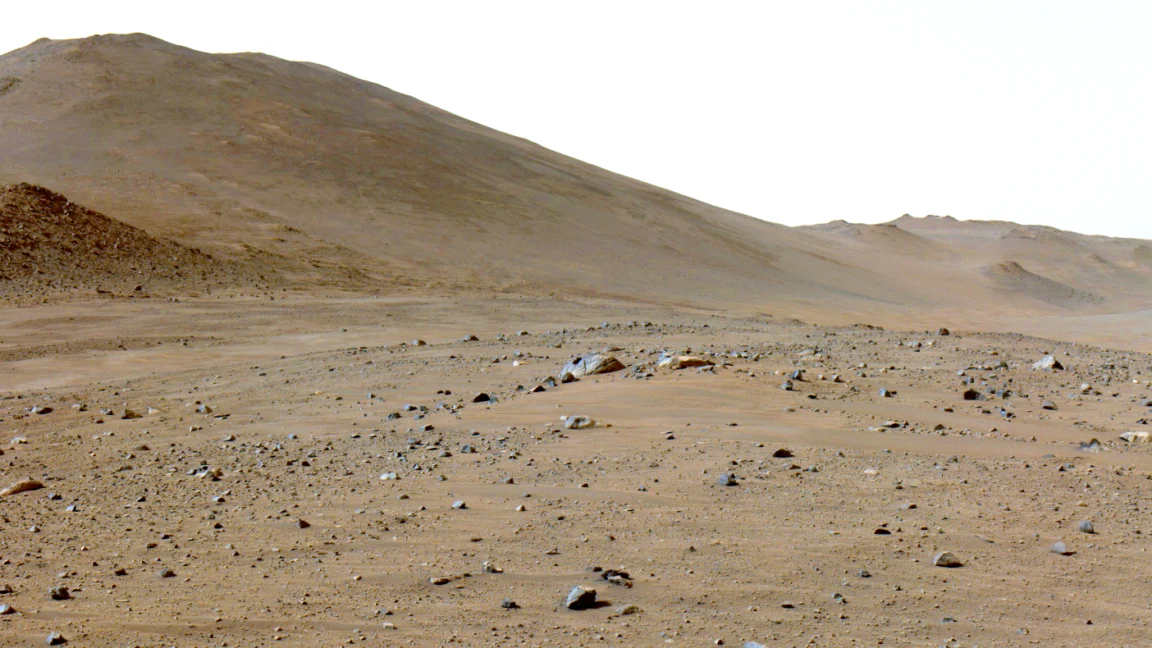
For over five years, NASA’s Perseverance rover has been a solitary explorer within the vast, desolate expanse of Jezero Crater. Tasked with the ambitious mission of seeking out the chemical fingerprints of ancient life, the rover has systematically surveyed the Martian surface, drilling into the crust to uncover secrets hidden for billions of years. While previous discoveries of organic carbon required intensive labor—involving the abrasion or extraction of material from the deep interiors of rocks—a breakthrough has occurred at a site known as "Bright Angel." Here, perched on the edge of an ancient river channel called Neretva Vallis, the rover has detected complex macromolecular carbon sitting plainly on the surface, offering the most tantalizing evidence yet of Mars’s complex chemical history.
Main Facts: The Bright Angel Discovery
The discovery at Bright Angel represents a milestone in planetary science. Unlike previous findings, which were often buried beneath layers of weathered rock, this organic material was detected directly on the exposed surface.
The detection was facilitated by the rover’s highly specialized instrument: SHERLOC (Scanning Habitable Environments with Raman and Luminescence for Organics and Chemicals). Mounted on the robotic arm, SHERLOC utilizes a deep-ultraviolet laser to interrogate the mineralogy and chemical composition of Martian targets. By measuring the "Raman shift"—the specific way light bounces back at altered energies—the instrument can map molecular bonds with high precision.
Researchers identified a clear spectroscopic signature known as the "G-band" (graphitic band) across three distinct targets: Cheyava Falls, Apollo Temple, and Walhalla Glades. This signature points to a dense, cross-linked network of reduced carbon atoms—a form of macromolecular carbon that is remarkably resistant to both thermal and chemical degradation. While the material bears a striking resemblance to terrestrial "kerogen"—a substance typically derived from fossilized microorganisms on Earth—scientists are exercising extreme caution, choosing the broader term "macromolecular carbon" to account for both biotic (biological) and abiotic (geological) possibilities.
Chronology of the Mission: From Landing to Bright Angel
The journey to Bright Angel was not accidental; it was the result of a meticulously planned traverse across the floor and delta of Jezero Crater.
- Arrival and Early Exploration: Since landing in February 2021, Perseverance has focused on the crater floor, analyzing igneous rocks and sedimentary deposits that suggested a history of liquid water.
- The Delta Campaign: As the rover ascended the ancient river delta, it began sampling mudstones and sandstones, uncovering organic molecules within the mineral matrix. These required the rover’s internal drill to expose, limiting the speed at which the science team could analyze the samples.
- The Neretva Vallis Traverse: Moving toward the western edge of the delta, the rover tracked the path of the Neretva Vallis, a river channel that once fed the lake in Jezero Crater.
- Sols 1180–1218: During this period, the mission reached the Bright Angel outcrop. This location was selected for its unique stratigraphy, which appeared to have been exposed by erosion from the ancient river. It was here that the SHERLOC instrument conducted its systematic survey of four specific targets.
- Data Analysis: Following the laser scans, the data was beamed back to Earth, where the science team, including lead researcher Ashley E. Murphy of the Planetary Institute, began the rigorous process of verifying the signals.
Supporting Data: Decoding the Spectroscopic Signature
The scientific significance of the Bright Angel discovery hinges on the nature of the G-band signature. In chemistry, the G-band is a hallmark of carbon-based molecules that have undergone specific structural changes.
The Role of SHERLOC
SHERLOC is effectively a high-tech "chemical eye." By firing a deep-UV laser at a rock target, the instrument forces molecules to vibrate. The light reflected back carries the "fingerprint" of these vibrations, allowing scientists to distinguish between simple carbon compounds and the complex, macromolecular structures that form the building blocks of life as we know it.
Comparing Martian Carbon to Terrestrial Kerogen
The chemical behavior of the carbon found at Bright Angel mimics that of terrestrial kerogen. On Earth, kerogen is the organic precursor to oil and natural gas, formed primarily through the heat and pressure applied to organic matter—mostly ancient microbial life—over millions of years. However, the science team is hesitant to classify the Martian findings as kerogen.
"The term kerogen implies a biogenic source," explains Dr. Murphy. By choosing to label the material as "macromolecular carbon," the team acknowledges that while the structure is consistent with biological life, it could also be the result of complex, non-biological (abiotic) processes, such as serpentinization or volcanic activity, which can also synthesize carbon structures in specific planetary environments.
Official Responses and Scientific Perspective
The scientific community has reacted with a mix of excitement and measured restraint. The detection at Bright Angel is widely considered the most "accessible" organic evidence ever found on the planet.
"To our knowledge, that’s the shallowest detection of organic matter on the Martian surface to date," Dr. Murphy noted in her recent publication regarding the findings. This accessibility is crucial; by finding these molecules on the surface, NASA avoids the necessity of invasive drilling for every single data point, allowing for a more rapid analysis of the surrounding geological context.
Other planetary scientists involved with the Perseverance mission have emphasized that while the findings are statistically significant, they do not constitute a "smoking gun" for life. The presence of macromolecular carbon simply confirms that Mars, like Earth, possessed the chemical ingredients necessary for complex chemistry. The question of whether that chemistry was ever utilized by living organisms remains one of the most profound inquiries of our time.
Implications: The Quest for Sample Return
The Bright Angel discovery serves as a powerful argument for the proposed Mars Sample Return (MSR) mission. While SHERLOC is an incredibly sophisticated tool, it is limited by its size, power, and the constraints of operating millions of miles away from Earth.
The Limits of In-Situ Analysis
Even with the precision of current instruments, there is a limit to what we can determine from an orbital or rover-based distance. To truly distinguish between abiotic carbon and the fossilized remains of ancient microbes, scientists require the full suite of laboratory equipment found on Earth. High-resolution electron microscopy, isotopic analysis, and mass spectrometry on Earth could reveal the specific structural arrangements of the Bright Angel carbon, potentially identifying biological markers (biosignatures) that are currently invisible to the rover.
Future Research Directions
The team at Jezero Crater is now evaluating whether to prioritize the Bright Angel site for a sample collection attempt. If these rocks were to be placed in the rover’s sample cache, they would become prime candidates for the next generation of Martian exploration.
The implications are far-reaching. If the carbon at Bright Angel is confirmed to be biological, it would fundamentally change our understanding of the universe, proving that life is not a phenomenon unique to Earth. If it is abiotic, it will still rewrite our understanding of Martian geochemistry, providing a blueprint for how planets evolve and how carbon cycles behave in the absence of a biosphere.
Conclusion: A Window Into the Past
The Bright Angel discovery is a testament to the endurance of the Perseverance mission. By lingering at the edge of the Neretva Vallis, the rover has provided humanity with a rare, undisturbed window into the deep history of our neighboring world. Whether this carbon is a relic of ancient Martian life or a fascinating byproduct of the planet’s cooling crust, it remains a critical piece of the planetary puzzle. As the rover continues its trek, every rock scanned and every sample drilled brings us one step closer to answering the ultimate question: Are we alone in the cosmos? For now, the carbon at Bright Angel remains a silent, complex witness to a history we are only just beginning to read.











