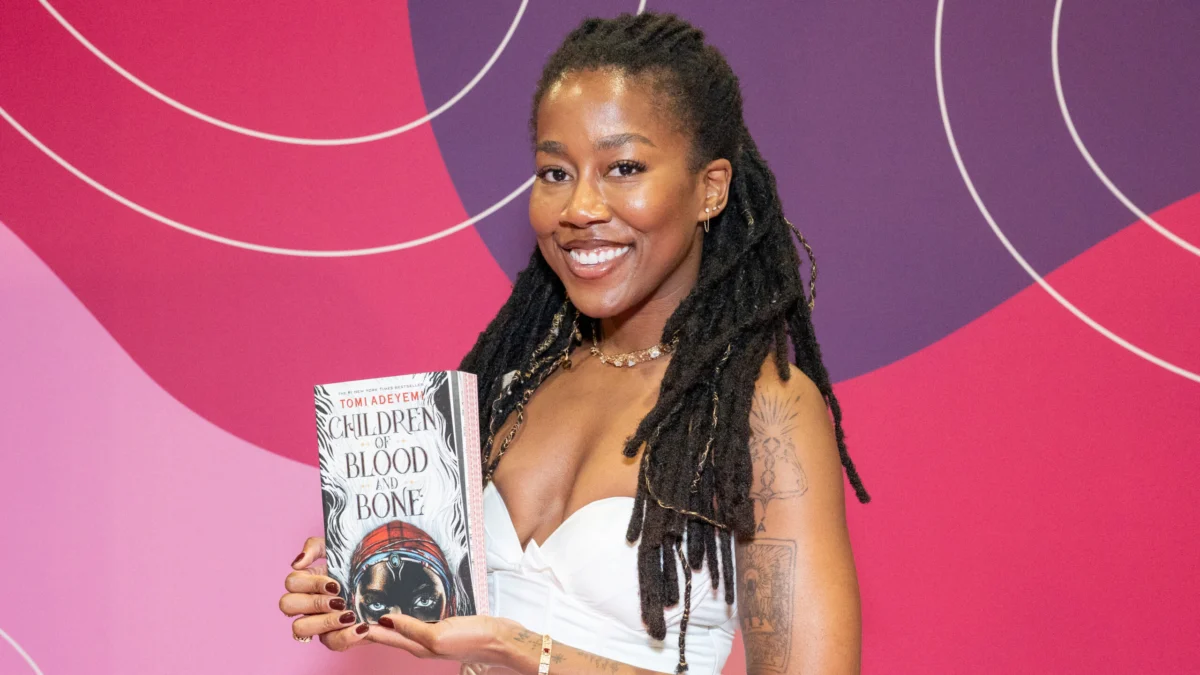
As the highly anticipated cinematic adaptation of Tomi Adeyemi’s 2018 Young Adult literary sensation, Children of Blood & Bone, approaches its January 15 premiere, the atmosphere surrounding the project has shifted from celebration to profound tension. While film adaptations are rarely without their creative disagreements, the public rupture between the author and the production—specifically involving star Amandla Stenberg—has cast a long, complicated shadow over the Paramount release.
Adeyemi, who not only penned the source material but also served as a co-writer on the screenplay alongside director Gina Prince-Bythewood, has made her stance clear: she will not be watching the film. The author’s recent decision to share private correspondence with fans via TikTok has transformed an internal production dispute into a viral cultural conversation about creative control, colorism, and the sanctity of source material in Hollywood.
The Breach: A Public Declaration of Detachment
The controversy reached a fever pitch when Adeyemi addressed a fan’s inquiry on TikTok regarding her conspicuous silence on the film’s promotional tour. Her response was uncharacteristically blunt.
“There is a reason I will not post anything about the adaptation of my work. That’s all,” Adeyemi wrote in a series of direct messages she subsequently shared with her audience. She followed this with a firm, final statement: “And lastly, since someone asked—I have not seen the film, and I will not watch it. It’s been painful holding this back from you all. And I’m sorry if any of you thought I didn’t care about US. More than any glitter.”
This acknowledgment served as a definitive break from the promotional machine, signaling that for Adeyemi, the adaptation does not represent a fulfillment of her creative vision, but rather a point of personal pain.
Chronology of a Conflict: From Inspiration to Alienation
To understand the intensity of the current fallout, one must look back at the origins of the project. When Children of Blood & Bone was published, it was hailed as a revolutionary entry into the fantasy genre, specifically for its vivid, unapologetic centering of West African-inspired mythology and Black protagonists.
The Casting Controversy
The seeds of the current friction were sown following the casting of Amandla Stenberg as Princess Amari. In the novel, Amari is described as having "dark copper skin," a physical trait that many readers felt was central to the character’s identity and the book’s broader commentary on colorism within fantasy literature. When Stenberg, a lighter-skinned Black actress, was cast in the role, a segment of the fandom immediately raised concerns regarding the erasure of dark-skinned representation.
The Stenberg-Adeyemi Narrative
In an effort to quell the backlash, Stenberg gave an interview in early 2024 describing a deeply emotional meeting with Adeyemi. According to Stenberg, the author told her that Stenberg’s own experiences with racism—specifically the vitriol she faced as a child when cast as Rue in The Hunger Games—served as the inspiration for writing the Legacy of Orïsha series.
“We just started crying,” Stenberg recalled, “and I said to myself, ‘God wants me here!’”
The Private Retaliation
The narrative of mutual inspiration appears to have been shattered by the revelation of a private message sent from Adeyemi to Stenberg in late February. The message, which Adeyemi shared via a screenshot, is devoid of the warmth Stenberg described: “Do not ever use my name in an interview or video again. Do not text me. Do not call me.”
This sudden, aggressive pivot suggests that the professional relationship had reached a breaking point, and that the public narrative of a collaborative, harmonious production was, at least from the author’s perspective, a fabrication.
Supporting Data: The Stakes of the Adaptation
The film, directed by Gina Prince-Bythewood, boasts an A-list ensemble cast, including Thuso Mbedu, Tosin Cole, Damson Idris, Cynthia Erivo, Lashana Lynch, Idris Elba, Chiwetel Ejiofor, and Viola Davis. Such a cast usually guarantees high expectations, but the underlying tension regarding the book’s themes makes the stakes significantly higher than a standard blockbuster release.
Children of Blood & Bone is not just a fantasy quest; it is a story about the reclamation of magic stolen from an oppressed people. The thematic weight of "reclaiming" is central to the narrative, which makes the controversy surrounding casting and creative fidelity particularly sensitive for the target audience. When the author of a story about reclaiming one’s power and identity feels the need to distance herself from her own adaptation, it creates a "credibility gap" that studios find difficult to manage.
Official Responses and Industry Implications
As of this writing, representatives for Amandla Stenberg have not provided a detailed statement, and the studio, Paramount, has maintained a professional distance from the internal feud, focusing their efforts on the film’s scheduled release. However, the industry implications of this fallout are significant.
The Power of the Author
In the age of social media, authors are no longer silent partners in the adaptation process. They are influencers with direct lines to the fanbases that studios hope to convert into ticket buyers. Adeyemi’s decision to air her grievances on TikTok directly impacts the marketing of the film. When the source material’s creator refuses to endorse the product, it risks alienating the "super-fans" who are essential for opening-weekend momentum.
The Issue of Colorism in Casting
The conflict has reignited a necessary, if uncomfortable, debate in Hollywood. The film industry has long been criticized for its preference for lighter-skinned Black actors in lead roles, even when the source material explicitly calls for darker-skinned representation. By casting Stenberg and then citing the author’s personal connection as a justification, the production may have inadvertently highlighted the very issues of colorism that Adeyemi sought to combat in her writing.
The Path Forward: Implications for the Legacy of Orïsha
The central question remains: how will this affect the Legacy of Orïsha franchise? A trilogy by definition requires long-term commitment. If the author is fundamentally opposed to the creative direction of the first film, the prospects for sequels are in serious doubt.
For Paramount, the film represents a massive investment of both capital and brand reputation. For Adeyemi, it represents the first translation of her life’s work into a new medium—a process that has clearly left her feeling disempowered.
The Fan Perspective
Fans are currently divided. Some express sympathy for Adeyemi, viewing her as a victim of a studio system that prioritized star power over the specific cultural requirements of her text. Others feel that the public call-out of Stenberg was unnecessarily harsh and may damage the hard work of the many other Black creatives involved in the project.
Conclusion
The situation serves as a cautionary tale for studios navigating the adaptation of works written by authors who are culturally active and deeply invested in the social messaging of their stories. The "glitter" of a Hollywood production, as Adeyemi put it, cannot compensate for a loss of creative integrity.
As January 15 approaches, the premiere of Children of Blood & Bone will be less about the magic on screen and more about the fractured relationship behind the camera. The audience will be left to decide whether the film stands on its own merits, or if the author’s public disavowal serves as the final word on a project that promised so much more than it could ultimately deliver.