Asep Darmawan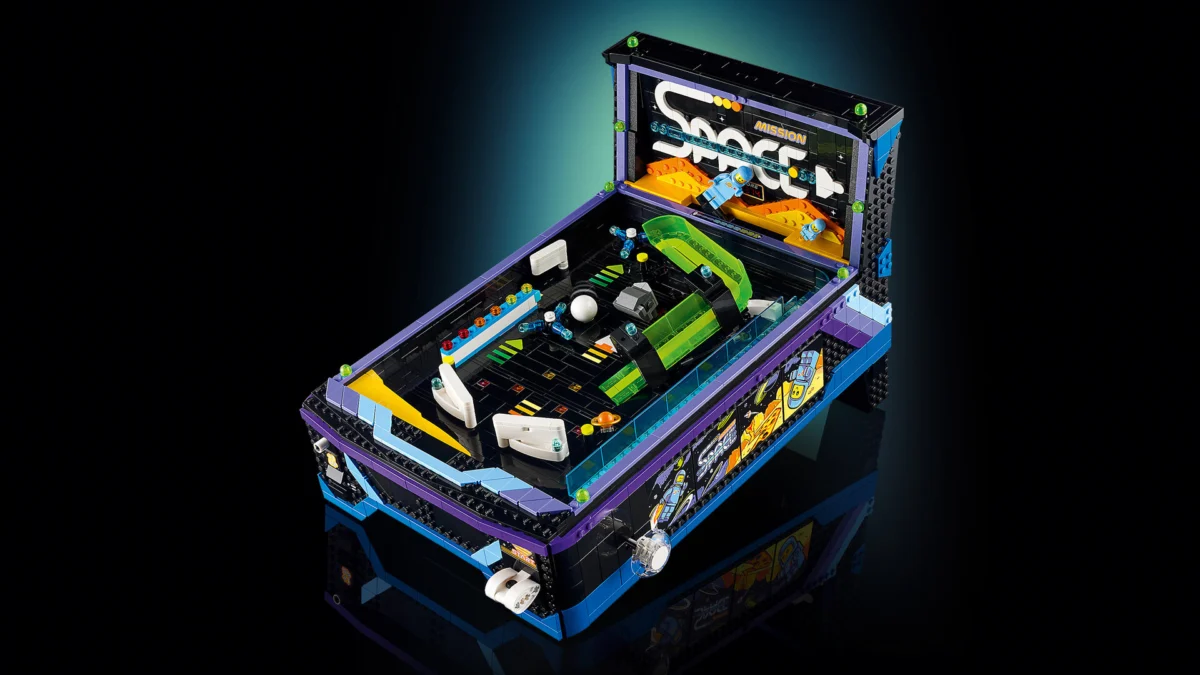
For generations, the Lego Group has transitioned from a simple toy manufacturer to a purveyor of nostalgia, curating a portfolio of "Icons" that bridge the gap between childhood play and adult hobbyism. Their latest release, the Lego Icons Arcade Pinball Machine (Set 11374), is not merely another display piece for the shelf; it is a sophisticated, fully functional mechanical engineering feat that brings the golden age of the arcade into the living room.
With 2,274 pieces, this set invites builders to construct a working pinball machine that eschews digital screens and batteries in favor of pure, tactile physics. As Lego continues to expand its "Gaming Heritage" line, the Arcade Pinball Machine stands out as a triumph of analog design, proving that even in a digital-first world, the satisfying "clack" of a plastic ball hitting a bumper remains an unparalleled experience.
Main Facts: Engineering an Analog Arcade
The Lego Icons Pinball Machine is a masterclass in kinetic construction. Measuring 24 centimeters in height, 38 centimeters in length, and 28 centimeters in width, the model is designed with both aesthetic appeal and structural integrity in mind.
Unlike previous gaming-themed sets—such as the static, display-only NES console or the decorative Pac-Man machine—the Pinball Machine is intended to be played. The functionality is entirely mechanical. Users utilize a spring-loaded launcher to propel the ball onto the playfield. Once in motion, the ball interacts with two primary flipper levers, which the player controls via side-mounted buttons.
The playfield itself is dense with detail, featuring rotating bumpers and a precision-engineered ramp that challenges the player’s hand-eye coordination. Beyond the simple mechanics of keeping the ball in play, Lego has integrated a narrative objective: a "space rescue" mission. Players must strike a specific asteroid target to trigger a mechanism that reunites an astronaut minifigure with their "baby astronaut" counterpart. A mechanical score/progress tracker allows players to keep tabs on their performance, which can be reset after each session. For those inevitable moments where the ball disappears from play, Lego has thoughtfully included a spare ball, ensuring the game never has to end prematurely.
Chronology: From Concept to Retail
The journey of Set 11374 from design studio to retail shelf followed a carefully orchestrated release schedule characteristic of Lego’s high-profile Icons series.
- June 17, 2024: Lego officially announced the set, generating immediate buzz within the AFOL (Adult Fans of Lego) community. The reveal showcased the machine’s vibrant, space-themed aesthetics and highlighted its mechanical capabilities.
- July 1, 2024: In a move to reward its most dedicated collectors, Lego opened the set for early access exclusively to members of the "Lego Insiders" program. This period allowed core fans to secure their units before the public release.
- July 4, 2024: The set reached general availability. It is currently available for purchase through the official Lego online store and at physical Lego Brand Stores globally.
This tiered release strategy not only manages logistics and inventory but also cultivates a sense of exclusivity that has become a hallmark of Lego’s marketing strategy for adult-oriented products.
Supporting Data: Investment and Value
Priced at 209.99 Euro in the German market, the Arcade Pinball Machine occupies a middle-ground in Lego’s premium pricing architecture. When compared to the Pac-Man Arcade Machine (Set 10323)—which retails for 269.99 Euro and features 2,651 pieces—the Pinball machine offers a slightly more accessible entry point while maintaining a high piece-to-price ratio.
Comparative Market Positioning
| Model | Piece Count | Retail Price | Functional Focus |
|---|---|---|---|
| Arcade Pinball (11374) | 2,274 | 209.99€ | Mechanical Physics |
| Pac-Man Arcade (10323) | 2,651 | 269.99€ | Static/Display + Crank |
| Nintendo NES (71374) | 2,646 | 269.99€ | Kinetic Display |
The build experience is bolstered by the Lego Builder App, which provides 3D interactive instructions. This is particularly crucial for a set of this complexity, as the internal mechanical linkages for the flippers and bumpers require a level of precision that traditional 2D paper manuals might struggle to convey to the average builder.

Official Responses and Design Philosophy
Lego designers have emphasized that the Pinball machine is a love letter to the "Classic Space" era—one of the most beloved themes in the company’s history. By incorporating the astronaut and baby astronaut figures, the set anchors itself in the deep lore of Lego’s brand identity, rather than relying solely on licensed third-party intellectual property.
In internal communications, the company highlighted the "mechanical transparency" of the build. By omitting electronics, Lego has removed the barrier of "black box" technology. The user can see exactly how the gear ratios work, how the spring tension dictates the launch force, and how the bumper movement is triggered by the ball’s collision. This educational aspect—hidden within the guise of a toy—is intentional, designed to foster an appreciation for mechanical engineering among adult builders.
Implications: The Shift Toward "Active" Display Sets
The release of the Arcade Pinball Machine signals a strategic shift in the Lego Icons series. For years, the adult-targeted sets were primarily static—architectural models, vintage cars, or floral bouquets. While these remain staples, the success of the Pac-Man machine and the NES console proved that the adult market is clamoring for "active play."
The "Playability" Trend
The implication for the future of Lego is clear: adult collectors no longer want just "shelf-sitters." They are demanding sets that offer a tactile, sensory experience. The Pinball machine elevates this by being a self-contained game. You do not need an internet connection, a subscription service, or a software update to play. You only need to build it.
This shift also addresses a criticism often leveled at high-end Lego sets: that they are "too expensive to be just a statue." By integrating playability, Lego justifies the premium price tag by adding "re-play value." The machine can be built, displayed for a week, and then brought down from the shelf to provide a quick, analog distraction during a busy workday.
Cultural Impact
Furthermore, the Pinball machine taps into the broader trend of "Analog Revivalism." In an era dominated by screens, high-fidelity graphics, and cloud-based gaming, there is a burgeoning cultural movement centered on tactile hobbies. From the resurgence of vinyl records to the popularity of tabletop board games, the desire to interact with the physical world is stronger than ever. The Lego Pinball machine fits perfectly into this space, serving as a bridge between the digital nostalgia of the 1980s and the physical necessity of modern "offline" hobbies.
Conclusion: A Future-Proof Investment
Whether viewed as an engineering challenge, a decorative centerpiece, or a functional toy, the Lego Icons Arcade Pinball Machine (11374) is a significant addition to the Lego catalog. It manages to balance complex internal mechanics with a nostalgic aesthetic that appeals to both seasoned Lego veterans and arcade enthusiasts.
As the set sits on desks and shelves around the world, its true value will not be measured solely in the secondary market price or the number of pieces contained within the box. Its value lies in the sound of the ball hitting the plastic bumper—a sound that, in a world of silent smartphones and haptic feedback, remains the gold standard of tactile satisfaction. Lego has successfully proven that they can not only build the past but also breathe new life into the mechanisms that defined it.

 Nana Muazin
 Pevita Pearce