Ali Ikhwan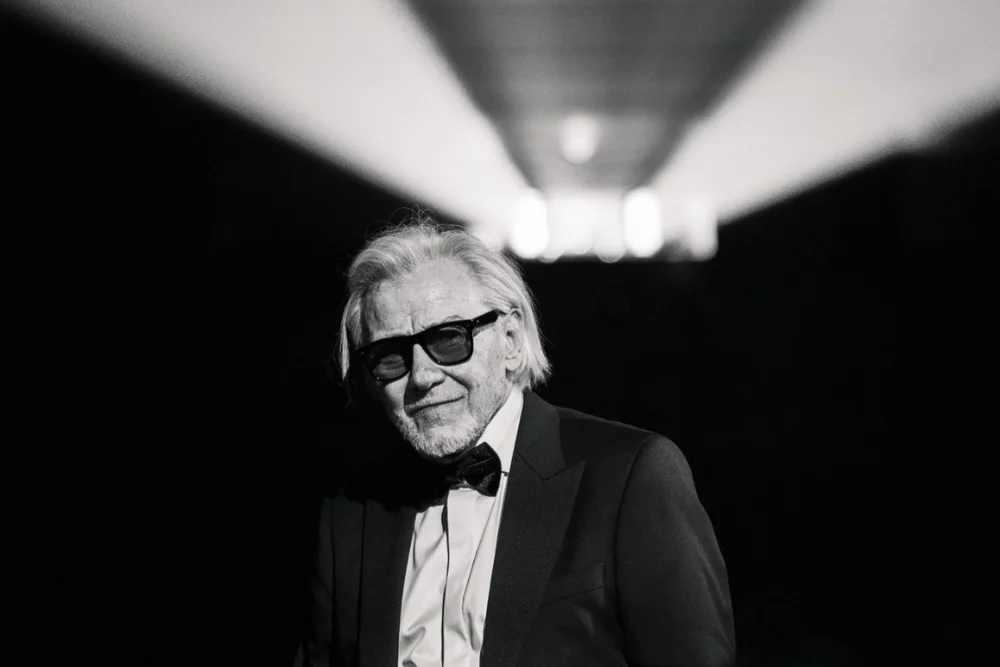
At the 58th Karlovy Vary International Film Festival, the air was thick with the weight of cinema history. Among the luminaries present, none commanded the room with quite the same gravitas as Harvey Keitel. Returning to the Czech Republic for the third time—this visit marked by a special screening of Martin Scorsese’s seminal 1973 masterpiece Mean Streets—the legendary actor, whose career spans over five decades of grit, nuance, and uncompromising performance, sat down with Variety to discuss his current projects, his fears for the future of the craft, and the enduring necessity of art in a fractured geopolitical landscape.
A New Chapter: Guerrilla Filmmaking in Hollywood
Despite a storied resume that includes collaborations with the likes of Quentin Tarantino, Jane Campion, and Wes Anderson, Keitel remains as hungry for the process of creation as he was during his days as a young student at the Actors Studio. During his conversation, the 85-year-old icon revealed he is currently immersed in an intimate, collaborative project written by his wife, the actor and filmmaker Daphna Kastner.
Keitel described the production not as a polished studio tentpole, but as a labor of love that thrives on spontaneity. "My wife wrote a script; she’s a writer, director, actress… We’re working on it," Keitel said. "It’s sort of guerrilla warfare. It’s not a Hollywood film in the traditional sense, but it’s being done in Hollywood because we live there. We have a lot of college students on the crew, and we’ll see where we go."
While the actor remained tight-lipped regarding the plot, his excitement was palpable. The decision to employ a crew of college students suggests a desire to return to the foundational, raw roots of filmmaking. It is a striking contrast to the massive, algorithm-driven blockbusters that currently dominate the global market, positioning this new project as an act of artistic rebellion.
The Digital Existential Crisis: AI and the Loss of "Emotional Life"
While Keitel is enthusiastic about his own creative output, his tone shifted to one of profound concern when the conversation turned toward the rise of artificial intelligence in the performing arts. For a man who served as the co-president of the Actors Studio for over two decades—a bastion of the "Method" and the psychological depth of performance—the encroachment of AI into the actor’s domain is not merely a technological shift; it is a fundamental threat to the human experience.
Keitel pointed to a specific, high-profile example that has recently made waves in the industry: the licensing of Michael Caine’s voice to the AI audio technology company ElevenLabs. Caine, a titan of British cinema, saw his voice replicated to narrate an audiobook of Homer’s The Odyssey.
Keitel’s critique of the result was scathing. "They used his voice, but there was no emotion in it," Keitel observed. "They couldn’t reproduce Michael Caine’s beauty."
For Keitel, the problem is not the technology itself, but the misunderstanding of what acting actually is. "This is a new industry that’s developing where actors are selling their image and their voices, but they can’t reproduce their emotional life," he explained. "In that way, the AI thing failed. I know it could be used for good purposes also, but we’re going to have to find good people."
The implication is clear: technology can replicate the frequency and timbre of a voice, but it cannot synthesize the lived experiences, the scars, the joys, and the complex psychological machinery that constitute an actor’s "emotional life." To Keitel, acting is a bridge between humans, not a collection of data points to be processed by a server.
A Legacy of Aesthetic Force
To understand Keitel’s apprehension, one must look at the body of work he has built. From the explosive volatility of Charlie in Mean Streets to the quiet, dignified authority of Winston "The Wolf" Wolfe in Pulp Fiction, and the meditative grace of his work in The Piano, Keitel has consistently championed the idea that acting is an "art form" rather than a commercial product.
When asked what goals remain for him, his response was both philosophical and deeply human. "There are so many things to deal with as a human being," he mused. "My fears, my loves, my desires, my errors, my successes, my having to face death… And you can do that very well through the arts. That’s one good way to do it."
His career has been defined by a refusal to be categorized, moving seamlessly between the dark, urban realism of Scorsese’s New York and the stylized, whimsical worlds of Wes Anderson. Yet, despite his monumental success, he refuses to rest on his laurels. He views every project as a necessary exploration of the human condition—a mechanism to process the chaos of existence.
The Role of the Film Festival in a Divided World
Keitel’s presence at Karlovy Vary is not accidental. The festival, which awarded him the Crystal Globe for Outstanding Artistic Contribution to World Cinema in 2004, represents a space where the "aesthetic force" of cinema is given primacy over commercial gain.
"Festivals are more important today than ever before in my lifetime because of the social situation around the world now," Keitel asserted. His view of the current state of global affairs is bleak. He lamented the rise of tribalism, the failure of political systems, and the persistent, violent conflicts fueled by religious and racial prejudices.
"Politics is a disaster. Religions are in conflict with each other," he said, his voice dropping into a tone of weary indignation. "Judging somebody by the religion or the color of their skin, I can’t think of anything more fucking ridiculous, and yet, we are still doing it."
He noted that the arts are the last bastion of true human connection, especially when other institutions fail to provide meaning. "There are plenty of new talents who are out of work," he said. "Let’s face it, the arts are a very different field to get involved in, and that’s when we need it the most. Politics is not doing it for us. Religion… is not doing it for us. Religions are in conflict. Everybody’s killing each other."
Conclusion: Aristotle and the Future of the Craft
In his final remarks, Keitel turned to the wisdom of the past to frame the challenges of the future. Quoting his "hero," Aristotle, he underscored the transformative power of art. "It takes more than words to change a culture. To change a person, it takes aesthetic force. The force of the arts."
As the industry grapples with the transition into an AI-augmented era, the message from a veteran like Keitel serves as a necessary anchor. While studios may look toward digital shortcuts to optimize production, the "aesthetic force" required to move a human soul remains rooted in the fallible, emotional, and profoundly human experience of the performer.
Whether it is through his new guerrilla-style production or his continued advocacy for the sanctity of the craft, Harvey Keitel remains a vital reminder of why we watch, why we act, and why—in an age of increasing artifice—the pursuit of truth through art remains the most radical, and necessary, act of all.

 Layla Zulfa
 Ammar Sabilarrohman