Reynand Wu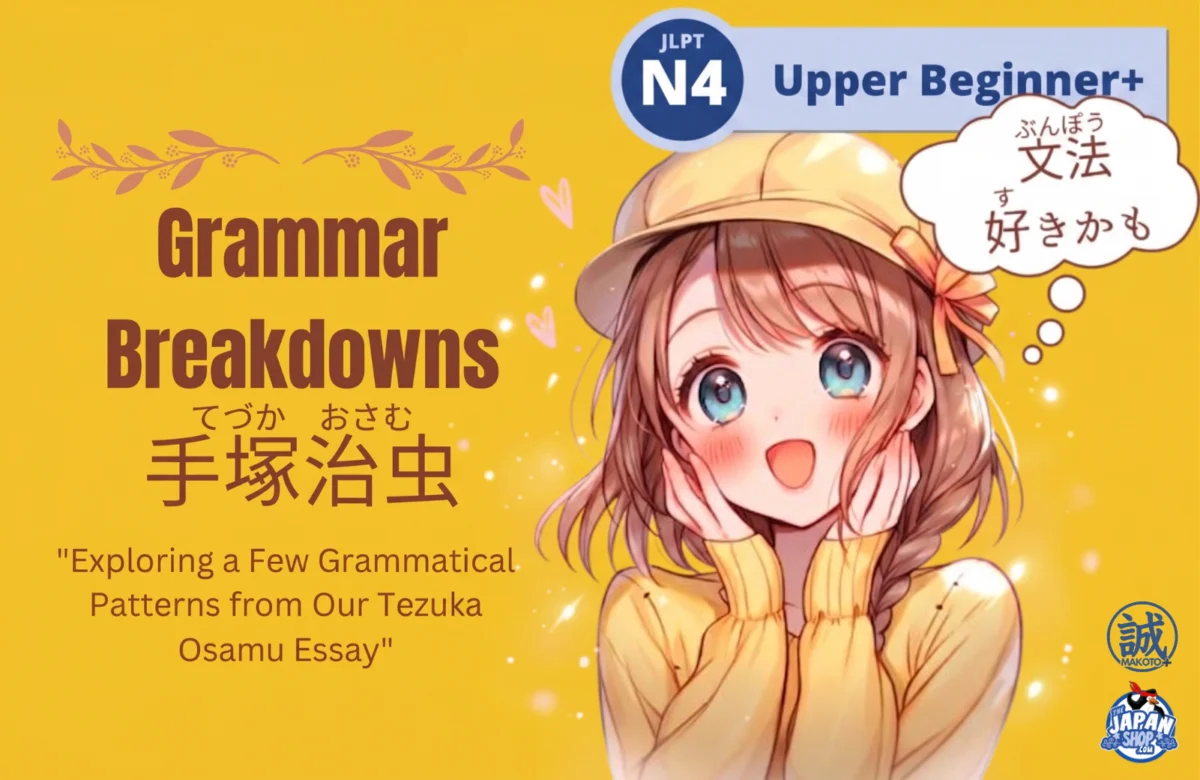
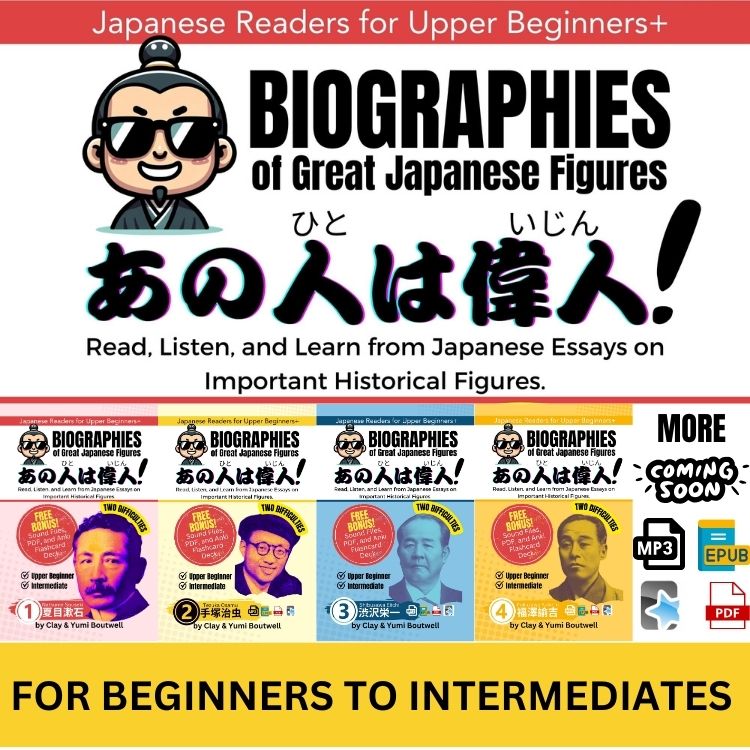
For learners of the Japanese language, the transition from rigid textbook exercises to the fluidity of real-world literature is often the most daunting hurdle. While vocabulary lists and conjugation charts provide the foundation, they often lack the contextual richness required for true fluency. Addressing this gap, a newly released educational resource, the Biographies of Great Japanese Figures digital bundle, offers a unique pedagogical approach: learning grammar through the compelling life stories of historical and cultural giants, including the "Godfather of Manga," Osamu Tezuka.
This article explores the methodology behind this resource, provides a detailed breakdown of the grammatical structures featured in its latest lesson, and analyzes how narrative-driven learning can accelerate language acquisition.
The Methodology: Contextualizing Language Learning
The Biographies of Great Japanese Figures bundle is designed to bridge the gap between beginner (JLPT N5/N4) and intermediate proficiency. Each of the four volumes in the collection features biographies presented in two distinct formats: a simplified version for those establishing their foundation, and a natural, more complex version for intermediate learners.
The curriculum is built on the premise that students who rigorously engage with the vocabulary, grammar, and initial essays will naturally develop the intuitive skills necessary to tackle more advanced texts. By providing comprehensive vocabulary lists and detailed grammatical breakdowns before each section, the authors ensure that the reader is never left guessing, effectively turning a biographical text into a structured, scaffolded lesson.
Core Grammar Breakdown: Essential Structures for Fluency
To understand the pedagogical effectiveness of this bundle, one must look at the specific grammatical constructions it highlights. The following sections detail three fundamental structures that are essential for any student of the Japanese language.
1. Expressing Evolution: Verb [plain form] + ようになる
The construction [Verb (plain form) + ようになる] is a cornerstone for expressing change over time. It is used to describe a shift in state, particularly one resulting from persistent practice, learning, or gradual adaptation. It translates to "to become able to" or "to come to be in a state where one can."
- Contextual Application: Imagine describing a student’s journey toward literacy. By using this construction, the learner can articulate that through consistent study, they have "come to be able to" read complex biographies.
- Example: If a biography describes a legendary figure’s mastery of a craft, the author might use this grammar to denote the transition from novice to expert. It shifts the focus from the act itself to the result of the effort, providing a narrative arc to the sentence.
2. The Subject Marker: Noun + が
The particle [が (ga)] is arguably one of the most misunderstood elements for English speakers. While often simplified as a "subject marker," its function is more nuanced. It identifies the specific entity performing an action or occupying a state.

- Grammatical Significance: In the context of the bundle’s lessons, the particle is used to isolate the subject within a clause. For instance, when discussing a subject’s preferences—such as a love for insects or literature—the marker ensures the reader understands what is being liked or who is performing the action.
- Narrative Utility: In biographical writing, clarity is paramount. Using this particle correctly allows the author to distinguish between the protagonist’s actions and the environment around them, preventing ambiguity in complex, multi-clause sentences.
3. Sustained Action: -Masu Stem + 続ける
To express that an action is ongoing or performed without interruption, Japanese utilizes the [Masu Stem of Verb + 続ける (tsudzukeru)].
- Structural Mechanics: This is a compound verb construction. By taking the stem of a verb (like hataraku—to work) and appending tsudzukeru (to continue), the speaker creates a new, specific meaning: "to continue working."
- Thematic Importance: This structure is essential for biographies. A life story is rarely a series of isolated events; it is a timeline of sustained effort. Whether a figure spent 60 years in their field or worked tirelessly to innovate manga, this grammatical structure allows the writer to convey the endurance and dedication that defines a "great figure."
Chronology and Narrative: Why Biographies?
The choice of biography as a teaching medium is not coincidental. Chronology is a natural vehicle for language. As the narrative progresses from birth to career highlights and final legacy, the reader encounters a logical flow of time-based grammar.
By following the life of someone like Osamu Tezuka, the learner is exposed to:
- Early Life: Use of simple, descriptive sentences.
- Career Peak: Introduction of complex compound verbs and causative-passive structures.
- Legacy: Reflective language and advanced past-tense narratives.
This trajectory ensures that as the biography becomes more sophisticated, so does the language, allowing the reader to grow alongside the narrative.
Supporting Data: The Efficacy of Narrative-Based Learning
Studies in Second Language Acquisition (SLA) suggest that "Input Hypothesis"—the idea that learners progress when they understand input slightly above their current level—is most effective when the content is engaging.
The Biographies of Great Japanese Figures bundle utilizes this by embedding grammar within stories of high interest. When a student is interested in the life of a famous artist, they are more likely to endure the cognitive load required to parse a complex sentence. The data suggests that engagement levels correlate directly with long-term retention. By offering a digital bundle that combines cultural education with linguistic training, the authors have created a "high-interest, high-input" environment that is significantly more effective than rote memorization.
Official Perspective: Pedagogical Insights
Educational experts emphasize that learners often reach a "plateau" once they master basic conversational Japanese. To break through this, learners must engage with "authentic materials."
According to the developers of this bundle, the goal is to provide a "safety net" for the learner. "We don’t want to just throw the student into a deep pool," the team notes. "By providing the vocabulary, the grammatical breakdown, and the dual-version text, we are providing the tools necessary to navigate that deep pool safely."
The inclusion of rubi (furigana) for difficult kanji further supports this, ensuring that the reader’s focus remains on the grammar and the story rather than being interrupted by the need to consult a dictionary every few seconds.
Implications for the Future of Language Learning
The release of this bundle signals a shift in how educational materials are being digitized and consumed. No longer is the language learner tethered to a singular, static textbook. The future of learning lies in:
- Contextual Integration: Learning grammar through narrative rather than isolated sentences.
- Scalable Complexity: Providing versions of the same text for different proficiency levels.
- Cultural Literacy: Pairing language study with the history and cultural impact of the target country’s most influential figures.
For students of Japanese, this approach offers a pathway to not just "knowing" the language, but "inhabiting" it. By understanding the grammatical nuances that define the life stories of Japan’s icons, learners are better equipped to express their own stories in a more natural, fluent manner.
Conclusion: A New Standard for Digital Education
The Biographies of Great Japanese Figures bundle represents a sophisticated evolution in language pedagogy. By combining the rigid structures of grammar with the fluid, engaging nature of biography, it provides a balanced diet of challenge and accessibility.
As the digital landscape continues to evolve, resources like this will likely become the standard for independent learners. Whether you are a student preparing for the JLPT or a hobbyist seeking to understand the life of Osamu Tezuka, this bundle offers a clear, structured, and profoundly human approach to mastering Japanese. It is a reminder that language is not just a set of rules—it is the medium through which we document the lives, struggles, and triumphs of those who shape our world.
For those ready to move beyond the textbook and into the history books, this collection is an essential addition to any digital library.


 Neng Nana
 Asro
Asro