Evan Lee Salim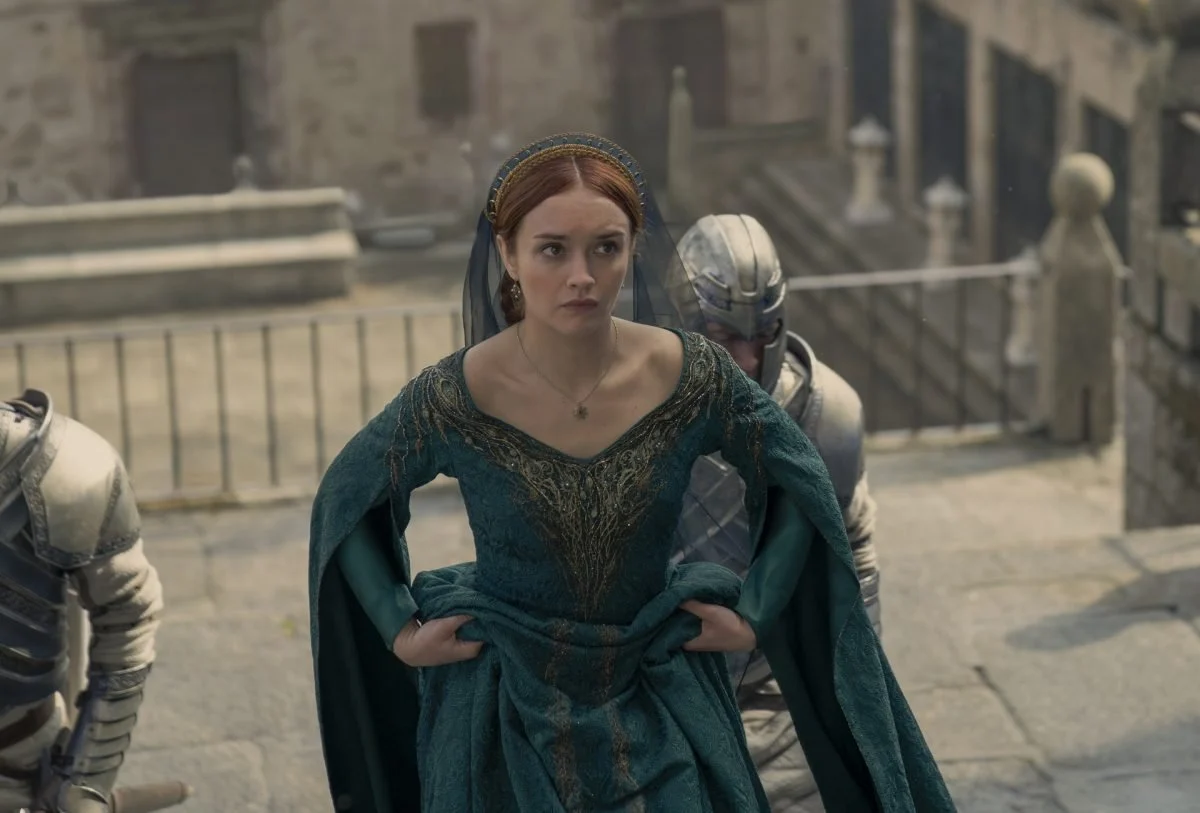
In the high-stakes world of Hollywood casting, the difference between a global franchise phenomenon and a "what-if" moment often comes down to a single afternoon in an audition room. For Olivia Cooke, currently commanding the screen as the complex, embattled Dowager Queen Alicent Hightower in HBO’s House of the Dragon, that "what-if" moment involves one of the most iconic roles in modern cinema history: Rey Skywalker.
During a recent, wide-ranging appearance on Josh Horowitz’s Happy Sad Confused podcast, Cooke offered a refreshingly blunt assessment of her past, revealing that she once vied for the lead role in J.J. Abrams’ Star Wars: The Force Awakens (2015). Her recollection of the event, however, is far from the polished, PR-approved anecdotes often shared by A-list stars. Instead, Cooke offered a raw, self-deprecating look at her earlier career, admitting that her attempt to join the Star Wars universe was, by her own admission, "really bad."
The Audition: A Lesson in Self-Awareness
The Star Wars casting process for The Force Awakens was notoriously secretive and exhaustive. Thousands of actors from across the globe were considered for the role of Rey, the Jakku scavenger who would eventually become the face of the sequel trilogy. Daisy Ridley, who ultimately secured the role, rose to international superstardom following the film’s release in 2015.
For Cooke, the memory of her audition remains vivid, not because of a near-miss, but because of the stark realization that she was simply not the right fit for the material at that stage in her development. "I just wasn’t that kind of an actor at that time," Cooke explained to Horowitz. When pressed on the quality of her performance, she didn’t mince words: "I was sh-t. I was really bad."
This level of professional vulnerability is rare. In an industry that demands constant posturing and unshakeable confidence, Cooke’s willingness to characterize her own performance as poor highlights the massive growth she has undergone over the last decade. At the time of the Force Awakens casting, Cooke was a rising talent, known primarily for her work in projects like Bates Motel. She lacked the expansive range and nuanced control that she would later demonstrate in critically acclaimed features like Sound of Metal and Ready Player One.
Chronology of a Rising Star: From Bates Motel to the Iron Throne
To understand why Cooke’s "bad" audition is so fascinating, one must look at her trajectory. Cooke began her career with a clear trajectory toward prestige television and independent cinema.

- 2013–2017: Cooke gained significant traction as Emma Decody in the A&E series Bates Motel. This role allowed her to hone her ability to portray vulnerability, a trait that would later become a cornerstone of her performance as Alicent Hightower.
- 2014–2015: This period coincided with the Star Wars casting window. While she was gaining industry attention, she was still defining her identity as a performer, largely working within the thriller and horror genres.
- 2018: Cooke broke into the mainstream blockbuster space with Steven Spielberg’s Ready Player One. Her portrayal of Art3mis/Samantha Cook demonstrated her ability to anchor a massive, CGI-heavy production, providing a stark contrast to her earlier, smaller-scale work.
- 2020: The release of Sound of Metal proved to be a turning point. As Lou, a musician struggling with the implications of her partner’s sudden deafness, Cooke delivered a powerhouse performance that showcased a level of emotional depth that silenced any critics who might have doubted her versatility.
- 2022–Present: Cooke ascended to the upper echelon of television acting with her role as Alicent Hightower in House of the Dragon. As the series progressed, her portrayal of a woman trapped in a patriarchal cage, maneuvering through the brutal politics of the Dance of the Dragons, has become the show’s emotional anchor.
Supporting Data: The Evolution of Alicent Hightower
The irony of Cooke’s failed Star Wars audition is that it paved the way for her to inhabit a role arguably far more complex than any character in the Star Wars sequel trilogy. Alicent Hightower is not a hero of the traditional variety; she is a woman of contradictions—pious yet vengeful, protective yet cold, and profoundly lonely.
In the early episodes of House of the Dragon’s third season, viewers are seeing a version of Cooke that is light-years away from the actor who struggled in a casting office a decade ago. Her performance has been defined by subtle shifts in posture, the flickers of repressed rage in her eyes, and an unsettling, palpable tension during her interactions with her children.
One particular scene—a deeply uncomfortable, emotionally fraught interaction with her son—has dominated social media discourse and critical reviews. In an exclusive interview with Nerdist, Cooke discussed the character’s internal landscape, noting that her portrayal of Alicent is built on layers of social expectation and personal trauma. "She’s a woman who has been conditioned to suppress every instinct she has," Cooke explained. "Playing that suppression is often harder than playing the outburst."
Official Responses and Industry Context
The reaction to Cooke’s confession has been largely celebratory among fans and industry analysts. There is a sense of collective relief that she did not land the role of Rey. While Daisy Ridley’s performance as Rey is synonymous with the character’s journey, it is difficult to imagine Cooke, with her specific brand of sharp, character-driven intensity, fitting into the "hero’s journey" archetype of the Star Wars universe.
Industry pundits have pointed to this anecdote as a prime example of "casting serendipity." Often, a "failed" audition is not a sign of lack of talent, but a lack of alignment between the performer’s sensibilities and the project’s requirements. If Cooke had landed the role, her career path would have been fundamentally altered; she likely would not have had the time or the narrative freedom to take on the character-heavy roles that define her resume today.
The Implications: Why Authenticity Matters
The implications of this story are twofold. First, it serves as a powerful reminder of the "imposter syndrome" that exists even at the highest levels of professional acting. By normalizing the "bad audition," Cooke humanizes the process of success, suggesting that even the most celebrated actors have moments where they fail to meet their own standards.

Second, it underscores the importance of roles that allow for complexity. Star Wars is a mythic, archetypal landscape; House of the Dragon is a grounded, Shakespearean tragedy. Cooke’s career is a testament to the fact that an actor’s greatest asset is not their ability to mold themselves into any role, but their ability to find the roles that perfectly align with their specific artistic voice.
As House of the Dragon continues its third season, the audience is treated to a masterclass in acting every Sunday night. Whether she is maneuvering through the corridors of the Red Keep or navigating the fraught dynamics of her own family, Cooke commands the screen with an authority that suggests she is exactly where she needs to be.
Looking Ahead: The Future of Alicent Hightower
As we move deeper into the current season, the stakes for Alicent Hightower are higher than ever. With the civil war within House Targaryen escalating, the character is being pushed to her absolute limit. For the audience, this is the payoff of years of character development.
The transition from a nervous auditioning actor to the centerpiece of the most-watched show on television is a journey of persistence. Cooke’s candidness regarding her past ensures that her audience feels connected to her as a person, not just a performer. It reminds us that behind every regal costume and scripted line, there is a human being who has had to learn, stumble, and grow.
For those who have yet to dive into the latest episodes, the current season of House of the Dragon is available every Sunday at 9 p.m. ET on HBO and Max. It is a spectacle of political intrigue and personal decay, and it features a performance by Olivia Cooke that, unlike her Star Wars audition, is nothing short of transcendent.
In the end, the industry is perhaps better off for that missed opportunity in 2015. We lost a Rey, but in exchange, we gained an Alicent—a character who, thanks to Cooke’s evolved craft, will be remembered as one of the most compelling figures in modern television history. It is a trade that fans of prestige drama are likely very happy to make.


 Siti Muinah
 Azzam Bilal Chamdy