In an era where high-performance computing is often synonymous with the aggressive hum of multi-fan cooling arrays and the rhythmic click of liquid cooling pumps, MonsterLabo has carved out a niche that defies the status quo. The French boutique manufacturer has officially launched the latest iteration of its flagship chassis, "The Beast," via a new Indiegogo campaign. This updated design represents a significant maturation of their fanless cooling philosophy, promising to silence the most powerful hardware currently available to consumers.
By eschewing active fans entirely, MonsterLabo is catering to a specific, discerning segment of the market: audio engineers, content creators, and enthusiasts who demand absolute silence without sacrificing the raw horsepower of top-tier silicon.
Main Facts: The Evolution of The Beast
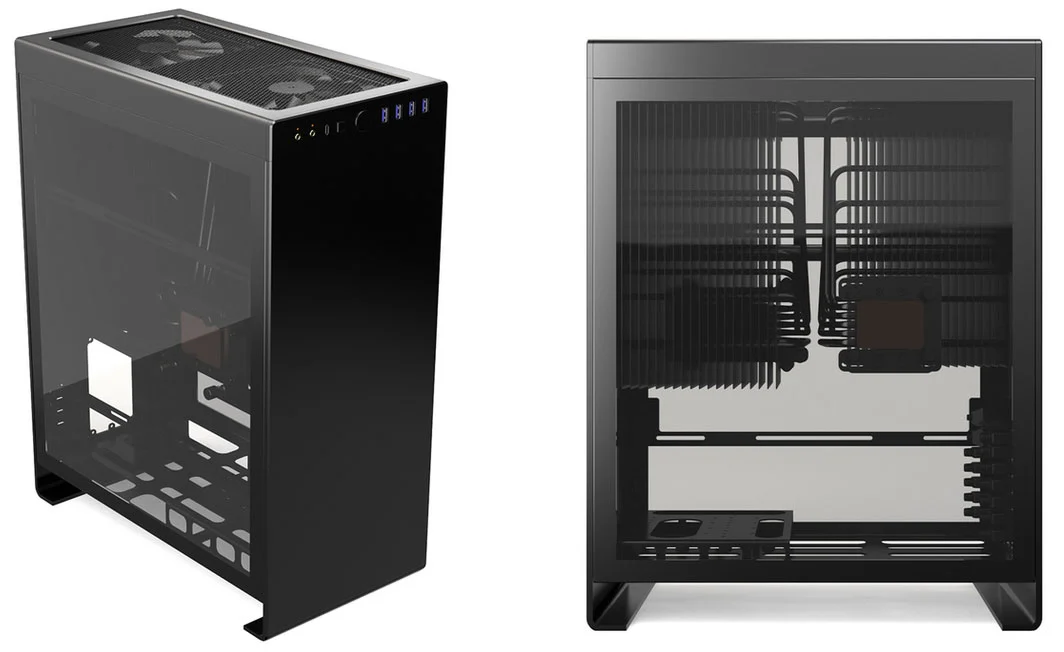
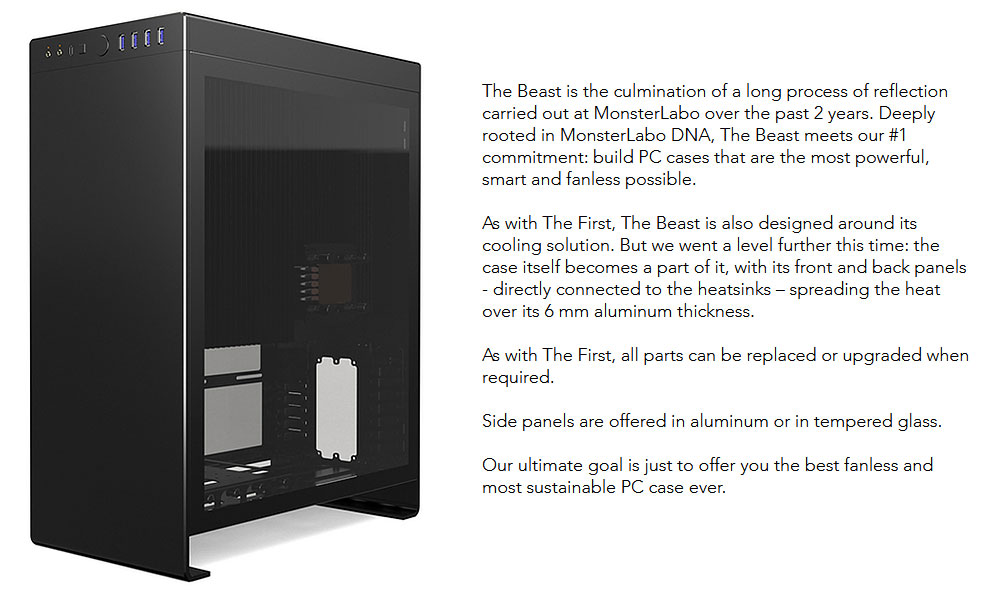
The core of the new campaign is an updated chassis design that offers improved compatibility with an expanded range of modern graphics cards and processors. While the fundamental silhouette of The Beast remains familiar—a massive, industrial-looking monolith—the internal architecture has been refined to better accommodate the ballooning power demands of contemporary high-end GPUs.
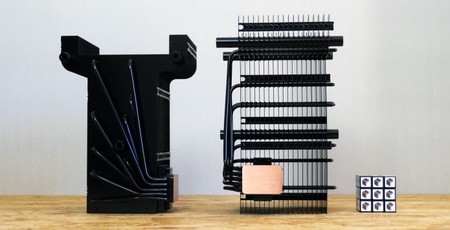
Central to this performance is the upgraded thermal engine, now dubbed "The Heart²." This passive cooling module functions as the heart of the system, consuming nearly half of the chassis’ internal volume. The architecture is split into two primary thermal zones: one dedicated to the CPU and the other to the GPU. By segregating these heat sources, MonsterLabo prevents thermal feedback loops, allowing the massive aluminium fins to dissipate heat efficiently through natural convection.
Furthermore, the new campaign introduces a tier of personalization previously unseen in the fanless market. Backers now have the option to commission custom color finishes, with MonsterLabo handling the painting process in-house. Additionally, the company is offering custom logo engraving services, allowing users to personalize their unit beyond the standard serial and unit numbering found on the rear panel.
A Chronological Perspective: From Concept to Consumer
To understand the significance of this latest launch, one must look back at the trajectory of MonsterLabo’s development. The company first made waves earlier this year, specifically in March, when they demonstrated a prototype of The Beast pushing the limits of passive cooling.
During that demonstration, the system was configured with an AMD Ryzen 3800X and an Nvidia GeForce RTX 3080. The test environment was particularly demanding: running Microsoft Flight Simulator 2020 at 1440p resolution on an ultra-wide display. Despite the intense graphical load, the system performed admirably. The CPU maintained a stable 75°C, while the GPU held steady at 65°C—thermal metrics that would be considered respectable even in some actively cooled air-cooled builds.
Following that successful proof-of-concept, the team shifted their focus toward refinement. The transition from the original design to the new version, featuring The Heart², marks the company’s pivot from experimental prototyping to a scalable, retail-ready product line. With the current Indiegogo campaign, MonsterLabo is attempting to bridge the gap between "niche science project" and "premium consumer hardware."
Supporting Data: Thermal Performance and Engineering
The engineering behind The Heart² remains a subject of intense scrutiny among enthusiasts. While the subcomponents appear similar to the previous generation, the integration of new heat-transfer technologies is where the real innovation lies.
The EKWB Partnership
One of the most critical improvements in this iteration is a strategic collaboration with EK Water Blocks (EKWB). Known primarily for their liquid cooling solutions, EKWB has provided custom-engineered heatspreaders specifically for this build. These are utilized for memory modules and, crucially, for GPUs with a Thermal Design Power (TDP) exceeding 220W. This collaboration is vital because, in a passive system, the contact interface between the component and the heatsink is the single most important variable. By optimizing the surface area and thermal conductivity at these contact points, MonsterLabo has significantly widened the pool of compatible hardware.
Real-World Stress Testing
To gauge the limits of the new system, tech YouTuber Optimum Tech recently documented a build utilizing an Intel i9-10900K. This processor is notorious for its thermal output, yet the system handled it with remarkable stability. Under load, with the CPU running at 4.5GHz and 1.13V across all 10 cores, it peaked at 89°C.
To achieve this, the RTX 3080 was tweaked using MSI Afterburner, applying a slight undervolt and a 150-200MHz reduction in the base clock to maintain temperatures below 80°C. These results underscore a fundamental reality of passive computing: while it can handle high-end hardware, it requires a "tuning-first" approach. Users must be comfortable with undervolting and power-limiting to optimize their specific silicon for the chassis’ thermal ceiling.
Power Delivery
Maintaining a silent system is futile if the power supply creates noise. MonsterLabo recommends pairing The Beast with passive PSUs like the SilverStone NightJar. Furthermore, the selection of the motherboard is paramount; MonsterLabo advises using boards with overspecced Voltage Regulator Modules (VRMs) that feature substantial integrated heatsinks, as these components will be deprived of the airflow typically provided by case fans.
Official Responses and Service Offerings
MonsterLabo has clearly identified that the barrier to entry for fanless computing is not just technical capability, but also the complexity of the build process. To lower this hurdle, the company is offering a variety of service tiers.
For those intimidated by the prospect of assembling a custom passive rig, the company provides pre-built systems starting at €2,850. For customers who prefer to source their own components, MonsterLabo offers a "fanless optimization" assembly service, where their technicians will handle the installation and thermal tuning to ensure the system is optimized for silence.
The pricing structure of the campaign is tiered to reflect production capacity:
- The Early Adopter Tier: Backers can secure a chassis for €790, with units slated for delivery by Christmas.
- The Easter Batch: For those who miss the first wave, the second batch is priced similarly with an estimated delivery in April 2022.
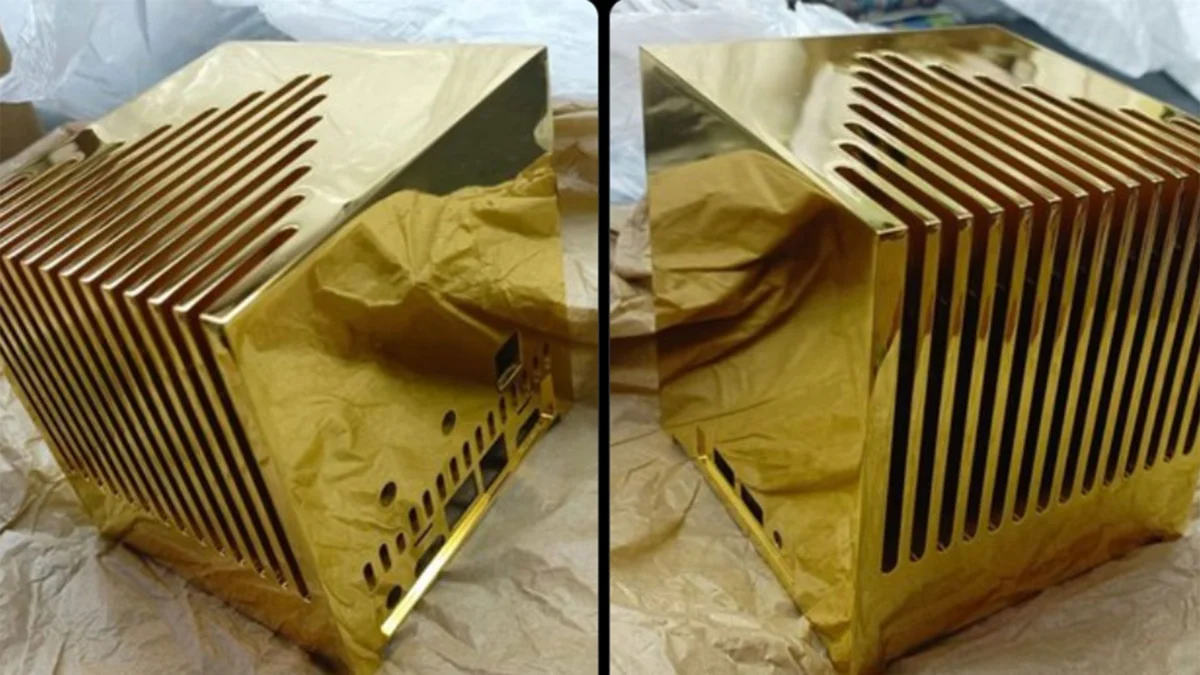
- The Brass Edition: For the true aesthete, the company is offering a "Brass Edition," which carries a premium and is also expected to ship by April.
Implications: The Future of Silent Computing
The launch of the updated Beast is more than just a case release; it is a statement on the sustainability and viability of passive cooling in an era of ever-increasing TDPs. As modern GPUs continue to push past the 300W and 400W thresholds, the challenge for passive designers grows exponentially.
MonsterLabo’s approach—utilizing massive, dedicated thermal mass and strategic partnerships with high-end component manufacturers like EKWB—suggests that silence does not have to come at the cost of performance. However, it does require a shift in consumer behavior. The modern "Beast" user is a builder, a tuner, and a patient observer of thermal dynamics.
If this Indiegogo campaign proves successful, it may push motherboard and GPU manufacturers to consider "passive-friendly" layouts as a standard design metric. As it stands, MonsterLabo remains the primary custodian of high-performance fanless computing, proving that with enough engineering finesse, the most powerful computers can indeed be the quietest. For the audiophile, the dedicated writer, or the professional who needs to hear themselves think, The Beast is not merely a computer case; it is the silent engine of productivity.