

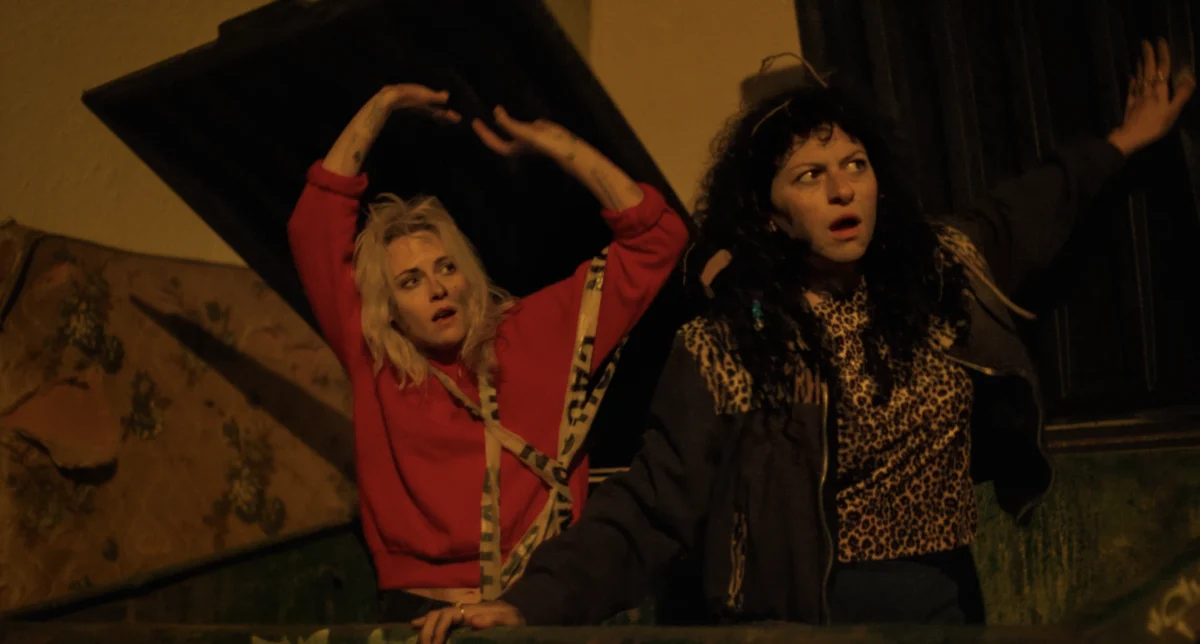
For years, industry pundits have been busy drafting obituaries for the "stoner movie." The logic seemed sound: as cannabis legalization swept across the United States, the transgressive thrill of marijuana culture began to evaporate, leaving behind a cinematic subgenre that some critics felt was destined for the bargain bin of history. However, if the current buzz surrounding Dylan Meyer’s upcoming feature The Wrong Girls is any indication, the reports of the genre’s death have been greatly exaggerated.
Far from a relic, the stoner buddy comedy is undergoing a metamorphosis. With a high-octane blend of mistaken identity, chaotic L.A. geography, and a cast that reads like a “who’s who” of modern comedic royalty, The Wrong Girls is positioning itself as the most significant entry in the genre since the turn of the decade.
The Premise: A Crime-Tinged Odyssey
At its heart, The Wrong Girls is a classic "wrong place, wrong time" narrative, albeit filtered through a hazy, herb-infused lens. The story follows two inseparable, weed-enthusiast friends—played by Kristen Stewart and Alia Shawkat—who inadvertently find themselves caught in a high-stakes criminal web.
The humor, according to early reports, derives from the agonizingly slow realization of their own peril. As they drift through the sun-drenched, palm-lined streets of Los Angeles, they remain blissfully unaware that they are being pursued, leading to a series of comedic misunderstandings that pay homage to the absurdity of the Coen Brothers’ The Big Lebowski. By grounding the stakes in real, palpable danger while maintaining a lighthearted, observational comedic tone, Meyer aims to reclaim the "hangout movie" for a new generation.
A Chronology of Development
The path to the screen for The Wrong Girls has been a journey of passion and persistence.
- The Conceptual Phase: Writer-director Dylan Meyer began drafting the script years ago, with a specific desire to invert the gender dynamics typical of the genre.
- The 2025 Breakthrough: In an exclusive interview with IndieWire in 2025, Kristen Stewart publicly voiced her excitement for the project, noting that the script was a rare find. “Dylan wrote that script years ago, and we are producing it now,” Stewart remarked at the time, noting that the prospect of filming in Los Angeles felt like a "fantasy."
- The Casting Blitz: Throughout 2025, the production team quietly assembled an ensemble cast that would become the envy of any studio. By bringing in stalwarts of the genre like Seth Rogen and Kumail Nanjiani, alongside versatile stars like Lakeith Stanfield, Tony Hale, Zack Fox, Kate McKinnon, and screen legend Geena Davis, the film solidified its status as a must-see event.
- The Final Stretch: Following a rigorous shooting schedule in the streets of Los Angeles, the film entered post-production in late 2025.
- The Theatrical Release: Neon, the studio behind the project, has slated the film for a wide theatrical release on Friday, August 14, 2026.
The Genre Evolution: Beyond the "Boy Movie"
One of the most compelling aspects of The Wrong Girls is the deliberate intention behind its creation. During a Q&A session featured in the film’s press notes, Dylan Meyer addressed the lack of female representation in the stoner buddy subgenre.

"I don’t think there’s a single stoner female buddy movie," Meyer noted. In her research and creative development, she cited a diverse range of influences, including Gregg Araki’s Smiley Face, the anarchic spirit of Beavis and Butt-Head Do America, the nostalgic camaraderie of Romy and Michele’s High School Reunion, and the gritty, cult-classic vibes of Repo Man.
Crucially, Meyer emphasized that she was not interested in simply mimicking existing tropes. "I really related to The Dude [from The Big Lebowski], and I realized there was a lack of female characters like that," Meyer said. "But I didn’t want to make a girl movie that was doing an impression of boy movies. I wanted to make a movie that felt true to the people that were in it and didn’t follow traditional comedic formula because it had to be truly itself."
This distinction is vital. By moving away from the "male-gaze" dominated humor of the 2000s, Meyer is attempting to carve out a new space where the comedy arises from character chemistry rather than the mere presence of the substance itself.
Supporting Data: The All-Star Ensemble
The gravity of the film’s cast suggests that this project holds significant weight within the industry. The ensemble is not merely a collection of cameos; it represents a cross-section of the most influential voices in modern comedy.
- The Leads: Kristen Stewart and Alia Shawkat bring a grounded, lived-in chemistry that serves as the film’s anchor.
- The Genre Veterans: Seth Rogen and Kumail Nanjiani provide a bridge to the established history of the stoner comedy, lending the production a sense of legitimacy and pedigree.
- The Character Actors: The inclusion of Tony Hale, Zack Fox, and Kate McKinnon suggests a script that values sharp, fast-paced dialogue and erratic, unpredictable comedic beats.
- The Icon: The presence of Geena Davis adds an element of gravitas and surprise, signaling that the film has a wider range of tones than the average genre entry.
Industry Implications: Is the Stoner Movie Back?
The release of The Wrong Girls arrives at a pivotal time for the film industry. With the rise of streaming, the mid-budget studio comedy—once the bread and butter of Hollywood—has largely migrated to smaller screens. By securing a wide theatrical release through Neon, The Wrong Girls is attempting to prove that there is still an appetite for big-screen, R-rated, ensemble-driven comedies.
If the film succeeds, it could trigger a "stoner renaissance." The shift in cultural perception regarding marijuana, moving from taboo to commonplace, has paradoxically made the subject matter more fertile for satire. Where previous films relied on the shock value of drug use, modern filmmakers are now free to treat cannabis as a normalized, almost mundane element of life, allowing the comedy to focus on the human dynamics, the social friction, and the absurdity of the situations the characters find themselves in.

Cultural Commentary and Reception
Critics and audiences are already drawing parallels between The Wrong Girls and the "hangout" films of the 1990s. The "hangout movie"—a film where the plot is secondary to the chemistry of the leads—relies heavily on the audience wanting to spend time with the characters. Stewart and Shawkat’s partnership is expected to be the defining element of the film, providing a sense of authenticity that is often missing in high-concept comedies.
Moreover, the decision to set the film firmly in Los Angeles adds another layer to the narrative. L.A. is a city with a long, storied history in cinema, and by utilizing it as both a backdrop and a character, Meyer is tapping into a long lineage of Hollywood crime-comedies. The city’s sprawl, its traffic, and its specific cultural eccentricities provide the perfect crucible for the kind of chaotic, meandering journey the characters undertake.
A Vision for the Future
As we look toward the August 14 release, the excitement surrounding The Wrong Girls suggests that audiences are hungry for films that don’t take themselves too seriously. In an era often defined by heavy franchises and high-concept sci-fi, a simple, well-executed buddy comedy—one that understands its own history while carving out its own identity—is a refreshing prospect.
Dylan Meyer has managed to assemble a team that respects the genre’s past while refusing to be bound by its limitations. By centering female perspectives, elevating the script’s intellectual ambition, and leaning into a stellar ensemble, The Wrong Girls is poised to be one of the most talked-about films of the late summer.
Whether or not the "stoner movie" is truly dead or merely dormant is a question for the historians. For now, the audience’s task is simple: head to the theater, grab a seat, and prepare for a wild, weed-fueled ride through the heart of Los Angeles. If the early buzz is to be believed, it will be a trip worth taking.










