The music world is in mourning today following the news that Bonnie Tyler, the unmistakable, gravel-voiced icon of the 1980s and a global symbol of the power ballad, has passed away. She was 75.
For decades, Tyler’s music transcended mere radio play; it became woven into the fabric of popular culture, providing the dramatic soundtrack to pivotal moments in film, television, and the collective memory of millions. From the operatic intensity of "Total Eclipse of the Heart" to the pulse-pounding anthem "Holding Out for a Hero," Tyler’s legacy is defined by a rare combination of raw vocal power and unashamed, theatrical emotionality. Her passing marks the end of a singular era in music, leaving behind a void that resonates far beyond the charts.
The Circumstances of a Tragic Loss
The announcement of Tyler’s death was confirmed via a statement released by her family and management team. The singer had been battling a serious health condition in recent months. According to the official statement, Tyler passed away in a hospital in Portugal, where she had been receiving treatment.
"Bonnie’s family and team are heartbroken to announce that Bonnie unexpectedly passed away last night in a hospital in Portugal as a result of the illness that she was being treated for," the statement read. "We will issue a further statement shortly, but for now, we ask for privacy to deal with this tragedy."
Reports indicate that her final days were marked by a difficult medical struggle. Tyler had been in a prolonged medically induced coma following emergency surgery necessitated by a perforated intestine. Despite the best efforts of the medical team, the complications proved insurmountable, leading to her peaceful, if premature, departure.

A Life of Song: A Chronological Journey
Born Gaynor Hopkins in Skewen, Wales, in 1951, she would eventually adopt the stage name Bonnie Tyler, a moniker that would become synonymous with a distinctively raspy, soulful delivery. Her journey to stardom was not instantaneous; it was the result of grit, vocal resilience, and a talent for identifying the kind of anthemic tracks that define a decade.
The 1970s: The Rise of a Star
Tyler first caught the public’s attention in the mid-1970s. Her breakthrough came with the 1977 single "Lost in France," which charted well in the UK. However, it was the 1978 hit "It’s a Heartache" that launched her into the international stratosphere. The song’s weary, world-worn delivery resonated with audiences worldwide, establishing the template for her future success. During this time, Tyler underwent surgery on her vocal cords, which—ironically—resulted in the permanent, signature rasp that would become her most recognizable trait.
The 1980s: The Power Ballad Zenith
The 1980s belonged to the power ballad, and Bonnie Tyler was its undisputed monarch. Collaborating with producer Jim Steinman, she released "Total Eclipse of the Heart" in 1983. The track became a global phenomenon, topping the charts in the UK, the US, and across the globe. It was more than a song; it was a mini-opera, complete with dramatic crescendos and a music video that remains a piece of surrealist pop-culture history.
In 1984, she contributed "Holding Out for a Hero" to the Footloose soundtrack. The track became an enduring staple of cinema, appearing in everything from the Shrek franchise to the recent hits like Stranger Things.
The Modern Era: An Enduring Legacy
Tyler never truly stepped away from the spotlight. Throughout the 2000s and 2010s, she continued to tour, perform, and record. She famously represented the UK in the 2013 Eurovision Song Contest with the song "Believe in Me," reminding a new generation of listeners of the power she still commanded. As she noted in recent interviews with the BBC, her connection to her audience never wavered. "I never get tired of singing [my hits]," she told the broadcaster. "I love it because everyone can’t wait to sing it."

Artistic Impact and Cultural Footprint
To analyze the impact of Bonnie Tyler is to analyze the evolution of the modern music video and the power ballad. "Total Eclipse of the Heart" serves as the definitive case study.
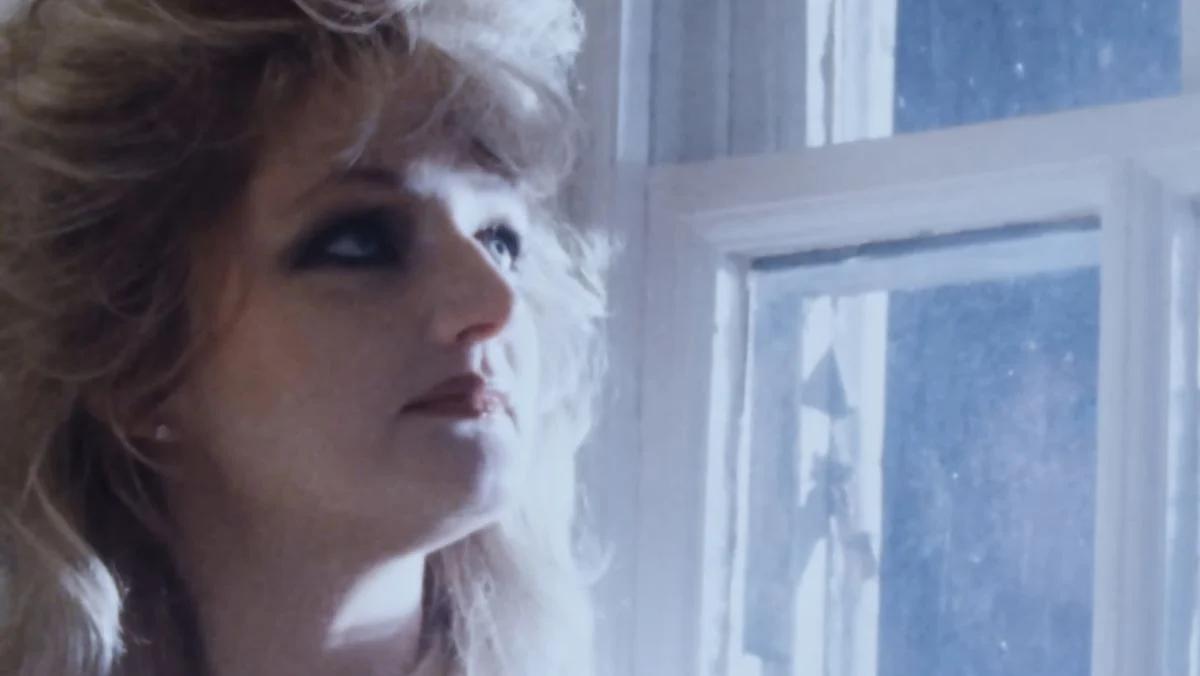
The music video—a masterclass in 80s aesthetic—featured dramatic lighting, billowing fabrics, falling chandeliers, and a troupe of male dancers who seemed to be trapped in a gothic, supernatural boarding school. It was bold, it was confusing, and it was absolutely brilliant. It pushed the boundaries of what a music video could be, shifting from simple performance clips to cinematic, narrative-driven storytelling.
Beyond the visuals, Tyler’s vocal style changed the industry. She proved that technical perfection was secondary to "lived-in" emotion. Her rasp told a story of heartbreak, endurance, and hope that resonated with listeners in a way that "cleaner" pop vocals often failed to do. She provided the definitive anthems for breakups, reunions, and late-night karaoke sessions, turning private pain into communal catharsis.
A Legacy of Resilience and Performance
The data regarding her career trajectory reflects a rare level of consistency. While many artists of the 80s saw their popularity wane with the turn of the century, Tyler maintained a steady touring schedule, proving that her appeal was not tied to a specific technological or stylistic moment, but to the visceral quality of her voice.
Her influence can be felt in the work of subsequent generations of artists who embraced the "theatrical pop" genre. Whether it is the bombastic production styles of modern pop stars or the cinematic use of music in contemporary television, the DNA of a Bonnie Tyler performance is often present. She normalized the idea that music should be big, loud, and unapologetically dramatic.

Official Responses and Public Outpouring
Since the news of her passing broke, tributes have flooded social media from fellow musicians, industry figures, and fans worldwide.
"The world has lost a titan of the stage," wrote one prominent music critic. "Bonnie Tyler didn’t just sing songs; she lived them. Her voice was a map of every heartbreak we’ve ever known."
The sentiment shared by her family—that she was surrounded by love despite the tragic circumstances of her illness—has provided some small measure of comfort to her fan base. The outpouring of grief serves as a testament to the fact that Tyler was not merely a celebrity, but a soundtrack to the lives of the people who grew up with her music.
Looking Forward: The End of an Era
As we reflect on the life and career of Bonnie Tyler, it is difficult to imagine the landscape of pop music without her. She was a bridge between the rock-infused country of the 70s and the high-production spectacle of the 80s.
Her death leaves a void, but her music remains omnipresent. It is in the movies we watch, the karaoke bars we frequent, and the playlists we curate when we need a reminder of what it feels like to feel everything at once.

The "Total Eclipse" may have reached its conclusion, but the light Bonnie Tyler cast on the world of music remains undimmed. She gave generations the permission to be dramatic, to be loud, and to sing their hearts out, regardless of who is listening. For that, and for the countless hours of comfort her voice provided, the world remains forever in her debt.
Rest in power, Bonnie. You were the hero we needed, and the one we will continue to hold out for in every power ballad that follows.