Dwi Wanna
The digital landscape is undergoing a profound regulatory transformation as the European Commission moves to formalize stringent restrictions on social media access for young users. Driven by rising concerns over mental health, addiction, and the unchecked influence of algorithmic content, European Commission President Ursula von der Leyen has signaled that the era of "unrestricted access" for minors is coming to an end.
This shift marks a significant escalation in the global debate regarding the responsibility of Big Tech platforms to prioritize the psychosocial wellbeing of children over engagement-driven business models. As the EU develops a centralized age-verification framework, the continent finds itself at a crossroads between technological autonomy and protective oversight.
The Core Mandate: Reclaiming the Digital Childhood
The European Commission’s recent initiative is not merely a technical adjustment; it is a fundamental shift in philosophy. President von der Leyen’s rhetoric has been uncompromising, characterizing the current status quo as a systemic failure that has left children vulnerable to addiction and psychological distress.
The central thesis of the Commission’s position is that the burden of safety should no longer rest solely on parents or individual users. Instead, the focus has shifted toward the architecture of the platforms themselves. As von der Leyen famously remarked in her State of the Union address, "Parents, not algorithms, should be raising our children."
The proposed restrictions aim to establish a uniform, enforceable age threshold across all EU member states. While the debate currently oscillates between an under-16 and an under-15 cutoff, the objective remains clear: to dismantle the frictionless access that has allowed children to spend an average of four to six hours daily on screens—amounting to an estimated 20 years of a person’s life spent in digital environments.
A Chronology of Regulatory Escalation
The road to these proposed restrictions has been paved by years of mounting evidence and public pressure.
- September 2025: In a pivotal State of the Union address, President von der Leyen announced the formation of a specialized expert panel tasked with auditing the impacts of social media on European youth. This announcement drew direct inspiration from the Australian model, signaling a willingness to look beyond conventional regulatory boundaries.
- Late 2025 – Early 2026: The expert panel began analyzing platform design, algorithmic influence, and the efficacy of parental control tools. Their preliminary findings served as the foundation for the current legislative discourse.
- March 2026: The European Commission officially released its initial response to the investigation, confirming that the EU would pursue a standardized age-verification solution. This announcement transformed the discussion from theoretical concern into concrete policy implementation.
- Ongoing (2026): Member states have begun debating the exact age threshold. While the Commission leans toward 16, a vocal minority of nations is pushing for 15, reflecting the difficulty of achieving consensus across diverse cultural and legal landscapes.
Supporting Data: The Case for Intervention
The urgency of the Commission’s actions is underscored by sobering statistical evidence. The data provided by the European Commission highlights a "digital epidemic" that extends across the continent:
- Time Consumption: Young people spend between four and six hours daily on screen-based social media consumption. Over the course of a youth, this represents an enormous portion of developmental time—nearly two decades.
- Psychosocial Impact: Nearly 60% of young children across Europe have reported experiencing emotional or psychosocial problems linked to their online activity. These issues range from anxiety and body dysmorphia to cyberbullying and sleep deprivation.
- Algorithmic Design: The Commission’s findings suggest that social media apps are not merely passive platforms but are active, designed ecosystems that prioritize addictive behaviors, often at the direct expense of child development.
These data points serve as the justification for the EU’s proposed "age-verification app." By moving away from self-declared ages—which are easily bypassed—to a more robust, standardized identity verification, the EU hopes to create a "digital gate" that is significantly harder to circumvent than existing systems.
Official Responses and Stakeholder Perspectives
The discourse surrounding these measures has drawn commentary from various sectors, including policymakers, child advocacy groups, and tech industry representatives.
The Commission’s Stance
President von der Leyen has been the primary voice of this movement. Her focus is on the distinction between the right to access the internet and the right to safety. She emphasizes that the policy is not about banning children from the internet, but rather about ensuring that social media companies do not have "unrestricted access" to children.
The Tech Industry’s Dilemma
Big Tech companies have largely responded with caution. While publicly stating a commitment to child safety, firms have historically argued that age verification is a technical and privacy-related minefield. There is a tension between the need for verification and the European Union’s stringent GDPR (General Data Protection Regulation) laws, which generally discourage the collection of excessive personal data. The Commission insists, however, that its new verification app will solve this by providing a privacy-preserving way to confirm age without storing unnecessary, sensitive information.
The Experts’ Skepticism
Not all observers are convinced. Critics point out that "digital workarounds" are inherent to the experience of the younger generation. Many experts argue that banning platforms will only force children toward darker, less regulated corners of the internet—or encourage the use of VPNs and proxy services to bypass the age gate entirely.
Global Context: A Domino Effect of Restrictions
The European Union is not acting in a vacuum. The move toward age-based restrictions is part of a broader, global trend:
- Australia: As the primary inspiration for the EU’s model, Australia has already enacted a ban on social media for those under 16. However, early reports from the region are cautionary; data suggests that nearly 70% of teens have found ways to circumvent the checks, proving that policy implementation is only half the battle.
- The United Kingdom: The U.K. has committed to a similar under-16 ban scheduled for implementation next year. Their approach is being closely monitored by Brussels to see if the U.K. can successfully navigate the technical hurdles that tripped up Australian regulators.
- Turkey: Turkey has already implemented a ban for users under the age of 15, providing a case study in how such policies function in non-Western democratic contexts.
The success of these regional bans remains a point of intense academic debate. The overarching question is whether a legislative "ban" can ever be truly effective in a borderless digital environment.
Implications: The Future of Digital Governance
The implications of the European Commission’s direction are far-reaching. If the EU succeeds in implementing a robust age-verification system, it will likely set a new global standard for digital safety, forcing social media giants to fundamentally re-engineer their products for the European market.
1. Shift in Platform Design
If platforms are forced to exclude minors, the "youth market" for major apps may essentially disappear, or at the very least, be siloed. This could lead to a fragmented internet where "age-appropriate" versions of apps become the norm, rather than the exception.
2. Legal and Ethical Precedent
By taking a stand, the EU is challenging the long-standing belief that the internet is a space that should remain largely self-regulated. This reinforces the "Brussels Effect," where European regulation becomes the de facto global baseline for tech companies that wish to maintain access to the European market.
3. The Parental Role
Ultimately, the Commission’s goal is to empower parents. By creating a standardized, institutionalized barrier, the EU hopes to reduce the "arms race" between parents and platforms. Instead of parents fighting a losing battle against sophisticated algorithms, the law provides a defensive perimeter that protects the family unit.
Conclusion: A Work in Progress
As the European Commission moves forward, the primary challenge will be balancing the desire for safety with the reality of digital persistence. The data is clear: the current environment is causing tangible harm to a generation. However, the solution—a combination of age-verification technology and legislative restriction—remains an untested, albeit bold, experiment.
Whether this approach will effectively limit "mental harm, addiction, and misery," as President von der Leyen hopes, or whether it will simply drive youth behavior deeper underground, remains to be seen. What is certain is that the age of the "Wild West" for social media is drawing to a close. The European Union has decided that the cost of inaction is simply too high, and they are prepared to rewrite the rules of digital engagement to ensure the next generation is shielded from the consequences of a connected, yet unregulated, world.


 Nana Wu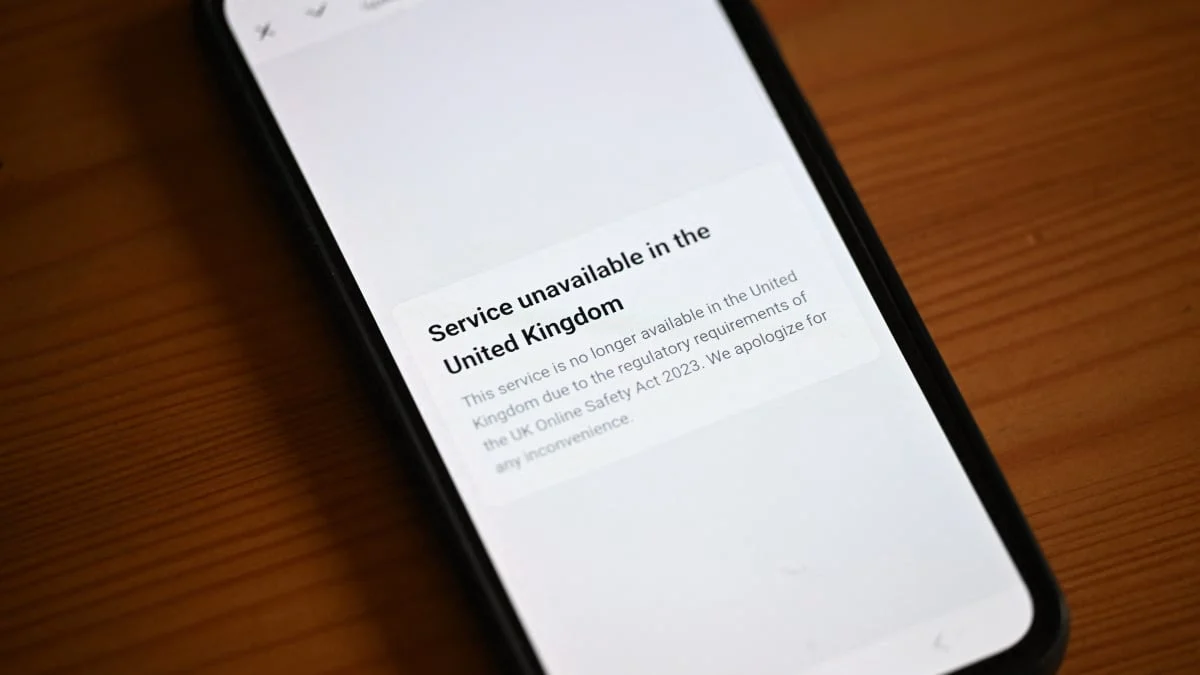
 Ammar Sabilarrohman