

A Star-Studded Resistance: Channel 4’s Ambitious New Thriller
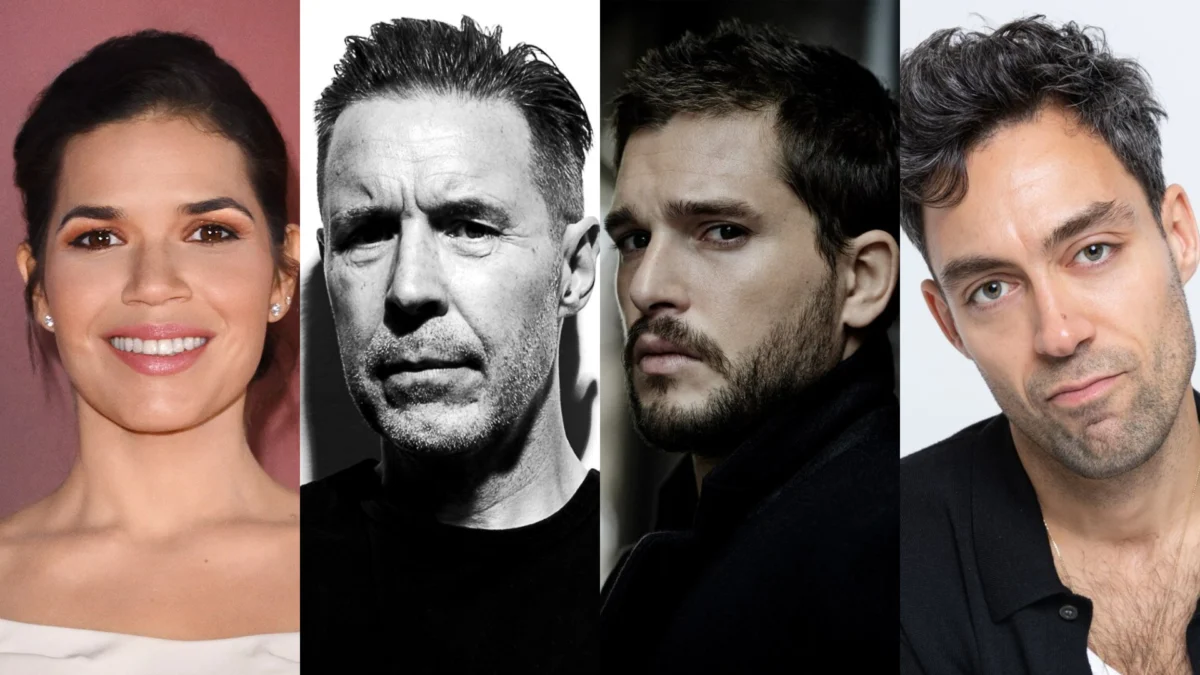
In a television landscape currently dominated by reboots and franchise expansions, Channel 4 has announced a project of staggering ambition and thematic weight. Army of Shadows, a tense, propulsive thriller, has officially commenced production, boasting a cast that reads like a who’s-who of prestige drama. America Ferrera (Barbie), Paddy Considine (House of the Dragon), Kit Harington (Game of Thrones), and Alex Hassell (Rivals) are set to lead this reimagining of a seminal historical narrative.
The series, which is currently filming across a sprawling backdrop of Manchester, Liverpool, London, and Paris, is the brainchild of BAFTA-winning writer Ronan Bennett. Known for his work on the gripping The Day of the Jackal and MobLand, Bennett has crafted a narrative that shifts the historical focus of the source material from Nazi-occupied France to a harrowing, alternate-reality Great Britain.
The Source Material: From History to Hypothetical
To understand the weight of Army of Shadows, one must first acknowledge its pedigree. The series is inspired by Jean-Pierre Melville’s 1969 cinematic masterpiece and the Joseph Kessel book of the same name. Both works served as definitive, unflinching portraits of the French Resistance—the shadowy, perilous, and often tragic efforts of ordinary citizens to dismantle the Nazi occupation from within.
Bennett’s adaptation, however, poses a chilling "what if" question: What if the occupation happened in Britain? The series has been developed in close cooperation with the Melville family and the Kessel estate, ensuring that the spirit of the original work remains intact even as the geography and political context are transposed.
The plot synopsis offers a haunting vision of a compromised Britain: "Britain looks almost normal, but the flags are different, the news is careful, and nobody says certain things out loud anymore. But everyone can feel it." This atmosphere of creeping dread provides the foundation for a story about the cost of conscience.
Chronology and Production Scope
The journey to bring Army of Shadows to the screen has been a meticulous process of development, involving heavy investment from StudioCanal and Two Cities Television. Following the greenlight from Canal+, the production team moved quickly to secure key filming locations that could represent both the "normal" and the "occupied" faces of the UK and France.
Production began recently, with the crew navigating a complex logistical map that spans several major European cities. By filming in Manchester and Liverpool, the production aims to capture the industrial and architectural grit necessary to portray a state under the boot of an authoritarian regime. The shift to London and Paris suggests a narrative that moves between the centers of power and the underground networks of the resistance.
The production is expected to span several months, with a post-production phase that will likely focus on the high-stakes tension inherent in the script. With director Lisa Gunning at the helm, the series is positioning itself as a visual and narrative powerhouse.
Character Dynamics and the Resistance Network
At the heart of the story is the formation of a clandestine network. The narrative centers on a former soldier, known only as "Berry," who acts as the architect of this secret resistance. Berry’s philosophy—"don’t act before you’re ready"—sets the tone for a series that eschews mindless action in favor of methodical, dangerous sabotage.
The network is comprised of "ordinary people with ordinary lives," a deliberate creative choice that serves to ground the high-concept premise. The ensemble includes:
- A Soldier: The tactical backbone of the resistance.
- A Student: Representing the radicalization of youth under oppression.
- A Radiographer: Providing the technical, behind-the-scenes support necessary for survival.
- A Journalist: Someone capable of navigating the propaganda-heavy landscape of the state.
The tension is ratcheted up by the introduction of an American operative named Jessie, played by America Ferrera. Described as being "very, very good at her job," Jessie represents the international dimension of the struggle. Her presence raises questions about foreign intervention, the motivations of global powers, and the moral ambiguity of an operative whose loyalties may not be as clear as they first appear.
Opposing them is the state—an entity with "unlimited reach"—and a minister committed to maintaining order at any cost. This dynamic ensures that Army of Shadows is not merely a story of heroes versus villains, but a complex study of the mechanisms of control and the human cost of choosing to resist.
Official Responses and Creative Vision
The leadership at Channel 4 has high expectations for the project. Gwawr Lloyd, the network’s interim head of drama, has been vocal about why this project fits the channel’s specific brand of provocative, high-stakes storytelling.
"Ronan Bennett has created a gripping, provocative and action-packed drama that feels both epic in scale and strikingly relevant," Lloyd stated. "The series asks powerful questions about freedom, resistance, and the choices people make when democracy is under threat. With a stellar cast lined up under the direction of Lisa Gunning, this is exactly the kind of thought-provoking and high-stakes drama that Channel 4 looks to bring to our viewers."
The collaborative nature of the production, involving the support of the Kessel estate—which is controlled by the Irish Red Cross—adds a layer of cultural legitimacy to the series. It is not a casual remake, but an intentional dialogue with the history of European resistance movements.
Implications: Why This Story Matters Now
In an era where political instability and the erosion of democratic norms are global concerns, the themes explored in Army of Shadows resonate with uncomfortable precision. By placing the resistance in a modern or near-modern British context, the show forces the audience to confront the fragility of their own societal structures.
The series is poised to become a significant cultural touchstone for several reasons:
- The "Normalcy" Trap: The narrative highlights how quickly a society can slip into authoritarianism under the guise of "normalcy." This serves as a cautionary tale about complacency.
- The Cost of Resistance: Unlike traditional action thrillers, Army of Shadows focuses on the cost of resistance. It suggests that once the decision to fight back is made, there is no return to a normal life. The irreversible nature of these choices is a central dramatic engine.
- Global Reach: The commission by Canal+ to distribute the show across over 50 countries in Europe, Africa, and Asia demonstrates the universal appeal of the subject matter. The resistance against occupation is a historical trope that continues to find fresh urgency in modern geopolitics.
- Star Power and Prestige: By casting actors of the caliber of America Ferrera and Kit Harington, Channel 4 is signaling that this is "event television." The investment in acting talent suggests that the emotional and psychological character work will be just as rigorous as the political commentary.
Conclusion: A New Standard for Political Thrillers
As production continues, anticipation for Army of Shadows will undoubtedly grow. The series represents a bold step forward for Channel 4 and a significant creative risk for all involved. By blending the historical gravitas of Melville’s work with the modern anxiety of a globalized world, Bennett and his team are creating something that feels both like a tribute to the past and a warning for the future.
If the project succeeds, it will not only serve as a benchmark for high-end television production but also as a reminder of the power of storytelling to interrogate the structures of power. Army of Shadows asks a question that is as uncomfortable as it is necessary: If your country were occupied, what would you do? As the cameras roll across Europe, the world waits to see how the resistance takes shape.










