The legacy of the Universal Monsters is a cornerstone of cinematic horror, a pantheon of icons that have haunted the collective imagination for nearly a century. When Skybound Entertainment and Image Comics announced their collaborative initiative to reimagine these titans, expectations were high. However, the sophomore issue of Universal Monsters: Blood of the Wolf Man has proven to be more than just a nostalgic retread; it is a sophisticated exploration of trauma, identity, and the monstrous nature of human lineage.
Writer Joshua Williamson and artist Leomacs have crafted a narrative that prioritizes psychological depth over mere jump scares, positioning Adam Jaeger not as a helpless victim of a supernatural curse, but as an active—if tormented—participant in his own unraveling.
The Core Conflict: Adam Jaeger’s Descent
The central premise of Blood of the Wolf Man #2 centers on the aftermath of the gruesome massacre established in the series opener. Adam Jaeger, the story’s protagonist, finds himself in the crosshairs of a mystery that is as much about his own fractured memory as it is about the blood-drenched reality of his condition.
The narrative hook is visceral: Adam discovers a literal bloody eyeball, a tangible piece of evidence from a night he cannot fully recall. This physical artifact serves as the catalyst for his investigation. Unlike traditional werewolf tropes where the protagonist spends the majority of the story in a state of reactive terror, Adam is relentlessly proactive. He ignores his father’s attempts to sweep the incident under the rug with hush money and forced therapy, opting instead to peel back the layers of his own history.

This sets up a compelling tension between the two generations of Jaegers. While Adam seeks the truth, his father acts as a gatekeeper, obsessed with containment and reputation. The conflict is not just between a man and a monster, but between the desire for transparency and the suffocating weight of family secrets.
Chronology and Narrative Progression
The pacing of the second issue allows for a deeper dive into the "why" and "how" of Adam’s transformation. Through careful narrative structuring, Williamson provides glimpses into Adam’s childhood, revealing an early traumatic event that serves as the bedrock for the horror to follow.
- The Incident: The debut issue established the immediate gore and the "massacre" that frames the series.
- The Investigation: In issue #2, we see the police pressure mounting. Two detectives are now actively pursuing the case, viewing Adam as their primary person of interest. This introduces a "ticking clock" element, as Adam must solve the mystery of his own condition before the authorities solve the mystery of the murders.
- The Psychological Deep Dive: The issue pivots to the past, examining the fate of Adam’s mother and the disappearance of his brother. These revelations do not slow the plot; rather, they provide the necessary context to explain why Adam’s father is so desperate to maintain a facade of normalcy.
By interweaving these flashbacks with the present-day investigation, the creative team keeps the reader off-balance, mirroring Adam’s own disorientation as he struggles to reconcile his domestic upbringing with the predatory instincts currently clawing at his psyche.
Artistic Mastery: The Visual Language of Horror
If the narrative is the skeleton of Blood of the Wolf Man, the artwork is its pulsing, raw tissue. Leomacs’ visual approach is nothing short of masterful, particularly in the way he depicts the duality of the werewolf experience.
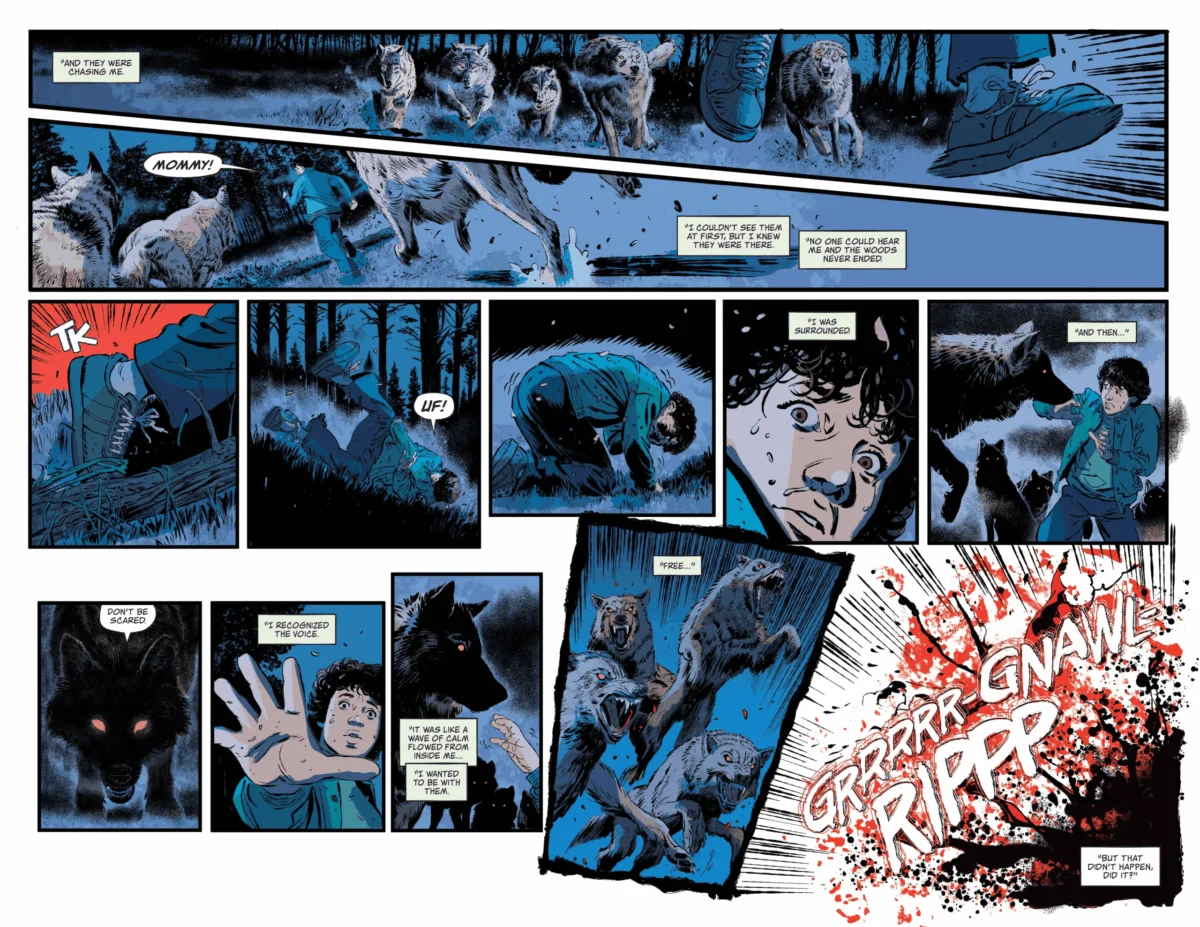
A standout sequence in the issue involves a recurring nightmare. Leomacs avoids the trap of explicit, wall-to-wall gore, choosing instead to lean into the surreal and the unsettling. By utilizing splash pages where the wolves blend seamlessly into the shadows, the artist creates a sense of predatory inevitability. The focus on Adam’s face—frozen in a mask of primal fear—contrasts sharply with the glowing, golden eyes of the pack, emphasizing the isolation of the victim.
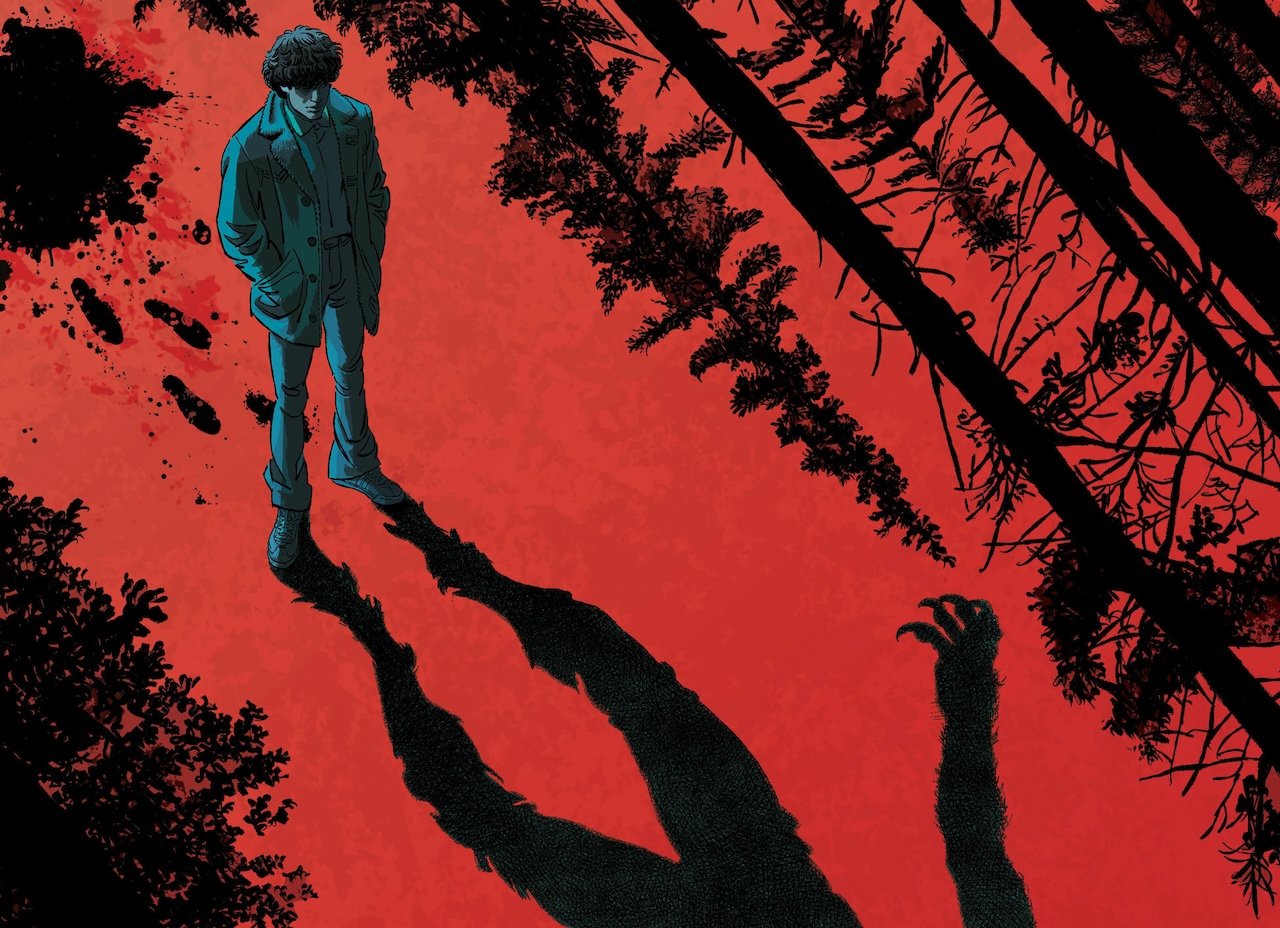
Complementing this, colorist Pip Martin employs a strategic palette that dictates the mood of every scene. The world is primarily rendered in "cold blues," a stylistic choice that emphasizes the isolation of the night and the clinical, lonely nature of Adam’s journey. This monochromatic gloom is periodically shattered by "blood red" accents, which appear with surgical precision during moments of violence. This contrast creates a visceral, jarring experience for the reader, ensuring that when the monster is revealed or the gore is presented, it feels earned and genuinely alarming.
Supporting Data: The Evolution of the Werewolf Genre
The "two wolves" metaphor—the idea that we all have a dark and light side, and the one that wins is the one we feed—is a well-worn trope in literature. However, Blood of the Wolf Man updates this for a modern audience by questioning the agency of the "feeder."
In traditional folklore, the werewolf is often an external force—a curse bestowed by a bite or a bloodline. Here, the internal struggle is portrayed as a systemic failure of family and memory. By focusing on the "sickly" or "weak" nature of Adam as a facade, the book challenges the reader to redefine strength. Is it the strength to hold back the beast, or the strength to confront the horrors of one’s own lineage?

This series fits into a growing trend of "prestige horror comics" that prioritize character work. Much like the recent resurgence of horror in independent film, Williamson and Leomacs are stripping away the kitsch of the Universal Monsters to find the raw, human anxiety underneath.
Implications for Future Issues
The second issue leaves us with several critical questions that promise to drive the remainder of the series:
- The Father’s Role: Is he merely a protector, or is he complicit in the creation of the beast?
- The Detectives: How will the introduction of law enforcement complicate Adam’s attempt to self-diagnose and cure his condition?
- The Nature of the Beast: Is the wolf an entity, a disease, or a manifestation of the trauma that the Jaeger family has hidden for generations?
The implications are clear: the series is moving toward a collision between the mundane world of law and order and the ancient, primal reality of the werewolf. The "sophomore slump" is a common concern in four-issue limited series, but Blood of the Wolf Man #2 avoids this entirely by raising the stakes and expanding the scope of the mystery.
Conclusion: A Deep Dive into the Dark
Universal Monsters: Blood of the Wolf Man #2 is a triumph of atmospheric storytelling. By focusing on the internal struggle of Adam Jaeger, the creative team has elevated this book from a simple creature feature to a profound study of inherited trauma.

The interplay between Williamson’s sharp, inquisitive script and the haunting, color-conscious art of Leomacs and Pip Martin creates a reading experience that is both intellectually engaging and deeply unnerving. As the series progresses, the primary question—"Is he strong enough to triumph over the wolf within?"—takes on a double meaning. It refers not only to the physical transformation but to the psychological battle of accepting one’s history.
For fans of the Universal Monsters, this series is a vital reminder of why these creatures have endured for so long. They are mirrors of our own darkest impulses, and in the hands of creators willing to explore those depths, they remain as dangerous and compelling as ever. The stage is set for a high-stakes finale, and if the first two issues are any indication, the descent into the darkness of the Jaeger family history will be as harrowing as it is essential.