

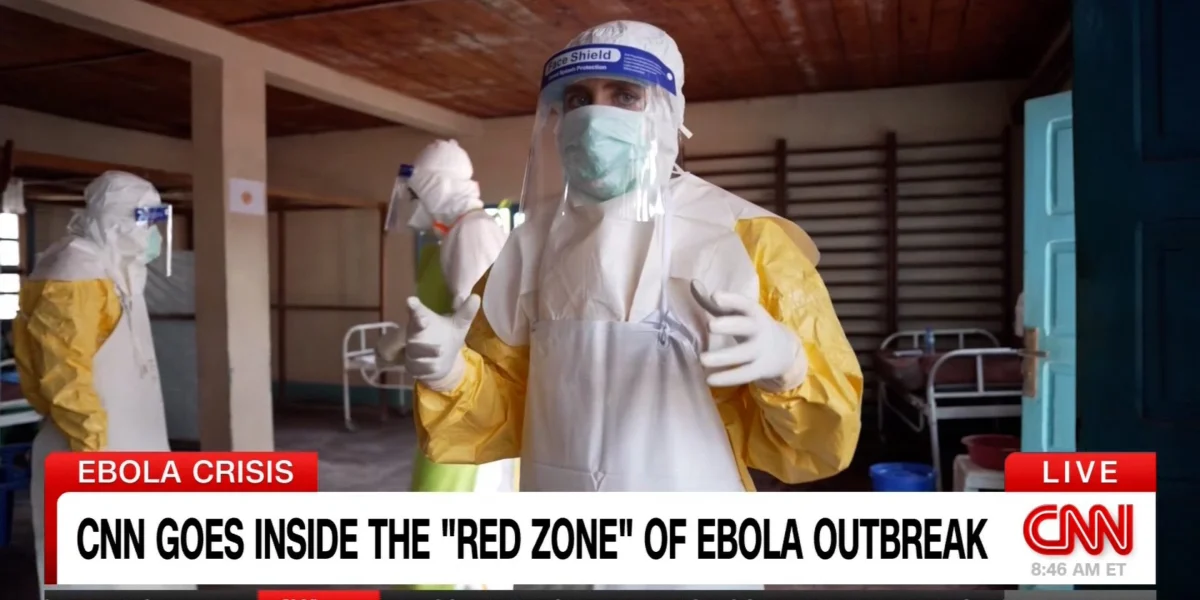
In the remote, gold-rich provinces of the Democratic Republic of Congo (DRC), a familiar and terrifying specter has returned. For the past several days, CNN’s chief international correspondent, Clarissa Ward, has been on the ground in Bunia—the capital of the Ituri Province—providing a harrowing, firsthand account of the latest Ebola outbreak. As the only television news organization granted access to this high-stakes medical frontline, Ward’s reporting offers a rare glimpse into the "red zones" where the battle for survival is waged daily.
With the CDC reporting 363 confirmed cases and 62 confirmed deaths, the situation in eastern Congo is at a critical juncture. The outbreak, characterized by a fragile interplay of fear, cultural tradition, and exhausted medical infrastructure, has once again tested the resilience of a population already hardened by decades of instability.
The Epicenter: A Chronology of the Crisis
The current outbreak did not materialize in a vacuum. It began in the remote, rugged terrain of the Mongbwalu gold-mining region. In her latest dispatch, Ward traveled to this isolated area, which is widely believed to be the "patient zero" site for the current cluster.
The timeline of the crisis is marked by the lag between the initial infection and the international realization of the threat. Local officials in Mongbwalu have faced intense scrutiny regarding their transparency. During her investigation, Ward spoke with the town’s mayor, who revealed the timeline of when he first became aware of the initial cases. The delay in reporting, compounded by a deep-seated skepticism among local residents toward external aid workers, has created a significant hurdle for containment efforts.
For the international media, reaching this epicenter is a logistical odyssey. Ward described a grueling, week-long process of securing the necessary diplomatic and health clearances from the DRC’s Ministry of Communication and Ministry of Health. The journey involved a multi-leg flight from London to Kinshasa, followed by a United Nations-chartered flight to the capital of Ituri, Bunia. This bureaucratic friction explains why the global press remains largely absent from the region, leaving a vacuum of information that Ward and her team have worked tirelessly to fill.
Inside the Red Zone: The Frontline Experience
The term "red zone" is not merely a clinical designation; it is a physical barrier separating the infected from the healthy. At the Bunia General Hospital, Ward and her crew entered these zones, donning multiple layers of heavy protective gear.
"From the moment you land here, you are asked to wash and sanitize your hands at every place you visit," Ward explained during an interview with TVNewser. "Your temperature is taken before you enter any location. And of course, before you go into the actual red zone, you are given multiple layers of protective gear. Also, when you leave the red zone, there is a whole process to remove the gear in order not to bring any contamination out."
Inside, the atmosphere is defined by a paradoxical mix of "grief, fear, and fragile hope." Medical professionals work around the clock in sweltering conditions, managing the physical symptoms of the virus while navigating the psychological toll of a high-mortality environment. The constant vigilance required to prevent cross-contamination turns every movement—from drinking water to removing a mask—into a life-or-death decision.
Cultural Collisions: Tradition vs. Containment
One of the most profound challenges identified by Ward is the friction between modern epidemiological protocols and long-standing cultural customs. In the Ituri Province, the process of mourning is deeply communal.
"One of the biggest challenges for authorities here is the tradition around funerals," Ward noted. "In this region, there is a tradition of touching and washing the body before laying a loved one to rest. Hundreds of people normally attend funerals. Authorities have struggled to explain to people that they cannot touch the body and have to mourn at a safe distance."
When an Ebola victim is buried, the body remains highly infectious. Traditional funeral rites, intended to show respect and closure, have historically served as super-spreader events in previous outbreaks. Bridging this gap requires more than just medical authority; it requires the delicate intervention of local community leaders, religious figures, and a public health campaign that respects local customs while insisting on safety.
Supporting Data and Communication Strategies
The scale of the crisis is reflected in the numbers provided by the CDC, yet these statistics often fail to capture the human element of the response. To combat the spread, authorities have turned to unconventional communication methods.
In her reflection on the trip, Ward shared an observation that did not make the initial broadcast: the role of the radio in public health. "One of the most striking things to me was hearing a catchy, upbeat sound about Ebola come on the radio as we were driving," she said.
In a region where television access is sparse, literacy rates are variable, and smartphones are not ubiquitous, radio remains the most powerful tool for information dissemination. These broadcasts translate complex medical instructions—such as social distancing, handwashing, and the dangers of handling deceased animals—into accessible, memorable songs. This adaptation is a testament to the agility of local health organizations trying to reach rural populations before the virus does.
Official Responses and Humanitarian Implications
The humanitarian implications for the DRC are severe. This is the 17th Ebola outbreak that the country has endured, leading to what many experts describe as "outbreak fatigue." Decades of armed conflict have left the local health infrastructure fragile and the population weary of both the disease and the resulting intervention measures.
The skepticism residents feel toward aid workers is, in part, a symptom of the broader distrust that follows long periods of instability. When residents do not see improvements in their daily quality of life—or when they feel that external aid is imposed rather than collaborative—they are less likely to cooperate with containment protocols.
As Ward wraps up her tour, she leaves with a profound sense of perspective on the human condition. "The people of the DRC have lived through decades of conflict. Poverty and disease are rampant," she stated. "Despite the enormous suffering, the courage and resilience that they have shown in the face of this crisis has humbled me profoundly."
Looking Forward: A Call for Sustained Attention
The situation in Bunia serves as a stark reminder of the global nature of health security. As the world watches, the efforts of the doctors and nurses in Bunia are not just protecting the people of the Ituri Province; they are serving as the first line of defense against potential regional escalation.
The story of this outbreak is not merely one of a virus—it is a story of a resilient population navigating the intersection of history, geography, and modern science. For the international community, the challenge remains: how to provide aid that is effective, respectful of local traditions, and sustainable in a region that has become accustomed to being the world’s forgotten frontline.
As Clarissa Ward’s reporting concludes, the world is left with a sobering image of the red zone: a place of intense, quiet suffering, where every sanitized hand and every radio broadcast represents a desperate, essential bid for survival. The fight in the DRC continues, and the world’s attention, however fleeting, remains a critical component of the global health response.
For more information on the current Ebola outbreak and ongoing international efforts, readers are encouraged to consult the latest situation summaries from the Centers for Disease Control and Prevention (CDC) and to follow the latest dispatches from ground-level reporters like the team at CNN.











