The Labor Day holiday has long been associated with the unofficial end of summer, a time for backyard barbecues, end-of-season retail events, and a moment to reset before the final quarter of the year. This year, however, it serves as a gateway to a burgeoning technological frontier: the world of 3D printing. Creality, a titan in the additive manufacturing space, has officially kicked off its Labor Day flash sale, offering enthusiasts and newcomers alike an unprecedented opportunity to acquire high-performance hardware at a fraction of the cost. With discounts reaching as high as 50% across its flagship lineup, the barrier to entry for home fabrication has arguably never been lower.
Main Facts: The Scope of the Sale
The current promotional campaign is one of Creality’s most aggressive to date. While the market for 3D printers has matured rapidly over the last five years, moving from niche hobbyist tools to essential desktop appliances, price has remained a significant hurdle for casual users. By slashing prices on core models, Creality is clearly positioning itself to capture a larger share of the burgeoning "maker" economy.
The crown jewel of this promotion is the Creality K1, which has seen its price plummet to $299. For a printer that has garnered praise for its high-speed output and robust design, this 50% discount represents a rare value proposition. Beyond the hardware, the company is also discounting its ecosystem—including essential resins and filaments—ensuring that once the printer arrives, the user has the necessary materials to begin printing immediately.
Chronology: A Limited-Time Opportunity
Timing is the essence of this promotion. The sale is not an indefinite price adjustment but a targeted flash event. Creality has set a hard deadline for these discounts: September 15, 2026, at 23:59 ET.
However, market analysts advise caution. Given the depth of the discounts, inventory turnover is expected to be high. Creality has issued a standard disclaimer that they reserve the right to conclude the sale early if specific models sell out, a tactic frequently used to manage supply chain logistics during high-demand windows. Prospective buyers should view the September 15 date as a "worst-case scenario" deadline; in reality, popular units like the Ender 3 V3 Plus may become unavailable well before the expiration date.
Supporting Data: Why These Models Matter
Understanding the technical landscape of this sale requires looking at why these specific machines are being featured.
- The Creality K1 ($299): Widely regarded as a workhorse, the K1 brings professional-grade speed and reliability to the home desktop. Its core benefit is its "out-of-the-box" capability, which removes the intensive calibration steps that previously defined the 3D printing hobby.
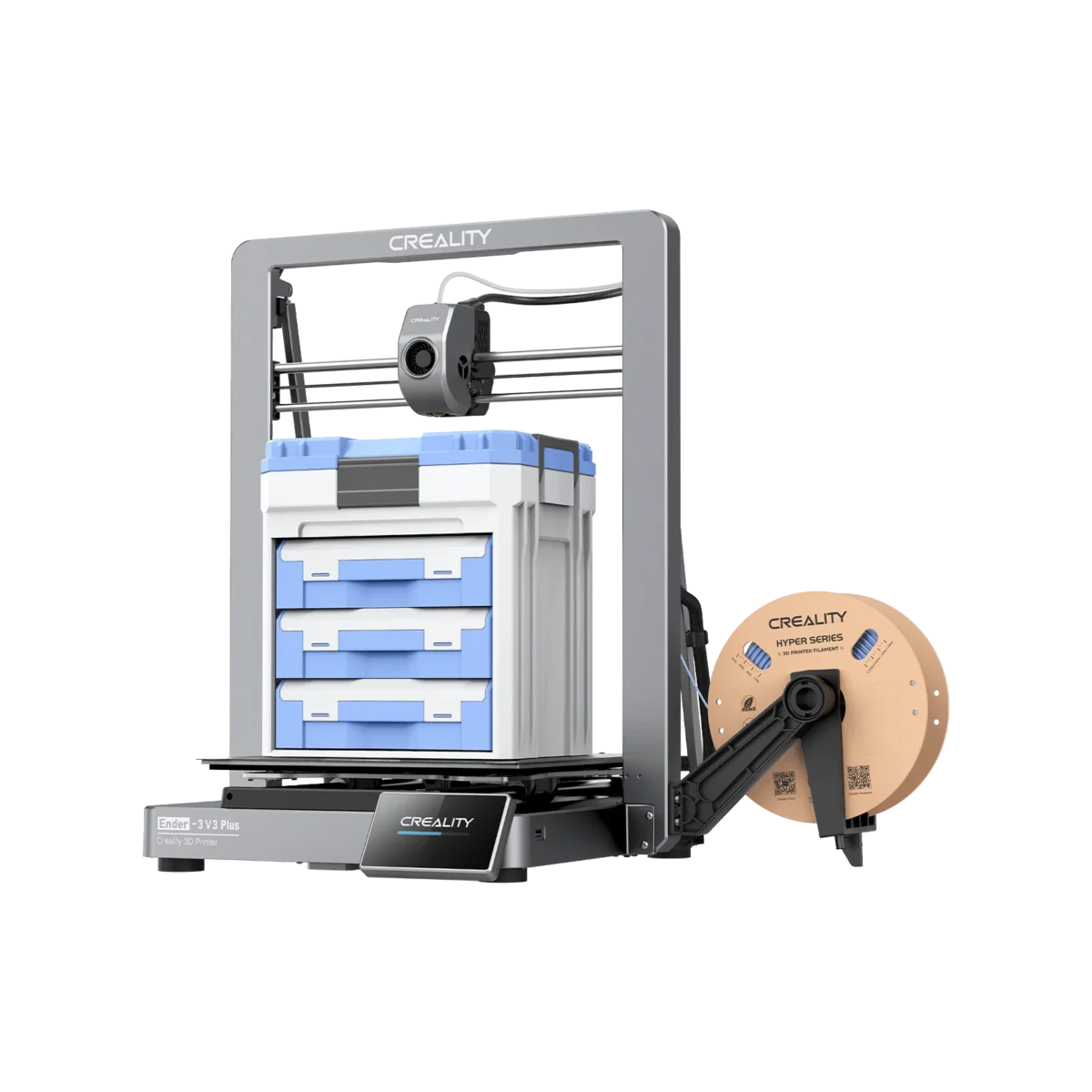
- The Creality Ender 3 V3 Plus ($339): Known as the "beginner’s standard," the Ender series is the most prolific line of 3D printers in history. The "Plus" model offers an expanded build volume, catering to those who wish to print larger functional parts or multi-piece assemblies without needing a sprawling, industrial-sized machine.
- The SparkX i7 ($229): Frequently appearing in "Best Of" guides for its price-to-performance ratio, the SparkX i7 represents an entry-level bridge for those who are curious about the hobby but hesitant to invest heavily. At its discounted price, it acts as a low-risk gateway to learning the fundamentals of CAD software and slicer settings.
Official Responses and Strategic Positioning
While Creality has remained focused on the consumer-facing aspects of the sale, industry observers note that these aggressive price drops are part of a broader strategy. By lowering the cost of entry, the company is effectively locking users into the Creality ecosystem. Once a user becomes familiar with the company’s interface, slicer software, and proprietary filaments, they are statistically more likely to upgrade to more expensive professional units within the same brand.
In previous statements regarding their market strategy, leadership at Creality has emphasized the "democratization of manufacturing." The goal is to move 3D printing from the laboratory and the garage workshop into the average living room, viewing the machine as a tool as common as a standard 2D laser printer.
Implications: The Future of Home Fabrication
The implications of this sale extend beyond simple retail statistics. We are currently witnessing a shift where additive manufacturing is becoming a standard household capability.
1. The Proliferation of "On-Demand" Goods
As more households acquire printers, the need for shipping small, plastic-based consumer goods decreases. Instead of ordering a replacement knob for a dishwasher or a specialized mounting bracket from a global retailer, users are increasingly turning to open-source repositories like Thingiverse or Printables to download and manufacture parts locally. This shift has massive environmental and economic implications for how we consume physical goods.
2. Skill Acquisition and STEM Education
For students and hobbyists, the affordability of these machines serves as a catalyst for learning. 3D printing requires an understanding of geometry, material science, and iterative problem-solving. By making hardware like the Ender 3 V3 Plus accessible, Creality is effectively lowering the barrier to entry for STEM education, allowing a broader demographic to engage with engineering concepts at a younger age.
3. The Secondary Market and Ecosystem Growth
A surge in unit sales usually triggers a secondary boom in the accessories market. From upgraded nozzles and specialized print beds to advanced materials like carbon-fiber-infused PLA or flexible TPU, the ecosystem surrounding these printers is vast. The Labor Day sale acts as a "priming" event, increasing the install base and subsequently driving demand for the third-party components and software support that keep the hobby thriving.
Navigating the Tech Landscape: How to Choose
For those overwhelmed by the options, the advice remains consistent: define your intent. If your goal is high-speed, high-fidelity prototyping, the K1 is the logical choice. If you are looking to learn the ropes with a machine that has a massive community support base, the Ender 3 V3 Plus is arguably the best investment. If you are budget-constrained and simply want to dip a toe into the water, the SparkX i7 offers the least friction.
Beyond the hardware, readers are encouraged to leverage the broader tech market conditions. This Labor Day weekend is characterized by widespread discounting across the board, including significant savings on gaming hardware, storage solutions, and home networking equipment. As households look to upgrade their digital infrastructure, the addition of a 3D printer can be the final piece in a high-tech home setup.
Conclusion: Act Fast
The intersection of the holiday weekend and these deep discounts creates a "perfect storm" for potential buyers. Whether you are a seasoned engineer looking for a secondary printer or a complete beginner curious about the possibilities of additive manufacturing, the window to act is narrowing.
The industry is moving toward a future where "printing" is synonymous with "creating." With the current pricing structure, Creality has provided a tangible, affordable path to that future. However, as with all flash sales, the combination of high demand and limited supply suggests that procrastination is the enemy of the bargain.
If you are prepared to join the thousands of makers currently shaping the future of home manufacturing, this Labor Day weekend is, without doubt, the time to start. Be sure to consult official product pages, check compatibility with your specific space requirements, and, most importantly, clear some desk space for your new machine before the September 15 cutoff.
For those interested in staying ahead of the curve, keep an eye on the Tom’s Hardware deals Discord for real-time updates as inventory levels fluctuate throughout the remainder of the holiday weekend.