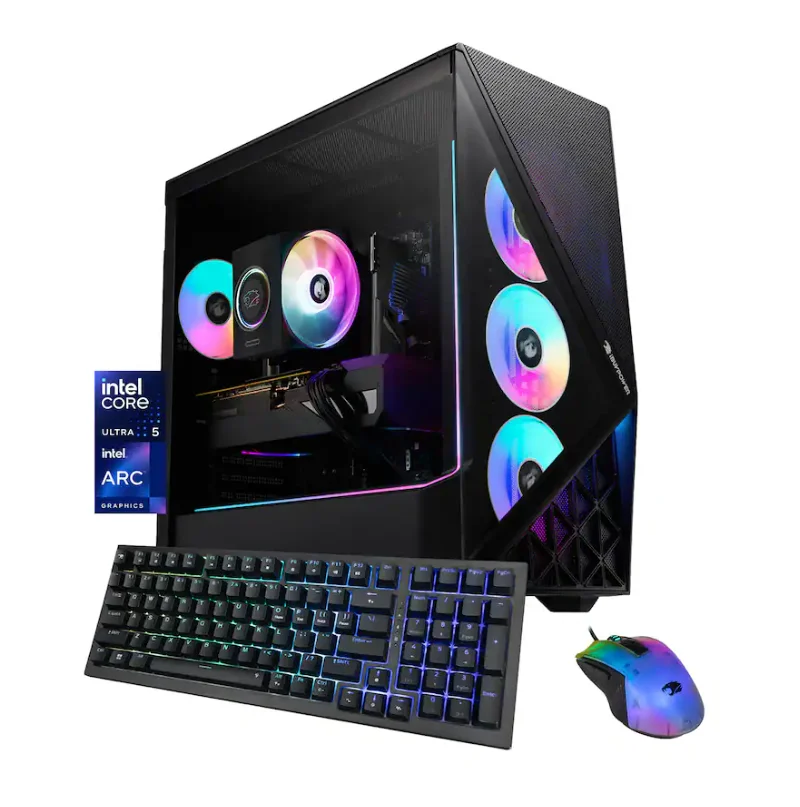
As the sun sets on Labor Day, the final hours of one of the year’s most significant retail events are upon us. For gamers who have been patiently waiting to upgrade their hardware, this represents a critical "now or never" moment. With retailers clearing out inventory to make room for end-of-year stock, savvy shoppers are currently seeing price drops on pre-built gaming rigs that haven’t been matched since early 2024.
The current landscape of the PC hardware market is complex, characterized by fluctuating supply chains and rising costs for essential components. As such, these Labor Day discounts offer a rare window of opportunity to acquire high-performance machines at prices that were previously considered unattainable. However, as the clock winds down on these promotions, the window is rapidly closing.
The Main Facts: Why Today is Pivotal
The Labor Day sales period has been defined by aggressive discounting across major electronics retailers, including Best Buy, Newegg, and Walmart. Enthusiasts looking for high-end systems—those featuring the latest GPUs from NVIDIA’s RTX 40-series or AMD’s Radeon RX 7000-series—are currently witnessing savings of over $1,200 on select configurations.
These aren’t just minor markdowns on outdated inventory; these are substantial price corrections on current-generation hardware. The primary drivers behind these sales are twofold: retailers are incentivized to move volume to clear warehouse space, and manufacturers are pushing to maintain market share amidst a broader economic tightening. For the consumer, this convergence of retail strategy and inventory management has created a "sweet spot" for purchasing.
A Chronology of the Sales Event
The progression of these Labor Day deals followed a deliberate, multi-day trajectory:
- Early Access (Pre-Weekend): Retailers began teasing their holiday promotions as early as the Tuesday before Labor Day, primarily focusing on mid-range builds to gauge consumer interest.
- The Peak (Saturday and Sunday): As the holiday weekend matured, retailers escalated their offers, bringing high-end, enthusiast-tier PCs into the discount fold. This period saw the most significant price slashes, with many retailers offering bundle deals—pairing high-refresh-rate monitors with tower units.
- The Final Stretch (Today): We are currently in the final hours. Retailers are now shifting from "promotional pricing" to "clearance mode." The inventory that hasn’t sold yet is being liquidated, leading to the last-minute price drops currently being reported. Once these units are spoken for, the promotional pricing will revert to standard MSRP (Manufacturer’s Suggested Retail Price) as stores pivot toward the upcoming Q4 holiday season.
Supporting Data: The Cost of Waiting
To understand why today is such a critical deadline, one must look at the broader context of the PC hardware industry. Since last year, the cost of individual components has seen a significant, albeit gradual, upward trend.
Component Price Volatility
- DRAM and NAND Flash: Global market analysts have observed a tightening in supply chains for memory and storage. Consequently, the cost of DDR5 RAM and NVMe SSDs—the backbone of any modern gaming PC—has climbed steadily throughout the year.
- GPU Scarcity and Pricing: While the GPU shortage of the pandemic era is over, the baseline cost for high-end graphics cards remains elevated. Buying a pre-built system during a sale event often bypasses the "individual component tax," as system integrators have long-term procurement contracts that allow them to absorb costs that individual consumers cannot.
The "Pre-Built" Advantage
Industry data suggests that for most users, purchasing a pre-built system during a major holiday event is now more cost-effective than building from scratch. When you factor in the cost of a Windows license, professional assembly, cable management, and—most importantly—a comprehensive warranty that covers the entire system, the value proposition of these Labor Day deals becomes undeniable.
Market Implications and Analyst Outlook
Industry experts suggest that the current pricing trends may represent a "calm before the storm." The semiconductor industry is currently navigating a period of increased demand for AI-focused hardware, which is placing an unexpected strain on foundry capacity.
"We are seeing a unique intersection of events," says Ben Stockton, a veteran deals analyst. "Manufacturers are balancing the needs of the consumer gaming market with the massive, high-margin requirements of the AI sector. This is creating a ripple effect that is slowly pushing up the baseline price of gaming-grade silicon."
If the current trajectory holds, consumers may find themselves paying 10% to 15% more for identical performance tiers by the time the holiday shopping season hits in November. Buying today is, in effect, hedging against future inflation within the hardware sector.
Official Retailer Strategies: What to Expect
As we enter the final hours, the strategies employed by the major players have become clear:
- Best Buy: Their strategy has been the "Total Tech" approach, often bundling gaming PCs with extended support packages or peripheral discounts. They have successfully targeted the entry-to-mid-level gamer looking for reliability.
- Newegg: By leveraging their "Shell Shocker" and daily deal formats, Newegg has focused on the enthusiast crowd, offering deep discounts on components and custom-built rigs that appeal to power users.
- Walmart: Walmart has positioned itself as the high-volume leader, focusing on aggressive pricing for mid-range systems that cater to families and casual gamers.
The Verdict: Act Now or Wait?
The temptation to "wait for Black Friday" is a common psychological trap. While Black Friday often brings flashy door-buster deals, it is also defined by inventory shortages and the "gaming" of pricing models, where MSRPs are artificially inflated to make discounts appear deeper than they are.
Conversely, the current Labor Day sales are based on genuine inventory liquidation. If you find a system that meets your performance needs—whether it’s for 1440p high-refresh gaming or 4K rendering—the data suggests that waiting is a high-risk strategy.
Final Checklist for Shoppers:
- Verify Specifications: Ensure the GPU and CPU meet your requirements for the next three years of gaming.
- Check Warranty: Ensure the system comes with a minimum one-year parts and labor warranty.
- Cross-Reference: Use price-tracking tools to confirm the "discount" is legitimate against the item’s historical price.
- Complete the Purchase: With only hours left, don’t let a cart timeout cost you a machine that could last you the next half-decade.
As the sun sets on Labor Day, the gaming PC market stands at a crossroads. For those ready to commit, the deals are there, but the window is closing. In a market defined by uncertainty and rising component costs, the best bargain isn’t just about the money you save—it’s about securing the hardware you need before the market shifts again.