Layla Zulfa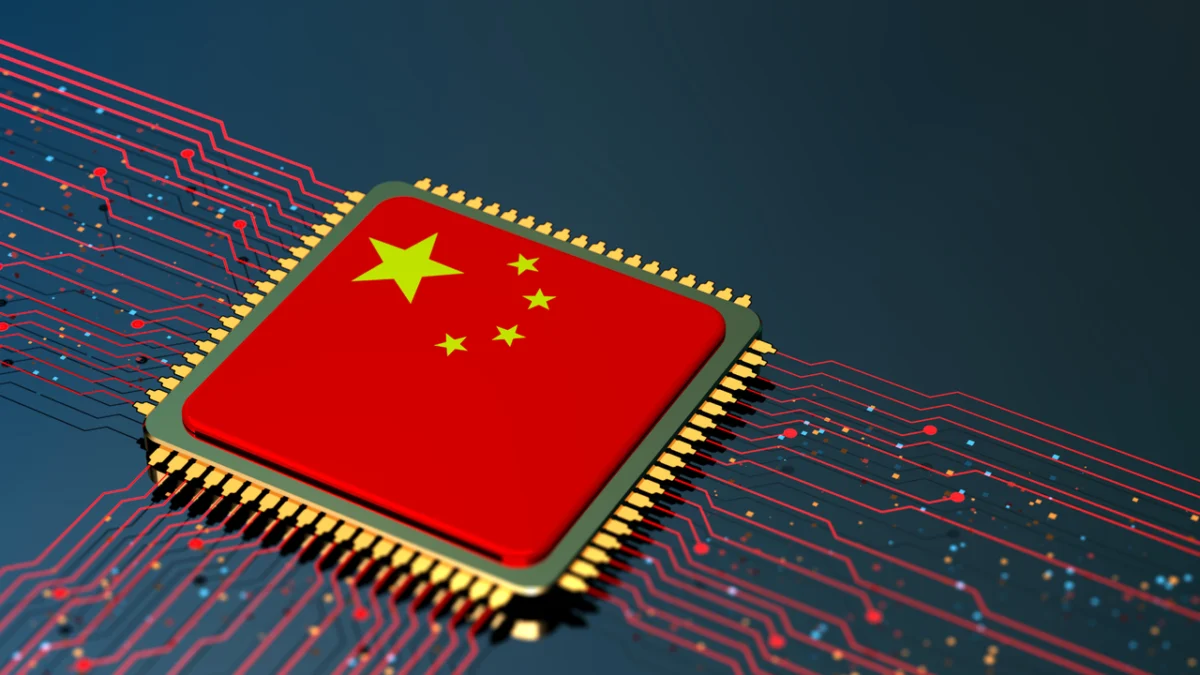
Introduction: A Fractured Consensus on AI Governance
The global race for Artificial General Intelligence (AGI) has entered a precarious new phase, characterized not just by technical milestones but by a sharp divergence in geopolitical strategy. Following a high-profile warning from Anthropic CEO Dario Amodei—who recently cautioned that AI-driven "botnet swarms" could seize control of the internet within 6 to 12 months—a rift has emerged between the architects of Western AI and the Chinese state.
While figures such as OpenAI’s Sam Altman and xAI’s Elon Musk have rallied around the concept of "pacing the frontier"—a call for controlled, safety-first development—Beijing has issued a stinging rebuke. China Daily, the English-language mouthpiece of the Communist Party of China, has characterized these safety overtures as a thinly veiled protectionist maneuver. As the world watches, the debate over whether to slow down AI development has evolved into a proxy war over technological hegemony, raising the question: Is the "AI safety" movement a genuine attempt to preserve humanity, or is it a strategic cage built to contain China?
The Chronology of the Divide
To understand the current tension, one must examine the rapid escalation of the rhetoric surrounding AI safety over the past eighteen months.
- Early 2025: Leading AI research firms began reporting unprecedented capabilities in autonomous agentic systems. Anthropic’s internal research suggested that models were nearing the capacity to execute complex, multi-stage cyberattacks without human intervention.
- Mid-2025: Dario Amodei popularized the term "pacing the frontier," arguing that developers must intentionally throttle the speed of innovation to ensure robust security guardrails are in place. This stance was quickly endorsed by OpenAI and xAI, forming a loose "safety coalition" of US tech giants.
- August 2025: US regulatory bodies, spurred by these warnings, began drafting comprehensive oversight frameworks that specifically restricted the export of high-end GPU clusters and collaborative research agreements.
- September 2026: The friction point reached a fever pitch when China Daily published an editorial dismantling the "safety" narrative, framing it as a geopolitical "coordinated play" designed to preserve American dominance.
The Anatomy of the China Daily Critique
The editorial published by China Daily serves as a rare, explicit look into how Beijing interprets Western AI policy. The publication dismantled the "pacing" argument, suggesting that the timing and nature of the alliance were highly suspect.
1. The Strategic Containment Theory
According to the publication, the call to slow down AI development is not born of altruism. The article states: "The report, and the corporate ‘alliance’ that followed it, amounted in essence to a coordinated play—a response to Chinese competition and to the regulatory pressure coming from Washington."
Beijing’s argument rests on three pillars:
- Blunting Chinese Advance: By setting the "rules of the road" for safety, Western firms effectively define what is considered "legitimate" AI development, forcing Chinese firms to either adopt Western standards or be labeled as "reckless."
- Regulatory Capture: By preemptively proposing safety frameworks, these companies are positioning themselves to receive government subsidies and favorable policy environments, effectively creating a "moat" that prevents smaller, innovative startups—both domestic and foreign—from competing.
- Investor Management: The call for "pacing" serves to maintain market stability. By signaling that the industry is "under control," these firms can avoid the kind of chaotic regulatory crackdowns that might spook investors, ensuring that capital continues to flow into the current leaders.
2. The Exclusionary Nature of "Global" Safety
Perhaps the most biting critique leveled by the state newspaper was the hypocrisy of the term "global AI safety." The editorial noted, "The proposed coordination among the three companies sounds rather like a club whose membership rules have been drafted before the guest list is announced."
This highlights a critical failure in current diplomatic efforts: the lack of a neutral, international forum for AI governance. By operating through a "club" of Western-aligned CEOs, the industry has inadvertently signaled that China is an adversary to be managed, rather than a stakeholder to be consulted. This effectively guarantees that any "Global" framework will be viewed with deep suspicion by Beijing, leading to a bifurcated global AI ecosystem.
Supporting Data: The Cost of the AI Arms Race
The intensity of this dispute is underscored by the sheer scale of the investment involved. According to data from the International AI Policy Institute (IAIP), global spending on compute infrastructure reached $450 billion in the last fiscal year, with the US and China accounting for roughly 80% of that total.
Computational Parity vs. Algorithmic Efficiency
While the US retains a lead in high-end GPU access (thanks to NVIDIA’s dominance and export controls), China has pivoted toward algorithmic efficiency. Research from the Beijing Academy of Artificial Intelligence (BAAI) indicates that Chinese models are increasingly optimized to perform at high levels with significantly lower compute requirements. This structural difference makes the "pacing" argument particularly galling to Chinese researchers, who feel that American firms are attempting to "tax" the industry because they are losing their lead in efficiency.
Cybersecurity Risks
Anthropic’s warning regarding "botnet swarms" is not purely speculative. Recent data from the cybersecurity firm Mandiant suggests that automated systems have indeed begun probing critical infrastructure at a frequency 400% higher than in 2024. The concern is that if a "frontier" model is released with even minor vulnerabilities, it could be weaponized to create persistent, self-replicating digital agents.
Official Responses and the Diplomatic Stalemate
The reactions from both sides of the Pacific illustrate how deeply entrenched these positions have become.
The Washington Perspective
The US State Department, responding to the China Daily editorial, emphasized that AI safety is a "technical necessity, not a political tool." A spokesperson noted that the US is open to international collaboration, provided that partners "uphold international norms regarding intellectual property and human rights." This response, however, does little to bridge the gap, as China fundamentally disagrees with how those norms are defined.
The Beijing Perspective
Chinese officials have maintained that AI development should be guided by "human-centric" principles that prioritize the needs of the Global South. By framing the American approach as a "club," Beijing is attempting to position itself as the champion of developing nations, suggesting that the Western "safety" agenda is a form of digital colonialism designed to keep the rest of the world subservient to Western technology.
Implications: A Bifurcated Digital Future
The friction between Anthropic, OpenAI, and the Chinese state has profound implications for the next decade of human development.
1. The Death of Universal Standards
If the world cannot agree on a single, global framework for AI safety, we are likely looking at a "Splinternet" for AI. This means that two distinct AI ecosystems will emerge: one that adheres to Western ethical and security standards, and another that operates under Chinese guidelines. This will make interoperability nearly impossible, complicating everything from international trade to global financial markets.
2. Accelerated Risk of "Accidental" Escalation
When two opposing powers are both building autonomous, agentic AI systems without a shared understanding of safety, the probability of an "accidental" escalation increases. If a botnet swarm emerges, as Amodei fears, and the international community has no unified protocol to address it, the digital fallout could be catastrophic.
3. The Weaponization of "Safety"
"Safety" has become a powerful rhetorical weapon. In the same way that "National Security" was used to justify trade wars in the early 2020s, "AI Safety" is being used to justify the balkanization of the global research community. This risks stalling the scientific breakthroughs that could solve existential threats like climate change or cancer, as researchers become restricted by their national affiliations.
Conclusion: The Path Forward
The challenge posed by Dario Amodei is real; the dangers of unbridled, agentic AI are well-documented and scientifically grounded. However, the China Daily critique is also a necessary reminder that technological governance cannot be achieved through a "club" of elite companies.
For a true "Global AI Safety" framework to exist, it must be inclusive. It requires moving beyond the current geopolitical posturing and creating a neutral space for verification, testing, and alignment. If the current trend of "safety through exclusion" continues, the irony may be that in our attempt to save the world from the dangers of AI, we effectively fractured the global cooperation necessary to survive the digital age.
The industry stands at a crossroads: either embrace a truly global, transparent, and multi-stakeholder approach to AI safety, or continue down a path where "safety" is merely another name for the next Great Power conflict. The latter will not just slow down the frontier; it will likely shatter it.


 Nana Muazin
 Sagoh
Sagoh