

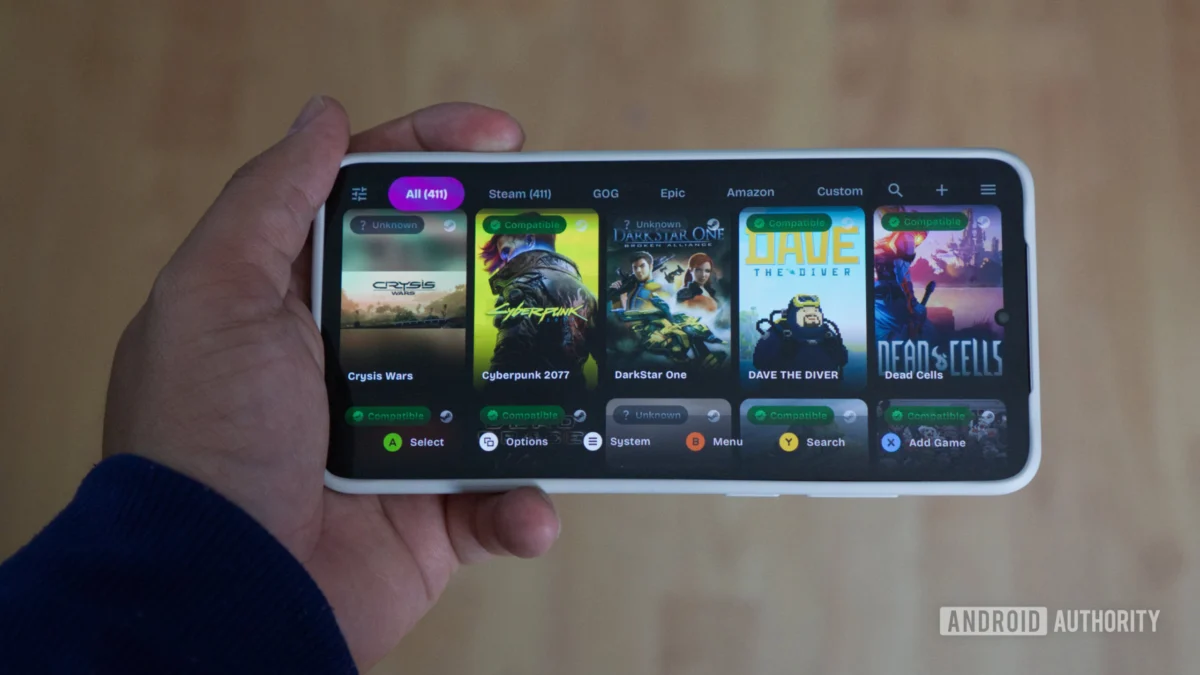
The landscape of mobile gaming is undergoing a seismic shift. For years, the dream of playing high-fidelity, AAA PC titles on a smartphone has been relegated to the realm of cloud streaming—a solution often hampered by latency, bandwidth requirements, and subscription fees. However, the open-source community is rapidly changing that narrative. Leading this charge is GameNative, an ambitious project that has officially hit a major milestone: the release of its 1.0.0 preview version.
In just twelve months, GameNative has evolved from a niche experimental tool into a robust environment capable of local PC game emulation on Android. By bypassing the need for cloud infrastructure, GameNative is positioning itself as a direct competitor to dedicated handheld gaming PCs like the Steam Deck and the ASUS ROG Ally.
Main Facts: What Does Version 1.0.0 Bring to the Table?
The release of version 1.0.0 is not merely a version bump; it represents a fundamental maturity in the architecture of the emulator. The development team has focused heavily on performance optimization, user experience, and broadening the scope of compatible storefronts.
Key Technical Enhancements
- Vulkan Renderer Integration: Borrowing from the highly regarded Winlator Ludashi app, GameNative now utilizes a sophisticated Vulkan renderer. This shift is critical, as it significantly lowers input latency and optimizes frame delivery, allowing mobile chipsets—which are naturally Vulkan-friendly—to communicate more efficiently with Windows-based game APIs.
- Steam Without the Overhead: One of the most impressive technical feats in this release is the new Steam implementation. Users can now facilitate online play without the resource-heavy Steam client running in the background, freeing up vital CPU and RAM resources for the actual gameplay.
- Offline Epic Games Support: The platform has extended its reach to the Epic Games Store, allowing for native offline execution. This is a massive boon for users who want to play their libraries during travel or in areas without stable internet access.
- Lossless Scaling Refinements: The team has stabilized its frame generation algorithms, providing a more consistent "lossless" upscaling experience. This feature allows users to boost performance without sacrificing the visual integrity of their games.
A Chronology of Rapid Development
The speed at which GameNative has progressed is nothing short of extraordinary. To understand the gravity of the 1.0.0 release, one must look at the rapid-fire trajectory of the project over the past year.
- Early Development (Mid-2025): The project began as a Proof of Concept (PoC) focused on basic Windows API translation for Android’s ARM architecture. Initial compatibility was limited to simple 2D titles and lightweight 3D indie games.
- The GPU Breakthrough: A major turning point occurred when the team successfully cracked support for non-Adreno chipsets. By adding support for Mali and PowerVR GPUs, the developers effectively opened the door to millions of devices previously sidelined by emulation software.
- The "Storefront" Era: Throughout late 2025 and early 2026, the team focused on integrating popular launchers. The addition of GOG (Good Old Games) and Amazon Games integration allowed users to centralize their collections.
- UX Advancements: Recognizing that a touch interface is insufficient for complex PC gaming, the team introduced full controller-based UI navigation and support for Samsung DeX, transforming smartphones into desktop-like gaming consoles.
- Present Day (May 2026): The 1.0.0 milestone marks the transition from "experimental" to "stable preview," signaling to the broader community that the platform is ready for broader adoption.
Supporting Data: Why Local Emulation Matters
The primary friction point for PC-on-mobile gaming has always been efficiency. Traditional virtualization requires significant overhead, which typically leads to thermal throttling and battery drain on mobile devices. GameNative’s architecture utilizes a translation layer that bridges the gap between Windows binary instructions and ARM-based processors.
Performance Benchmarks (Estimated)
According to community-driven telemetry reports, the integration of the Vulkan renderer has yielded a 15% to 25% increase in average frame rates for titles running on mid-to-high-tier chipsets (such as the Snapdragon 8 Gen series). Furthermore, by stripping away the Steam client overhead, users have observed an average of 10% more available system memory, which is vital for preventing crashes in memory-intensive titles.
Device Compatibility
The project’s focus on Mali and PowerVR support is its greatest strength. While the high-end gaming market is dominated by Qualcomm’s Adreno GPUs, a vast majority of the global Android user base operates on devices that utilize different architectures. By building a wider "net" for hardware support, GameNative is democratizing access to PC gaming, ensuring it isn’t limited only to the most expensive flagships.
Official Responses and The Developer Philosophy
The GameNative team has maintained a transparent and collaborative relationship with their user base. Through their public GitHub repository, the developers have emphasized that their goal is not just to "copy" Windows, but to "reimagine" how PC games run on mobile hardware.
In recent discussions, the lead developers highlighted the importance of the Public Roadmap. By outlining their future goals—which include deep integration for EA and Rockstar Games launchers—the team is fostering a sense of community ownership. They have publicly stated that "the endgame is a seamless, plug-and-play experience where the user forgets they are running an emulator."
This philosophy has attracted a significant number of contributors, creating a virtuous cycle where community-reported bugs are often patched within days. This "agile" development style is the core reason for the project’s rapid acceleration.
Implications: The Potential Demise of Handheld PCs?
The question remains: Can GameNative actually "kill" the handheld PC market? The implications of this technology are profound.
1. The Death of the "Second Device"
If a user can achieve 80% of the Steam Deck experience on the smartphone they already carry, the economic argument for purchasing a $400–$700 dedicated handheld device becomes much harder to justify. As mobile processors continue to shrink the gap with laptop-grade CPUs, the line between a "phone" and a "gaming console" will continue to blur.
2. Economic Disruption
For game publishers, this represents a massive expansion of their Total Addressable Market (TAM). A game that was previously restricted to PC owners is suddenly accessible to a global audience of billions of Android users. However, this also poses a challenge for DRM and anti-cheat systems, which are currently designed for Windows environments and often struggle within emulation layers.
3. The Future of Mobile Productivity
The integration of features like DeX and controller-based UI suggests that the project is aiming for more than just gaming. If GameNative can successfully emulate complex Windows applications alongside games, it could theoretically evolve into a full-fledged productivity solution, potentially replacing the need for a laptop for many users in developing markets.
What’s Next?
The roadmap for late 2026 and beyond is ambitious. The development team is currently prioritizing:
- Enhanced Online Connectivity: Bridging the gap for multiplayer-focused games that require specific server authentication.
- Automated Optimization Profiles: Using AI to detect the hardware and automatically apply the "best" settings for a specific game, removing the manual configuration hurdle for casual users.
- Expanded Compatibility: Moving beyond the current list to include more demanding AAA titles that currently struggle with modern anti-cheat protocols.
Conclusion
The release of GameNative v1.0.0 is a watershed moment in the history of mobile computing. By successfully localizing PC gaming on Android, the developers have challenged the status quo and provided a glimpse into a future where hardware is agnostic.
While there are still hurdles—specifically regarding the complexity of anti-cheat software and the thermal constraints of mobile devices—the sheer velocity of progress is undeniable. As we look toward the end of 2026, it is clear that GameNative is not just a project to watch; it is a project that is actively reshaping the definition of a gaming platform. Whether you are a hardcore gamer looking to take your Steam library on the go or an enthusiast interested in the bleeding edge of emulation technology, the arrival of GameNative 1.0.0 is a milestone that signals: the PC-on-mobile era has officially arrived.












No comments yet. Be the first to join the conversation!