Basiran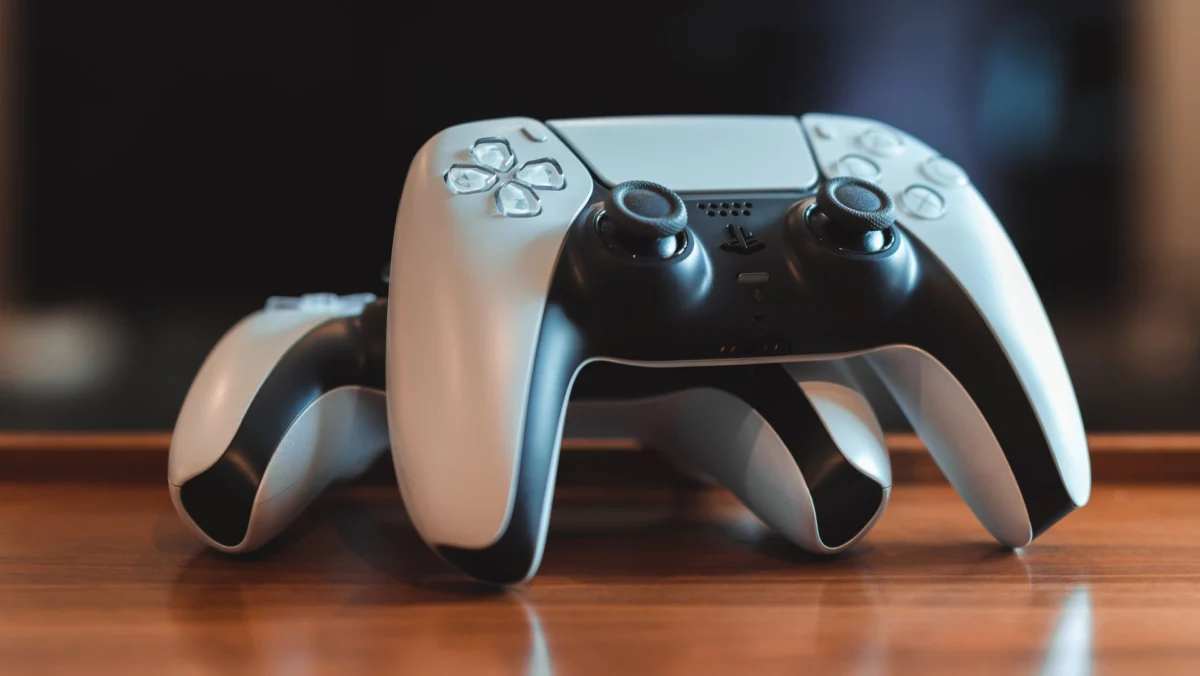
The landscape of digital commerce in gaming is poised for a significant evolution, according to a recently unearthed patent from Sony Interactive Entertainment. The technology, titled "Video Game Controller-Driven Information Transfer," outlines a system that would integrate Near-Field Communication (NFC) or similar wireless protocols directly into PlayStation controllers. This innovation suggests that in the near future, gamers may be able to purchase new titles, downloadable content (DLC), or in-game cosmetic items simply by tapping a credit card, smartphone, or gift card against their controller.
As digital storefronts become the primary method for acquiring media, Sony is seemingly looking to remove the "friction" associated with navigating console menus, entering long alphanumeric codes, or manually inputting credit card details. By turning the humble gamepad into a secure point-of-sale terminal, Sony aims to create a seamless bridge between physical payment methods and digital gaming assets.
The Chronology: From Filing to Public Discovery
The journey of this technology from a conceptual filing to public scrutiny spans over a year of development and internal processing.
- March 2025: Sony officially files the patent application with the relevant patent authorities. At this stage, the filing remains confidential, shielded from public view as the company refines the technical specifications and legal scope of the intellectual property.
- September 17, 2026: The patent is officially published, marking the transition from a private internal project to a matter of public record. The publication of such documents is standard practice, allowing competitors and the public to review the scope of Sony’s technological ambitions.
- Late 2026 (Recent Discovery): Gaming news outlet Dexerto identifies the patent within the public database, sparking widespread discussion across the gaming industry regarding the future of console-based retail and hardware integration.
The timeline reflects the slow-moving nature of patent law, where ideas often remain in "stealth mode" for eighteen months or longer before entering the public domain. While the publication of a patent is not a guarantee of a forthcoming product, it serves as a clear indicator of Sony’s long-term R&D priorities.
The Mechanics: How Controller-Driven Payments Would Work
At the core of the "Video Game Controller-Driven Information Transfer" patent is the implementation of short-range wireless communication technology, likely NFC, embedded within the chassis of a PlayStation controller—presumably a future iteration of the DualSense.
Technical Integration
The patent describes a system where the controller acts as a secure intermediary between the user’s physical payment device and the PlayStation console itself. Rather than requiring the user to navigate the PlayStation Store interface using a thumbstick and digital keyboard, the controller would detect a tap-to-pay signal.
Once the device (a smartphone, a contactless credit card, or an NFC-enabled gift card) is held against a designated area on the controller, the device would initiate a handshake with the console. The console would then process the transaction using the encrypted data received through the controller.
Security Protocols
One of the primary concerns with such a system is security. Sony’s documentation suggests that the controller would not store sensitive financial data locally. Instead, it acts as a "pipe" for encrypted tokens. By utilizing tokenization, the controller ensures that even if a signal were intercepted, the actual credit card number or bank details would remain obfuscated, adhering to modern PCI-DSS standards used by physical retail point-of-sale systems.
Supporting Data: The Shift Toward Frictionless Gaming Commerce
The move toward integrated payment systems is not occurring in a vacuum. The gaming industry has seen a massive shift toward digital-first ecosystems, with the physical disc market shrinking in favor of digital downloads and subscription services like PlayStation Plus.
Digital Revenue Trends
Recent industry reports indicate that digital sales account for over 80% of total game revenue for major publishers. For Sony, the PlayStation Store is a high-margin engine that drives the company’s quarterly earnings. Reducing the "time-to-purchase"—the duration between a player deciding they want a game and the moment the transaction is finalized—is a key metric for maximizing revenue.
The Success of "Tap-to-Pay"
Consumer behavior data globally suggests a massive preference for contactless payments. According to financial industry surveys, over 70% of transactions in developed markets are now conducted via tap-to-pay (contactless cards or digital wallets like Apple Pay and Google Pay). By bringing this familiar, high-speed payment method to the living room, Sony is aligning its gaming hardware with the broader habits of the modern consumer.
Official Responses and Industry Skepticism
As of late 2026, Sony Interactive Entertainment has maintained a standard policy of not commenting on specific patents. In the legal and tech world, it is common for major corporations to file hundreds of patents annually—many of which are defensive in nature or intended to "stake a claim" on potential future technologies that may never reach the production line.
Industry analysts have offered a mixed reaction. Some, like those at retail research firms, see this as a logical evolution of the console as a hub for all home media. Others express caution regarding "impulse buying." By making the purchase process as simple as a single tap, there is a risk of lowering the psychological barrier to spending, which could draw scrutiny from consumer protection agencies, particularly concerning younger gamers or those prone to excessive microtransactions.
Implications: A New Era for Gaming Retail
The potential implementation of this technology has far-reaching implications for Sony, developers, and the gaming community at large.
For Sony: Controlling the Ecosystem
By integrating payments directly into the hardware, Sony further cements its "walled garden." If a user can tap their phone to buy a game, they are less likely to seek out third-party retailers for codes or gift cards. It also creates a seamless experience for purchasing DLC, Battle Passes, and in-game currencies, which are often the primary revenue drivers for "Games as a Service" (GaaS) titles.
For Developers: Increased Conversion Rates
For game developers, the barrier to purchase is the enemy. Every second a player spends typing in a 16-digit credit card number on a console keyboard is a second where they might change their mind. A tap-to-pay system could significantly increase conversion rates for impulse purchases, such as a limited-time skin or a sudden expansion pack.
For the Consumer: Convenience vs. Security
The primary benefit for the gamer is convenience. There is no longer a need to have a credit card stored on the console (which can be a security risk if the console is shared or the account is compromised). Users can simply tap their phone, which is already protected by biometric authentication (FaceID or fingerprints), providing a "two-factor" layer of security that is superior to simple password entry.
However, there is also the question of cost. Integrating NFC chips into every DualSense controller adds to the manufacturing cost of the hardware. Sony would have to weigh whether the potential increase in digital sales revenue justifies the added production expense of the peripheral.
Conclusion: The Future of the Living Room
While the PlayStation patent for controller-driven payments remains a conceptual document for now, it highlights a clear direction for the gaming industry: the total dissolution of boundaries between the gamer and the marketplace.
Whether this specific technology manifests in the PlayStation 6 or a future revision of current-gen hardware, the intent is clear. Sony is looking to make the console not just a gaming machine, but a fully integrated commerce portal. As we move closer to a cashless society, the gaming controller is poised to become the primary tool for not just playing, but participating in the digital economy. For now, gamers must wait to see if this patent becomes a standard feature or remains an interesting footnote in the history of console innovation.

 Pevita Pearce
 Asep Darmawan