Neng Nana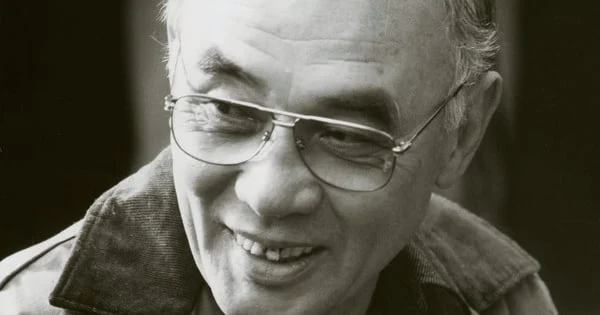
Tokyo, Japan – September 26, 2026 – The Japanese film industry mourns the loss of Toshio Masuda, a towering figure whose prolific career spanned over six decades, leaving an indelible mark on both live-action cinema and the nascent world of anime. Masuda, celebrated for his meticulous craftsmanship and narrative prowess, passed away peacefully of old age on August 26, at the venerable age of 98. His death was reported on Thursday by prominent Japanese newspapers, Mainichi Shimbun and Yomiuri Shimbun.
Masuda’s directorial journey began in 1958, and his prolific output resulted in 82 films, earning him the esteemed moniker "a craftsman among craftsmen." His contributions extended far beyond directing, encompassing significant work as a screenwriter and supervisor, particularly in the realm of anime, where he played a pivotal role in shaping the early visual and narrative language of beloved franchises.
A Career Forged in Film: From Nikkatsu to Hollywood Collaboration
Born in Kobe in October 1927, Masuda’s formative years were deeply influenced by the burgeoning post-war Japanese film scene. He joined Nikkatsu Corporation in 1954, following a stint at Shintoho, and quickly established himself as a director of considerable talent. His directorial debut, Kokoro to Nikutai no Tabi (Journey of Heart and Flesh) in 1958, signaled the arrival of a filmmaker with a keen eye for dramatic storytelling and character development.
During his tenure at Nikkatsu, Masuda helmed a series of critically acclaimed films that showcased his versatility and command of various genres. Among these notable works are the gritty crime drama Rusty Knife, the poignant melodrama Red Handkerchief, and the suspenseful thriller Red Quay. These early films solidified his reputation as a skilled storyteller capable of drawing nuanced performances from his actors and crafting visually compelling narratives.
Masuda’s international recognition, however, was significantly amplified by his co-direction of the Japanese sequences for the monumental 1970 Japanese-American co-production, Tora! Tora! Tora!. This ambitious war film, which meticulously recreated the events leading up to the attack on Pearl Harbor, required a delicate balance of cultural perspectives and historical accuracy. Masuda’s involvement ensured that the Japanese portrayal was handled with the utmost authenticity and dramatic weight, earning him praise for his contribution to this landmark cinematic achievement.
His live-action filmography continued to flourish with diverse projects such as the energetic youth film High Teen Boogie, the evocative Katayoku Dake no Tenshi (Angel with Only One Wing), and the disaster epic Prophecies of Nostradamus. Masuda’s directorial talent was formally recognized by the Japanese film industry when he received nominations for the Best Director Award at the prestigious Japan Academy Film Prizes. He was nominated for The Battle of Port Arthur at the 4th ceremony and for Company Executives at the 13th ceremony, testament to his consistent quality and impact.
Pioneering the Yamato Saga: Shaping the Future of Anime Storytelling
While Masuda’s live-action career was substantial, his influence on the anime landscape is perhaps even more profound and enduring. He became an integral part of the creation and evolution of the iconic Space Battleship Yamato franchise, a series that revolutionized Japanese animation and captivated audiences worldwide.
His initial foray into anime began with his role in overseeing the scripts and supervising the 1974 television series Star Blazers (the localized title for Uchū Senkan Yamato). This groundbreaking series, with its mature themes, compelling characters, and epic space opera narrative, laid the foundation for a generation of anime creators. Masuda’s script supervision ensured that the series maintained a strong narrative coherence and emotional depth, resonating deeply with viewers.
He then transitioned to directing, helming the 1977 film compilation of the series, Space Battleship Yamato. This cinematic adaptation brought the beloved story to the big screen, introducing it to a wider audience and solidifying its status as a cultural phenomenon. Masuda’s directorial vision was crucial in translating the television narrative into a more condensed and impactful cinematic experience.
His involvement deepened with the subsequent films in the Yamato saga. He served as one of the directors and scriptwriters for Farewell to Space Battleship Yamato (1978), a film that explored more complex emotional arcs and brought a poignant conclusion to the initial storyline. He continued this creative partnership for Space Battleship Yamato: The New Voyage (1979), which expanded the universe and introduced new challenges for the crew.
Perhaps his most significant directorial contribution to the franchise was Be Forever Yamato (1980). This film is widely regarded as a pivotal installment, pushing the boundaries of anime storytelling with its ambitious scope, intricate plot, and mature thematic explorations. Masuda’s direction and scripting were instrumental in crafting a film that not only thrilled audiences but also contributed significantly to the artistic evolution of anime.
Masuda’s commitment to the Yamato universe extended beyond directing. He served as the chief supervisor and one of the scriptwriters for Final Yamato (1983), the intended final chapter of the original saga, bringing a sense of closure and epic scale to the long-running narrative. In a testament to his enduring legacy and the franchise’s lasting impact, he also took on the role of general supervisor for the 2009 film Space Battleship Yamato Resurrection, demonstrating his continued connection to the universe he helped create.
Beyond the Yamato saga, Masuda’s directorial reach in anime also encompassed the co-direction of the film Future War Year 198X and the chief direction and scripting for the film Odin – Starlight Mutiny. These projects further showcase his versatility and willingness to explore new frontiers within the animated medium.
A Legacy of Craftsmanship and National Recognition
Toshio Masuda’s career was marked by an unwavering dedication to his craft. His ability to navigate the complexities of both live-action filmmaking and the burgeoning anime industry, delivering impactful and memorable works in each, is a testament to his extraordinary talent. His reputation as "a craftsman among craftsmen" was not merely a compliment but a recognition of his meticulous attention to detail, his deep understanding of storytelling, and his unwavering commitment to artistic excellence.
The significance of his contributions was formally acknowledged through numerous accolades and honors. In 2018, he received the Award for Distinguished Service from the Chairman at the 41st Japan Academy Prizes, a prestigious honor celebrating a lifetime of achievement. Earlier, in 1993, he was awarded the Medal of Honor with Purple Ribbon, a distinguished Japanese honor bestowed upon individuals who have made significant contributions to the arts, culture, and academic fields. Further national recognition came in 1999 with the award of The Order of the Sacred Treasure, Gold Rays with Rosette, an honor recognizing distinguished service to the nation.
Official Condolences and a Lasting Impact
The passing of Toshio Masuda has been met with widespread sorrow and tributes from across the Japanese film and anime communities. The Japan Academy Film Prize Association, an organization that recognized his talent throughout his career, posted its official condolences on Friday. Their statement, written in Japanese and shared on social media, expressed profound sadness and acknowledged his immense contributions to Japanese cinema.
The statement, translated, reads: "We deeply mourn the passing of Toshio Masuda, who passed away on August 26. Mr. Masuda began his career at Nikkatsu in 1954, and after directing numerous films such as ‘Kokoro to Nikutai no Tabi’ and ‘Rusty Knife,’ he gained international acclaim for his co-direction of the Japanese side of the war film ‘Tora! Tora! Tora!’. He also played a central role in the ‘Space Battleship Yamato’ series, directing and writing for films such as ‘Be Forever Yamato,’ which is considered a masterpiece. His prolific career, spanning 82 films, has left an irreplaceable legacy. We offer our deepest condolences to his family and friends."
The accompanying image, a photograph of Masuda at an awards ceremony, further underscores the esteem in which he was held.
Toshio Masuda’s passing marks the end of an era for Japanese cinema. His visionary work, from the gritty realism of his live-action dramas to the expansive universe of Space Battleship Yamato, has inspired countless filmmakers and storytellers. His legacy will continue to resonate through the films he created and the generations of audiences he touched. He is survived by his profound artistic contributions, a testament to a life dedicated to the art of filmmaking.

 Asro
Asro
 Lina Hope