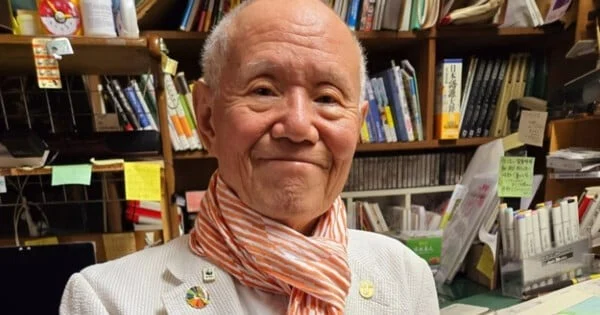
Tokyo, Japan – October 27, 2026 – The vibrant world of manga has lost one of its most iconic figures. Tetsuya Chiba, the visionary artist behind the groundbreaking boxing manga "Ashita no Joe," passed away on October 22 in a Tokyo hospital at the age of 87. His death was attributed to myelodysplastic syndrome, a complex blood cancer affecting bone marrow cells.
Chiba’s passing marks the end of an era, leaving behind a legacy that has profoundly shaped Japanese popular culture and inspired generations of artists and fans worldwide. His most celebrated work, "Ashita no Joe," a gripping tale of an impoverished orphan’s rise through the brutal world of professional boxing, resonated deeply with audiences for its raw emotion, unflinching realism, and exploration of themes such as perseverance, redemption, and the human spirit’s capacity for both triumph and despair.
A Life Dedicated to Art and Storytelling
Born in Tokyo, Chiba’s early childhood was spent in what is now the northern region of China, an experience that may have subtly informed his later narratives of struggle and survival. His artistic journey began at an astonishingly young age. At just 17 years old, he made his professional debut as a manga creator in 1956, a testament to his precocious talent and early dedication to his craft.
Chiba’s prolific career spanned decades, during which he created a diverse body of work. However, it was the serialization of "Ashita no Joe" in Kodansha’s Weekly Shonen Magazine from 1968 to 1973 that cemented his place in the pantheon of manga legends. The manga’s protagonist, Joe Yabuki, a defiant street urchin with a natural aptitude for boxing, became a cultural phenomenon. His journey from the slums to the boxing ring, fraught with hardship, intense rivalries, and profound personal growth, captivated readers and continues to be studied and admired for its masterful storytelling and compelling character development.
The Enduring Impact of "Ashita no Joe"
The influence of "Ashita no Joe" extended far beyond the pages of the manga. The series spawned two highly successful television anime adaptations in 1970 and 1980, as well as two animated films in 1980 and 1981, further solidifying its place in the hearts of millions. The gritty realism and emotional intensity of the anime mirrored the manga’s impact, introducing Joe Yabuki’s story to an even wider audience.
In recent years, the enduring appeal of "Ashita no Joe" was evident in the 2018 anime series Megalobox. This innovative reimagining offered a science-fiction twist on the original narrative, transplanting the core themes of struggle and resilience into a futuristic world of mechanized boxing. Megalobox explicitly credited Chiba’s original manga as its inspiration, demonstrating the timeless relevance of his creations. The sequel series, Megalobox 2: Nomad, which premiered in April 2021, further underscored the lasting power of Chiba’s universe.
Moreover, "Ashita no Joe" finally received its first official English-language release in December 2024, under the title "Ashita no Joe: Fighting for Tomorrow." This release, published by Kodansha, offered a new generation of international readers the opportunity to experience the masterpiece in its original form, attesting to its global and enduring appeal.
A Lifetime of Health Challenges and Unwavering Dedication
In the years leading up to his passing, Chiba faced significant health challenges, yet his commitment to his art remained unwavering. In September 2026, he was forced to place his autobiographical short essay manga, Hinemosu Notari Nikki, on hiatus due to declining health. This personal and introspective work, launched in Big Comic in December 2015, offered readers a glimpse into Chiba’s life and reflections, further endearing him to his fanbase.

Chiba’s health struggles were a matter of public record, with earlier reports detailing a series of medical procedures and conditions. In January 2022, he underwent heart surgery to receive a stent in his coronary artery. Later, in a blog post in 2024, he revealed he had also undergone eye surgery. His health concerns were first brought to public attention in November 2021, when he was hospitalized in Tokyo after feeling unwell following the summer. At that time, he disclosed that he was experiencing a series of abnormalities affecting his heart valve, coronary artery, and throat, and had begun treatment for a tumor in his throat. Despite these considerable obstacles, Chiba continued to create and share his work, demonstrating remarkable resilience and a profound love for manga.
Recognition and Honors
Tetsuya Chiba’s immense contributions to the art form were widely recognized and celebrated throughout his career. In 2022, he achieved a significant milestone when he was nominated to the prestigious Japan Art Academy, becoming one of its first two manga creators, alongside Yoshiharu Tsuge. This inclusion marked a pivotal moment in acknowledging manga as a legitimate and significant art form within Japan’s established cultural institutions. Furthermore, he served as the chairman of the Japan Cartoonists Association, a role that underscored his leadership and influence within the manga community.
The pinnacle of his accolades came in 2024 when Chiba was honored with the highly prestigious Order of Culture award. This distinguished honor is bestowed upon individuals who have made outstanding contributions to the development of Japanese culture. Chiba’s selection as the first manga creator to receive this award was a monumental recognition of his impact and a testament to the profound cultural significance of his work.
A Legacy That Continues to Inspire
Tetsuya Chiba’s legacy is not merely confined to his celebrated manga. He was a pioneer who pushed the boundaries of storytelling and artistic expression within the manga medium. His ability to imbue his characters with profound humanity, explore complex emotional landscapes, and tackle difficult social themes with unflinching honesty set a benchmark for future generations of manga artists.
The impact of "Ashita no Joe" and Chiba’s broader body of work continues to resonate. His art serves as a powerful reminder of the enduring strength of the human spirit, the importance of perseverance in the face of adversity, and the universal quest for self-discovery and redemption. As the manga world mourns his loss, the indelible mark left by Tetsuya Chiba will undoubtedly continue to inspire and captivate audiences for decades to come.
His passing is mourned by fans, fellow artists, and cultural institutions in Japan and across the globe. The stories he told and the characters he created will forever remain a vital part of our shared cultural heritage.
Sources: Comic Natalie, NHK