Basiran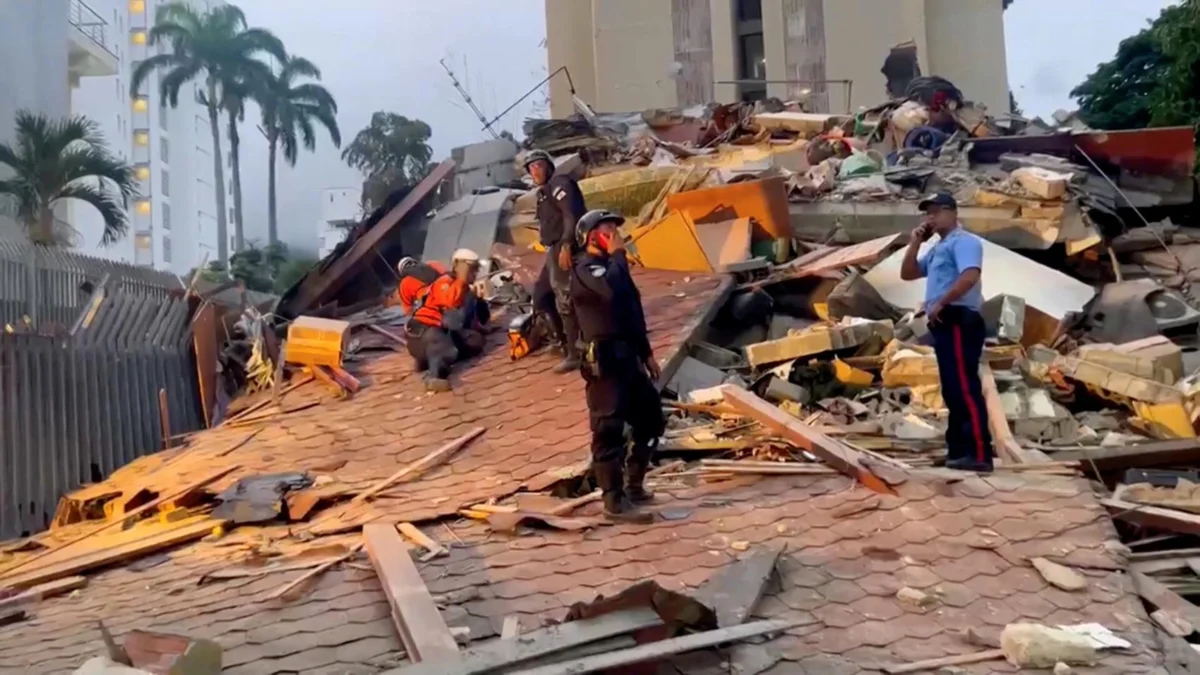
CARACAS, Venezuela — A catastrophic seismic event has brought Venezuela to a standstill after two massive, back-to-back earthquakes rocked the nation on Wednesday, leaving at least 32 people dead and over 700 injured. As the dust settles over the capital, Caracas, and surrounding regions, the scale of the destruction has prompted a desperate search-and-rescue operation and an international plea for assistance.
Interim President Delcy Rodriguez, addressing a shell-shocked nation in the early hours of Thursday, described the disaster as a "true tragedy." While official counts currently stand at 32 fatalities, authorities fear the final toll could be significantly higher. Predictive modeling from the U.S. Geological Survey (USGS) suggests the human cost could climb into the thousands, with a high statistical probability of exceeding 10,000 deaths, given the structural integrity of urban areas and the proximity of the quakes to densely populated zones.
The Seismic Double-Strike: A Chronology of Terror
The seismic activity began in the late afternoon on Wednesday, a day marked by a public holiday that had many residents gathered in their homes. According to the USGS, the first tremor, a powerful magnitude 7.2 earthquake, struck approximately 160 kilometers west of Caracas. Before emergency services could even begin to process the initial reports of damage, a second, even more violent magnitude 7.5 tremor struck less than a minute later.
The sequence of events was described by survivors as a "horror movie." Maria Alejandra, a resident of an apartment complex in the capital, recounted the harrowing moments of the collapse: "We had to climb over the rubble and everything. The building superintendent with the baby and all the neighbors coming down. But from that building, I only saw that one family get out."
The tremors were felt acutely across the capital, a city still haunted by memories of the devastating 6.3 magnitude quake that leveled portions of the metropolitan area in 1967. As the ground shook, residents described a terrifying, deafening roar followed by the sickening sound of concrete buckling. For many, the first indication of the disaster was not the ground itself, but mobile alerts—seconds before the shaking intensified, phones across the city buzzed with emergency warnings, providing only a heartbeat of time to seek cover.
Assessing the Widespread Destruction
The epicenter of the dual quakes, located near the coastal region of Morón, has left infrastructure in shambles. Perhaps most concerning is the state of La Guaira, located just north of Caracas. As home to Venezuela’s primary international airport, the region is reported to be the worst-affected area, though current casualty figures from the government do not yet include this coastal hub, suggesting that the death toll will rise sharply once search teams gain access to the wreckage.
In the capital itself, the districts of Baruta and Chacao have been particularly hard-hit. Gustavo Duque, mayor of Chacao, confirmed that at least four major buildings had completely collapsed, burying residents beneath tons of debris. Interior Minister Diosdado Cabello, appearing alongside the President on state television, confirmed that civil protection forces are currently overwhelmed, utilizing every available resource to extract survivors from the ruins.
Emergency response has been severely hampered by damage to transport infrastructure. The closure of the main airport in Maiquetia has isolated the region, creating a logistical bottleneck for incoming medical supplies and specialized search-and-rescue teams. Furthermore, widespread power outages—common in the region even before the disaster—have plunged neighborhoods into darkness, forcing rescue workers to navigate hazardous, unstable piles of rebar and concrete by flashlight.
Official Responses and International Mobilization
The gravity of the situation has transcended the volatile political landscape currently defining Venezuelan governance. Interim President Rodriguez has signaled a pivot toward international cooperation, explicitly thanking global leaders for their immediate pledges of solidarity.
"We are carrying out very intense rescue efforts to save as many lives as God allows us to save," Rodriguez said. "We send our message of solidarity, and to those families who have lost loved ones, we reaffirm our condolences and our support in these difficult hours."
The response from the United States was swift. Despite the intense diplomatic friction between Washington and the interim administration—stemming from the January raid that led to the capture of former President Nicolas Maduro—U.S. President Donald Trump issued a statement via social media affirming the readiness of the U.S. to provide aid.
"The two major earthquakes that just hit the great people of Venezuela are both massive in scale and have left a devastating number of deaths," Trump noted. "The U.S. is ready, willing, and able to help."
The U.S. State Department has confirmed it is in direct communication with local authorities to coordinate the logistics of humanitarian assistance. Other nations, including Brazil, the Dominican Republic, and El Salvador, have also mobilized offers of aid, with the Venezuelan Foreign Ministry now tasked with the complex challenge of integrating these international assets into a fractured domestic relief framework.
Implications for Energy and Economy
While the human cost remains the primary focus, the economic implications of the earthquake are already being scrutinized. Venezuela is a nation built on oil, and the integrity of its energy infrastructure is vital to the country’s precarious recovery.
Initial reports from major energy stakeholders provide a glimmer of stability amidst the chaos. Authorities in Maracaibo, situated near the nation’s critical oil hub on Lake Maracaibo, reported no significant injuries or structural damage to regional infrastructure. Similarly, workers at the El Palito refinery, located near the epicenter, confirmed that operations remain intact. UK-based energy giant Shell, which maintains significant interests in Venezuelan gas fields, reported that all of its personnel in the country are accounted for and unharmed.
However, industry analysts warn that the disaster could still exert downward pressure on oil output. While physical infrastructure appears resilient, the secondary effects of the earthquake—specifically the collapse of the national power grid and the potential disruption of supply chains—could hinder production levels in the coming weeks. Neither the Venezuelan oil ministry nor the state-run company PDVSA has provided a comprehensive assessment of the disaster’s impact on long-term crude output.
A Nation in Mourning and Suspense
As Thursday morning dawned, the city of Caracas remained in a state of suspended animation. Schools have been shuttered for the remainder of the week, and hospitals—already struggling under the weight of previous economic crises—are now operating at triple capacity. At the Hospital de Clinicas, management has ordered staff to double up on shifts, bracing for an influx of trauma victims that has not yet peaked.
For the people of Venezuela, this disaster is a grim reminder of the country’s place atop the intersection of the Caribbean and South American tectonic plates. Historical records from the USGS note that in 1812, a similar seismic event caused the deaths of approximately 30,000 people in the cities of Merida and Caracas.
As the sun rises over the ruins of the capital, the sound of sirens and the frantic digging of residents and first responders define the atmosphere. The "horror movie" described by survivors is far from over; for those still waiting for word of missing loved ones beneath the collapsed high-rises of Caracas, the most difficult hours are yet to come. The resilience of the Venezuelan people is now being tested on a scale not seen in generations, as the nation stares into the abyss of a humanitarian disaster that will require years of reconstruction and support from the global community.


 Neng Nana
 Asro
Asro