In the rapidly evolving landscape of global entertainment, the bridge between South Korean webtoons and big-budget cinema has never been stronger. Lezhin Entertainment, a powerhouse in the digital comics industry with over 10 million readers worldwide, has officially set the stage for one of its most ambitious projects to date: the film adaptation of Kim Sung-nyung’s acclaimed webtoon, Happy Boy. Currently titled Concrete Utopia, the production has generated significant buzz not only for its source material but for its star-studded cast, which features some of the most prominent names in Korean cinema.
The Powerhouse Trio: Casting and Creative Vision
The announcement, originally made by Lezhin Entertainment on August 5th, confirmed that the film will be led by an all-star ensemble: Lee Byung-hun, Park Seo-joon, and Park Bo-young.
Lee Byung-hun, a veteran of both Korean cinema and Hollywood, brings a gravitas to the project that suggests a complex, layered narrative. He is joined by Park Seo-joon, a global icon known for his versatility in romantic comedies and intense dramas, and Park Bo-young, whose nuanced performances have made her a staple of the Korean box office.
The project is helmed by director Uhm Tae-hwa, celebrated for his work on The Hidden Time and The Fighting. Under his direction, Concrete Utopia aims to translate the psychological intensity of the webtoon into a cinematic experience that challenges the audience’s perceptions of morality under duress.
Unpacking the Source Material: The World of ‘Happy Boy’
To understand the stakes of Concrete Utopia, one must look at the two-part narrative structure of Kim Sung-nyung’s original work. The webtoon is essentially a two-act study of human fragility and transformation.
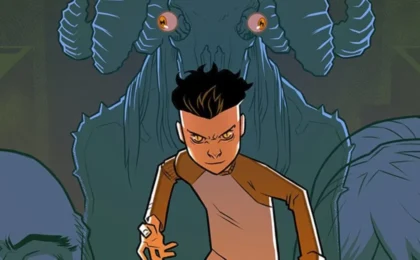
The first portion of the comic follows a group of high school students trapped in a school building following a catastrophic, unforeseen disaster. Through the eyes of Donghyun, a social outcast, the story explores the visceral fear, claustrophobia, and the volatile emotional dynamics that emerge when young people are stripped of their societal support systems.
The second part, titled "Pleasant Neighbors," shifts the focus to the broader social implications of such a disaster. This is the portion upon which the film Concrete Utopia will focus. It delves into the harrowing transformation of ordinary individuals who, when pushed to the brink of survival, begin to prioritize their own existence over empathy, ethics, and community. The story serves as a mirror, asking the audience to consider how power dynamics shift when the veneer of civilization is peeled away by tragedy.
Chronology of Development and Production
The journey of Happy Boy from a digital panel to a cinematic feature is part of a larger strategy by Lezhin Studios to capitalize on the rich intellectual property inherent in the webtoon medium.

- 2018: Lezhin Entertainment acquires Lezhin Studios, explicitly aiming to bridge the gap between their digital comics platform and the film and television industry.
- 2019-2020: The studio successfully produces Method and Chomi’s Interest for tvN, proving their ability to manage complex narrative transfers.
- August 5, 2020: The official announcement of the Concrete Utopia project is made, identifying the main cast and director.
- August 25, 2020: Industry reporting confirms the project is moving into advanced pre-production, with plans for a 2021 filming schedule.
- Future Outlook: The studio has signaled that Concrete Utopia is merely one piece of a broader portfolio, with D.P. Dog’s Day also currently in development for a film adaptation.
Lezhin Studios: An Evolving Media Titan
Lezhin Studios has established itself as more than just a production company; it is an incubator for genre-defying content. By integrating their internal catalog of webtoons with film production, they are essentially creating a self-sustaining ecosystem of content creation.
Their production slate is aggressive and diverse. Currently, the studio is deep in the pre-production phases for Method: A Second Attempt and the much-anticipated Netflix original series, Hell. This momentum suggests that Lezhin is positioning itself to be a key supplier of prestige content for both traditional theatrical distribution—as seen with the Lotte Entertainment partnership for Concrete Utopia—and the rapidly expanding streaming market.
The Philosophy of Survival: Creator’s Perspective
Kim Sung-nyung, the creative mind behind the source material, has expressed his support for the adaptation. In a statement provided during the project’s announcement, Kim reflected on the thematic core of his work:
"I’m looking forward to seeing how the movie depicts the change people go through when placed in extreme situations and the themes of preserving one’s humanity in the process."
This statement highlights the central tension of Concrete Utopia. The film is not merely a disaster movie; it is an existential character study. The shift from the "high school" setting of the first act to the "neighborhood" setting of the second is a calculated move to broaden the scope of the story, showing that the degradation of social morality is a universal phenomenon, regardless of age or social standing.
Implications for the Korean Film Industry
The production of Concrete Utopia represents a significant shift in the Korean entertainment industry. Historically, films based on graphic novels were often viewed as niche, but the success of the webtoon-to-screen pipeline has shifted the industry’s center of gravity.
1. The Rise of Webtoon IPs
The global success of titles like Kingdom or Sweet Home has proven that the sophisticated, often dark, and highly visual nature of Korean webtoons is perfectly suited for high-budget, live-action adaptation. Studios are now aggressively bidding on webtoon rights before the source material has even finished its digital run.
2. Star Power and Prestige
By casting actors of the caliber of Lee Byung-hun and Park Seo-joon, the producers are signaling to both domestic and international markets that this is a "prestige" project. This move ensures that Concrete Utopia will likely receive significant distribution support, both in Korea and through global streaming platforms.

3. Cultural Export and Narrative Complexity
South Korean cinema has been defined by its ability to blend genre tropes with deep social commentary. Concrete Utopia follows in this tradition. By focusing on the "reversal of power dynamics," the film promises to be a critical analysis of human behavior, potentially resonating with global audiences who have become increasingly familiar with themes of societal collapse and resilience in the face of uncertainty.
Challenges and Expectations
While the project has all the hallmarks of a blockbuster, the challenges are significant. Adapting a serialized webtoon—which relies on the slow-burn development of characters over dozens of chapters—into a two-hour film requires ruthless editing and thematic distillation.
Director Uhm Tae-hwa is known for a visually distinctive, atmospheric style, which will be essential in capturing the claustrophobic nature of the "concrete utopia" mentioned in the title. The irony of the title—the juxtaposition of a perfect, orderly society with the brutal reality of survival—will be the linchpin of the film’s success.
As the production team moves into the 2021 filming cycle, the industry will be watching closely. If Concrete Utopia succeeds, it will likely accelerate the trend of deep-collaboration between webtoon publishers and film studios, further cementing South Korea’s status as a premier hub for high-concept storytelling.
Conclusion
The announcement of Concrete Utopia is more than just a casting update; it is a declaration of intent. As Lezhin Studios continues to push the boundaries of how its digital content is consumed, it is bringing complex, character-driven stories like Happy Boy to a wider, global audience.
With a visionary director, a powerhouse cast, and a source material that is as haunting as it is relevant, Concrete Utopia is positioned to be a landmark film. It serves as a reminder that even in the most catastrophic, "concrete" settings, the most compelling stories are always those that explore the resilience, or the loss, of our shared humanity. As production continues, audiences around the world wait to see if this "utopia" will be as visually and emotionally transformative as the original panels promised.