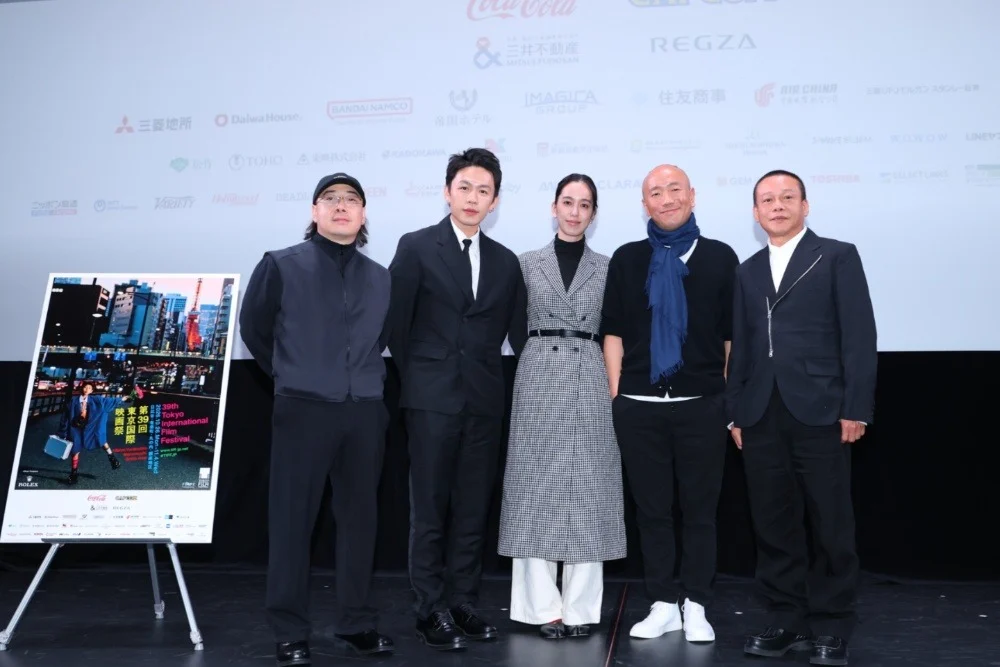
In the quiet, suspended reality of the global pandemic, when the world’s rhythms were forcibly recalibrated, Chinese filmmaker and painter Qiu Jiongjiong found himself contemplating the most fundamental human act: the gathering of people around a table. This meditation on sustenance, both physical and spiritual, has culminated in his latest cinematic achievement, Fuxi: Four Tales of Feasting. Currently competing at the Tokyo International Film Festival, the film stands as a surreal, ambitious exploration of human history, stitched together by the threads of cuisine and the universal search for meaning.
The Genesis of a Culinary Odyssey
The concept for Fuxi—a title that evokes both the physical pleasure of consumption and the ritualistic act of dining—emerged from the isolation of lockdown. For Qiu, who has built a reputation for blending the sensibilities of a painter with the structural language of cinema, the pandemic provided a moment of profound clarity. As humanity was physically distanced, the yearning for communal tables became a potent symbol of survival and continuity.
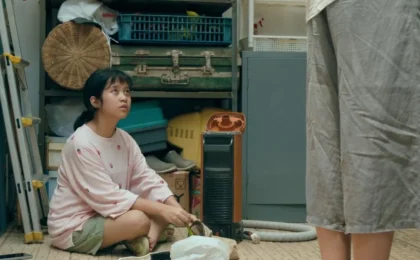
Fuxi is not a conventional narrative. Instead, it is an anthology of four distinct eras, each presented through a lens of fantastical, non-realistic aesthetics. By centering each segment on a meal, Qiu attempts to bridge the vast chronological divide between ancient history and contemporary existence. He treats the dining table as a microcosm of the universe, where the trivialities of daily life collide with the monumental questions of life, death, and the passage of time.
A Chronology of Consumption: From Prehistory to Poetics
The structural backbone of the film is its four-part progression. Rather than a linear historical account, Qiu opts for a "relativity" of experience, where the "large" (the cosmos, the sun, the moon) is constantly measured against the "small" (a bowl of food, a conversation, a life).
The Prehistoric Transformation
In the film’s opening chapter, which delves into a primordial past, Qiu makes the daring casting choice of Lee Kang-sheng. The Taiwanese actor, best known for his decades-long collaboration with auteur Tsai Ming-liang, portrays a dying grandmother—a role that requires him to embody the frailty and wisdom of the ancient.
The casting was, according to Qiu, a result of Lee’s inherent "mysterious quality." The director felt that Lee’s screen presence, often defined by a quiet, meditative stillness, was perfectly suited to the ethereal nature of a prehistoric character. Despite the linguistic barrier—the entire film is performed in the Leshan dialect of Sichuan province, a language Lee did not speak—the actor immersed himself in the role, working tirelessly with dialect coaches to capture the cadence of a forgotten world.
The Song Dynasty Poet
In a later segment, the film shifts to the literary heights of the Song dynasty. Taiwanese actor Lee Hong-chi takes on the mantle of the legendary poet Su Dongpo. Like his co-star, Lee Hong-chi found himself navigating the complexities of the Leshan dialect, a challenge he embraced for the opportunity to work within Qiu’s unique visual framework. For Lee, the appeal lay in the director’s ability to create a world that felt untethered from the constraints of realism, allowing for a performance that prioritized atmosphere over historical literalism.
Supporting Data and Creative Evolution
For Qiu Jiongjiong, Fuxi marks a significant departure from his previous feature, A New Old Play. While that work was an intimate, inward-looking exploration of an individual’s personal history, Fuxi is an outward-facing project that engages with the collective human experience. It also represents the first time the director has worked with a cast of professional actors, a transition he notes has significantly broadened his creative ambitions.
The project has extended well beyond the cinema screen. Concurrent with the film’s festival run, Qiu is presenting a solo exhibition titled Qiu Jiongjiong: Fuxi: A Feast for the Universe at the A4 Art Museum in Chengdu. Running through January 31, the exhibition serves as a companion piece to the film. It features three elaborate, Sichuan-style banquet installations, utilizing painting, video, and immersive media to further interrogate the region’s cultural attitudes toward life and death.
Official Perspectives and Artistic Philosophies
In interviews, the collaboration between director and stars reveals a deep mutual respect for the craft of performance and the philosophy of art.
Lee Kang-sheng, reflecting on the experience of playing a woman in a dialect he did not understand, describes the process as one of the most challenging in his storied career. "This may be the film with the most dialogue I’ve ever had, but I couldn’t understand a word of it," he notes. Yet, this opacity became an asset. By focusing on the sound and rhythm of the dialect rather than the literal meaning, Lee was able to tap into a visceral, non-verbal performance that resonates with the film’s surrealist goals.
The actors’ own cinematic influences also highlight the intellectual space in which Fuxi operates. Qiu cites Christopher Nolan’s The Odyssey as a source of fascination, particularly in how it reconstructs history through a specific aesthetic. Meanwhile, Lee Kang-sheng reveals that his recent viewing of Stanley Kubrick’s 2001: A Space Odyssey—recommended by friends Chang Chen and Tsai Ming-liang—has reshaped his curiosity about the limits of film. "I was surprised that such a brilliant film could have been made so long ago," Lee remarks. "It made me more curious about different kinds of films."
Implications for the Future of Independent Cinema
The release of Fuxi and the accompanying exhibition suggest a growing trend in contemporary Chinese art: the move toward multidisciplinary storytelling that refuses to be categorized. By synthesizing the act of eating—a biological necessity—with the lofty concerns of philosophy and history, Qiu Jiongjiong is carving out a niche that feels both deeply local to the Sichuan province and universally resonant.
The implications for the actors involved are equally compelling. Lee Kang-sheng, having recently completed filming on Argentine director Iván Fund’s science-fiction feature Bodies of Summer, is clearly at a crossroads in his career. While his partnership with Tsai Ming-liang remains a cornerstone of his identity, his willingness to engage with the "strangeness" of Qiu’s project and his expressed interest in the genre work of Jason Statham suggests a desire to subvert his own image.
"Whether I’m playing a gangster or an old woman, I want to bring my own version of Lee Kang-sheng to the role," he says. This indicates that the "Lee Kang-sheng" brand is no longer just about the minimalist aesthetic he helped pioneer, but about a versatile engagement with the global film landscape.
As for Qiu, he remains enigmatic about his next steps. While he is currently developing a new project, he has yet to commit to a specific medium or subject matter. If Fuxi is any indication, however, his next venture will likely continue to explore the "relativity" of our existence—the delicate, often surreal connections between the grand scale of the universe and the small, intimate rituals that keep us grounded.
Conclusion
Fuxi: Four Tales of Feasting is more than a film; it is an invitation to sit at a table that spans time and geography. By focusing on the Leshan dialect, the visual richness of Sichuan culture, and the transformative power of food, Qiu Jiongjiong has crafted a work that demands the audience slow down and participate in the banquet. In doing so, he reminds us that regardless of the era, the language, or the century, the act of sharing a meal remains our most persistent, and perhaps most meaningful, human connection.