

For years, the professional creative community has lived in a state of bittersweet transition. When Apple transitioned from Intel processors to its proprietary Apple Silicon architecture, the industry gained unprecedented power efficiency and raw computational speed. However, it sacrificed the modularity that defined the "pro" desktop experience—specifically the ability for users to upgrade their own RAM.
Now, according to the latest intelligence from Bloomberg’s Mark Gurman, Apple is preparing a monumental leap that could reconcile its unified memory architecture with the extreme demands of enterprise-level workflows. The upcoming M7 Ultra chipset is reportedly engineered to support a staggering 1.5TB of RAM, a development that signals Apple’s intent to finally eclipse the ceiling set by the 2019 Intel-based Mac Pro.
Main Facts: The 1.5TB Threshold
The core of the news lies in the architectural headroom being built into the M7 Ultra. While Apple’s "Unified Memory" architecture—where the RAM is soldered directly onto the processor die—provides industry-leading bandwidth and latency, it has historically placed a hard cap on capacity.
By pushing the design parameters of the M7 Ultra to accommodate 1.5TB of memory, Apple is effectively signaling that it intends to cater to the most demanding data scientists, 3D animators, and researchers who require vast memory pools for large-scale language models (LLMs) and complex simulation renders.
However, there is a caveat: this capacity is currently a design goal. Gurman notes that the final availability of this configuration remains contingent on global memory-chip market stability. Given the current volatility in the semiconductor supply chain and the rising costs of high-density memory modules, Apple may choose to throttle the launch configuration to protect profit margins and ensure supply chain viability.

Chronology: A History of Apple Silicon Memory Constraints
To understand why the M7 Ultra represents such a significant pivot, one must look at the trajectory of memory configurations in Apple Silicon Macs over the last few years.
- The M1 Era: Apple debuted its unified architecture, proving that 16GB of unified memory could outperform 32GB of traditional RAM due to proximity to the GPU and CPU. However, "pro" users felt the squeeze as the top-tier M1 Ultra capped out at 128GB.
- The M2 and M3 Transition: As the chips grew more powerful, so did the memory ceilings. The M3 Ultra, however, became the center of a controversy when Apple abruptly discontinued the 512GB and 256GB memory configurations for the Mac Studio. This left power users with a 96GB or 128GB ceiling, forcing many to hold onto older Intel-based hardware.
- The M5 Pivot: Reports indicate that later this year, Apple will introduce the M5 Ultra, which is expected to support up to 768GB of unified memory. This will mark a new high-water mark for the company, effectively doubling the previous generation’s capabilities.
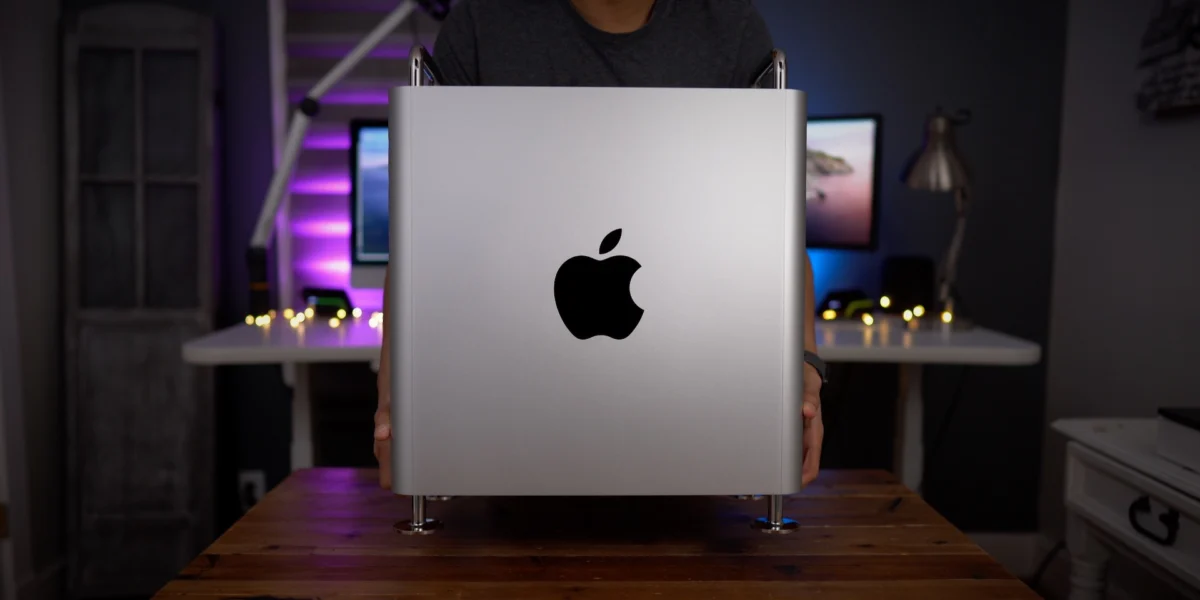
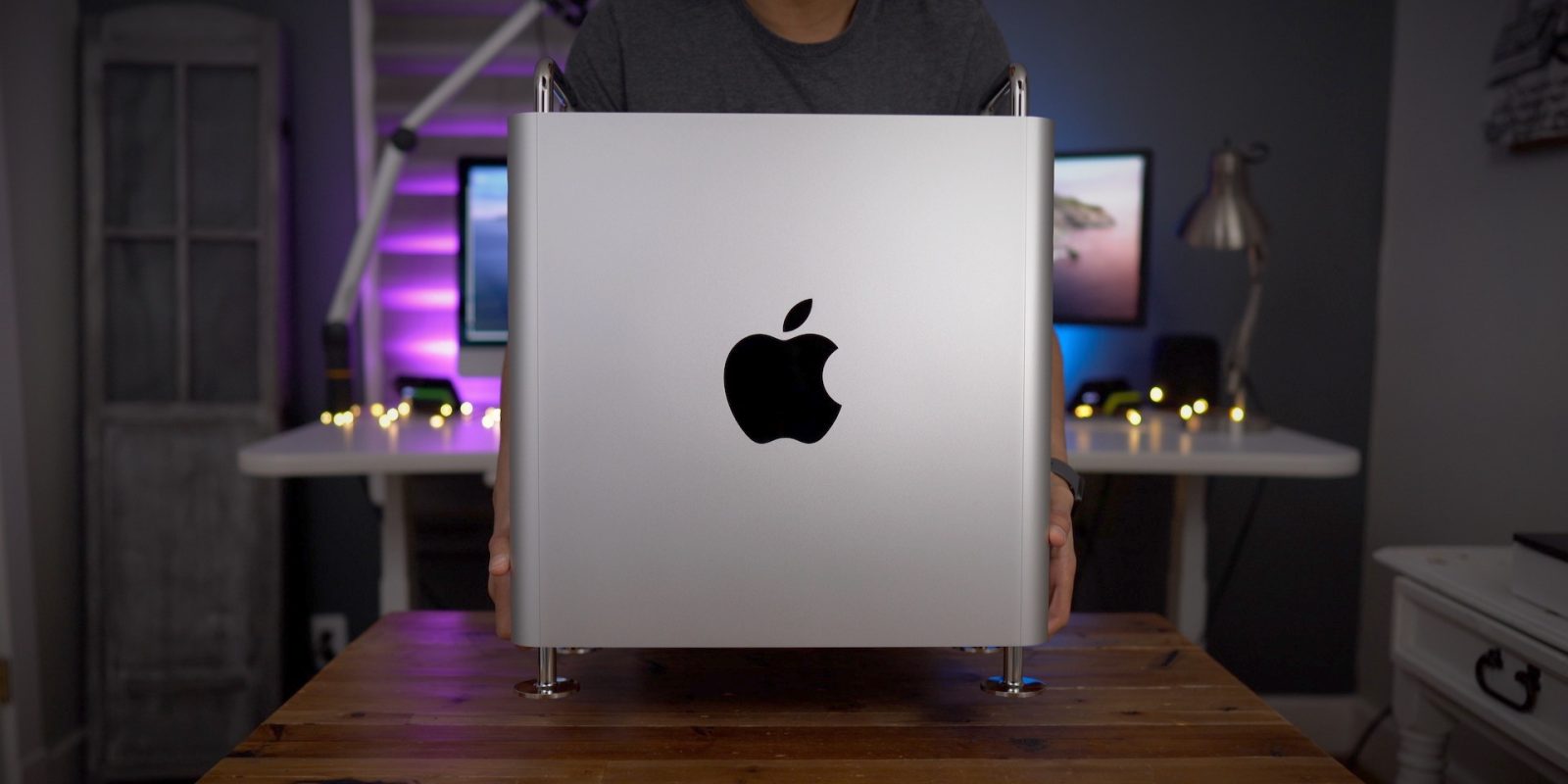
- The M7 Vision: Looking toward the future, the M7 Ultra is positioned to be the "Great Equalizer," matching the 1.5TB limit of the iconic 2019 Mac Pro "cheese grater" tower, but doing so with the efficiency and performance gains of Apple’s proprietary Silicon.
Supporting Data: The Cost of Performance
The transition to such high memory tiers is not merely a technical challenge; it is a financial one. If we extrapolate from Apple’s current pricing models, where memory upgrades typically carry a significant premium—roughly $25 per additional gigabyte—the cost of a 1.5TB machine becomes staggering.
For a base model starting at 128GB, jumping to 1.5TB involves an increase of approximately 1,372GB of RAM. At current industry rates for high-performance enterprise memory, users should expect to pay a premium that could push the total cost of the machine well north of $35,000.
This pricing tier firmly places the 1.5TB M7 Ultra Mac in the "Enterprise/Workstation" category, alongside high-end NVIDIA DGX systems or specialized workstations from HP and Dell. It is a niche, but one that is vital for Apple’s ongoing efforts to maintain relevance in the AI and Machine Learning sector.
Official Responses and Market Silence
As is customary, Apple has remained characteristically silent regarding the leaked specifications of its future silicon roadmap. The company’s policy is to avoid commenting on unreleased products or industry rumors.
However, supply chain analysts note that Apple’s engineering teams have been in constant communication with memory suppliers—such as Micron, Samsung, and SK Hynix—to secure high-bandwidth, high-density DRAM capable of meeting the power and thermal requirements of the M7 Ultra architecture. These back-channel negotiations are essentially the "official" evidence that these chips are currently in active development.
Implications: What This Means for the Industry
The move toward 1.5TB of RAM has massive implications for several key sectors:
1. The Death of the "Memory-Limited" Narrative
For the past four years, the primary critique of Apple Silicon has been its inability to handle massive, multi-terabyte datasets in real-time. By reaching the 1.5TB threshold, Apple effectively eliminates the only remaining argument for maintaining legacy Intel-based workstations. This will likely trigger a final, massive migration of enterprise users to the Apple ecosystem.
2. AI and Large Language Model (LLM) Development
Running local LLMs requires massive amounts of VRAM. Because Apple’s unified memory is shared between the CPU and GPU, a 1.5TB system would allow for the local hosting of enormous AI models that were previously impossible to run on a consumer-grade desktop. This turns the Mac Studio or Mac Pro into a premier machine for AI researchers who prefer the macOS interface.
3. The Future of Thermal Management
Integrating 1.5TB of RAM onto a single chip die creates significant thermal challenges. High-density memory modules generate heat, and packing them next to an ultra-high-performance CPU creates a "heat soak" effect. The chassis design of the next-generation Mac Pro will likely need to be drastically overhauled to accommodate the cooling requirements of such a densely packed, power-hungry chipset.

4. Enterprise ROI
For creative studios, the $35,000 price point is not a deterrent, but a business expense. If an M7 Ultra machine can reduce render times from days to hours, the machine pays for itself in a matter of months. Apple’s willingness to build these machines shows they are listening to the feedback from high-end production houses that rely on the Mac ecosystem.
Final Thoughts: The Path Forward
The journey from the M1 to the M7 Ultra reflects a broader transformation of Apple. The company has moved from being a consumer electronics brand to a silicon powerhouse that dictates its own technical roadmap, independent of external chip manufacturers.
While the average user may never need more than 16GB or 32GB of RAM, the existence of the 1.5TB M7 Ultra configuration is a victory for the "Pro" moniker. It proves that Apple is still willing to invest in the extreme top-end of performance, ensuring that even as they move toward an AI-driven, highly integrated future, they remain the standard-bearer for creative and technical professionals.
As we await the debut of the M5 Ultra later this year, the industry will be watching closely to see how effectively Apple manages the thermal and supply chain challenges associated with these massive memory arrays. If the M7 Ultra succeeds, it will cement Apple’s place in the high-performance computing market for the next decade.











