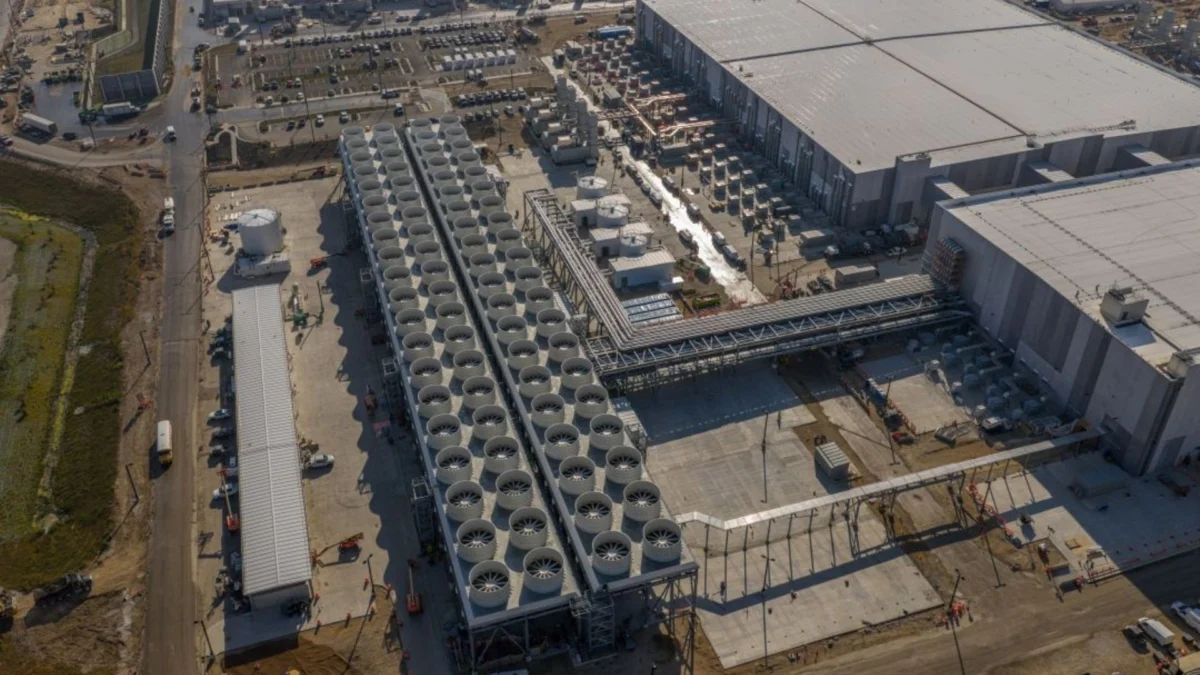
The rapid expansion of artificial intelligence (AI) infrastructure has triggered a seismic shift in energy policy and utility management. As AI models grow in scale, the data centers required to train and deploy them demand unprecedented amounts of electricity. This surge has placed a spotlight on the relationship between big tech and local power grids, leading to increased community skepticism and regulatory scrutiny. In response, OpenAI has introduced its "Grid Protectors Program," a strategic initiative designed to synchronize data center operations with the stability of local energy grids, aiming to appease local residents and utility providers alike.
The Core Challenge: Data Centers and Grid Strain
At the heart of the modern technological revolution lies the data center—a physical manifestation of the cloud. These facilities, filled with thousands of high-performance GPUs, are ravenous for electricity. When a new data center is proposed, it is rarely met with universal enthusiasm. Residents often cite fears of increased utility costs, potential blackouts, and the strain on local infrastructure as primary reasons for their opposition.
The concern is not unfounded. The power requirements for AI-focused data centers are significantly higher than those of traditional web-hosting facilities. To sustain the massive compute power required for Large Language Models (LLMs), these centers require high-voltage connections and constant uptime. When demand on the grid spikes—due to heatwaves, cold snaps, or general industrial usage—the presence of an massive, energy-intensive data center can exacerbate local grid volatility.
OpenAI’s Grid Protectors Program seeks to address this friction by introducing a "demand-responsive" architecture. By shifting from a static power consumption model to a flexible one, the company intends to demonstrate that data centers can be "good neighbors" to the communities that host them.
Chronology of the Power Crisis and Response
The relationship between AI development and energy consumption has evolved rapidly over the last three years:
- 2022–2023: The AI Boom: Following the public release of ChatGPT, the industry saw an exponential increase in the demand for compute. This led to a scramble for real estate and power capacity across the United States.
- Early 2024: Community Backlash: As utility companies struggled to keep up with the projected load increases, local planning commissions began pushing back. Significant public resistance emerged in regions like Northern Virginia and the American Southwest, where residents voiced concerns about environmental impact and grid reliability.
- Mid-2024: Regulatory Pressure: State utility commissions began implementing stricter requirements for data center operators, forcing them to prove their projects would not destabilize the grid.
- Late 2024: The Launch of Grid Protectors: Recognizing that infrastructure bottlenecks could throttle its growth, OpenAI formally unveiled the Grid Protectors Program. This marked a shift in corporate strategy, moving from "energy consumer" to "grid partner."
Supporting Data: Why Flexibility Matters
To understand the necessity of this program, one must look at the data regarding peak load management. Utility grids are designed to handle peak demand, but when that peak exceeds supply, providers must fire up "peaker plants"—often the least efficient and most polluting sources of energy.
- Load Shedding Capability: By participating in the Grid Protectors Program, OpenAI data centers can throttle non-essential background tasks during periods of grid stress. This allows the facility to effectively "shed" load during peak hours, freeing up megawatts for residential and commercial use.
- Infrastructure Lead Times: Traditionally, building a data center requires waiting for utility providers to upgrade local substations and transmission lines—a process that can take years. By demonstrating that they can operate with a dynamic load, data centers may be able to bypass some of these long-term infrastructure requirements, allowing them to go online significantly faster.
- Economic Impact: Estimates suggest that grid-responsive data centers could reduce the total cost of energy upgrades for local communities by 15% to 20%, as the facilities no longer require the same level of static grid reinforcement.
Official Responses and Corporate Strategy
In its official documentation, OpenAI describes the program as a fundamental shift in how AI companies view infrastructure. The company maintains that its mission is to build AI that benefits humanity, which includes ensuring that the energy footprint of its development does not come at the expense of local citizens.
"Our goal is to ensure that as we scale the compute necessary for AI research, we do so in a way that supports, rather than burdens, the communities we operate in," an OpenAI spokesperson stated. "The Grid Protectors Program allows us to utilize the grid when it is under-utilized and step back when the community needs that power the most."
Utility providers have largely welcomed the initiative. By having a large, flexible load that can be signaled to drop consumption instantly, utility operators gain a powerful tool in their effort to maintain grid frequency and stability. This partnership creates a symbiotic relationship: the tech giant gets the energy it needs, and the utility provider gains a sophisticated tool for load balancing.
The Broader Implications: A Model for the Future?
The introduction of the Grid Protectors Program carries significant implications for the broader tech industry and energy sector.
1. Shifting Public Perception
If successful, this program could serve as a blueprint for other AI companies, such as Google, Microsoft, and Amazon. If the industry can prove that it is proactively managing its energy impact, the current wave of "anti-data center" sentiment may subside, paving the way for easier site selection and permitting.
2. Decoupling Growth from Carbon
There is a long-term goal here: decoupling AI growth from fossil-fuel-reliant grid stress. By aligning compute cycles with the availability of renewable energy (e.g., training models primarily when solar or wind production is high), OpenAI is essentially attempting to turn data centers into "load-balancing batteries."
3. The Regulatory Landscape
Governments are likely to watch this experiment closely. If the Grid Protectors Program proves effective at preventing outages during heatwaves, it may become a regulatory requirement for all hyperscale data centers. This would move energy management from a voluntary corporate social responsibility (CSR) initiative to a mandatory industry standard.
4. Technological Synergy
The integration of AI into grid management is, ironically, the solution to the problem AI created. By using AI algorithms to predict grid load and automate the throttling of data center compute, the industry is creating a self-optimizing system. This could lead to a more resilient national power grid overall.
Challenges Ahead: Technical and Operational Hurdles
Despite the promise of the program, there are significant hurdles. Implementing grid-responsive architecture requires:
- Latency-Sensitive Operations: AI training is a time-intensive process. If a data center must drop its load abruptly, it could potentially delay the training of a major model. OpenAI must develop sophisticated software that can pause or migrate workloads across different geographic regions without losing progress.
- Hardware Efficiency: Powering down GPUs frequently can lead to thermal stress on the hardware. Managing the cooling and power cycles of hundreds of thousands of GPUs without damaging them is an engineering challenge of the highest order.
- Standardization: For this to work on a national scale, there needs to be a standardized communication protocol between data centers and regional transmission organizations (RTOs). Currently, the energy market is fragmented, with different rules in different states.
Conclusion: The New Era of "Grid-Aware" Computing
The narrative surrounding AI has long been focused on the software—the parameters, the layers, and the intelligence. However, the future of the industry is increasingly tethered to the physical world of wires, transformers, and turbines. OpenAI’s Grid Protectors Program represents a maturation of the AI industry. It recognizes that the "AI revolution" cannot happen in a vacuum; it requires a stable, reliable, and equitable power grid.
As we look toward a future where AI is integrated into every facet of society, the energy footprint of these models will only grow. Whether this leads to a grid that is chronically strained or one that is smarter and more efficient depends on initiatives like this one. By choosing to collaborate with the power grid rather than simply tapping into it, OpenAI is signaling that the era of "growth at any cost" is giving way to a more sustainable, and ultimately more viable, model of development.
For the residents living near these massive server farms, the promise is clear: the lights will stay on, the grid will remain stable, and the technological progress of the next decade will not come at the cost of their daily comfort. The challenge now remains for the industry to execute this vision at scale, ensuring that "Grid Protection" is not just a marketing promise, but an engineering reality.