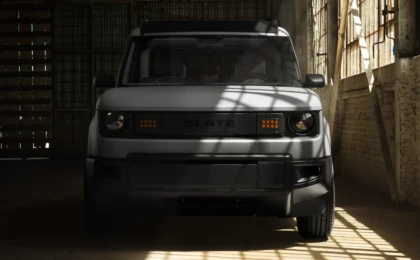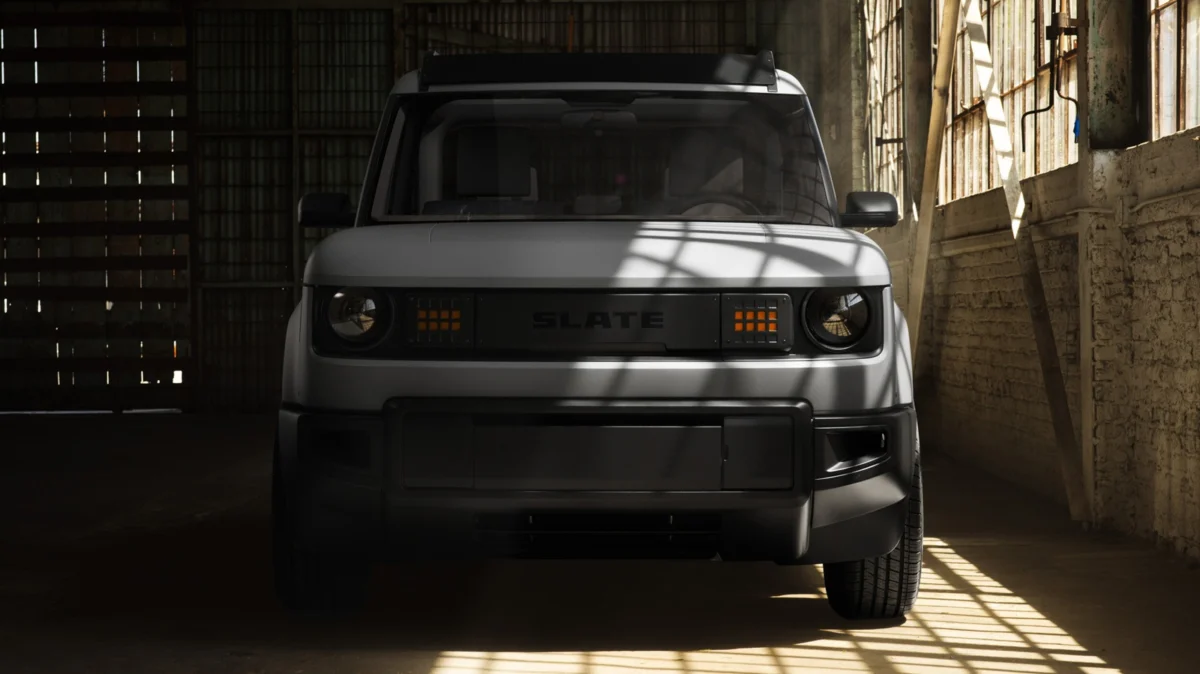
In the rapidly evolving landscape of the American electric vehicle (EV) market, the quest for the “affordable” electric pickup has been a elusive goal for many startups. Slate, a company that captured headlines in April 2025 with the unveiling of its utilitarian, “bare-bones” electric truck, is making a significant mid-stream adjustment to its powertrain strategy. In a move that prioritizes local supply chain efficiency and cost management over federal tax credit eligibility, the company has officially abandoned its initial plans for Nickel-Manganese-Cobalt (NMC) batteries in favor of a US-produced Lithium Iron Phosphate (LFP) system.
This pivot marks a critical juncture for Slate, reflecting the broader challenges facing EV manufacturers as they navigate shifting federal policies, raw material costs, and the practical realities of vehicle engineering.
A Chronology of Change: From NMC Ambitions to LFP Reality
When Slate first introduced its flagship pickup in the spring of 2025, the narrative was centered on a tiered battery strategy. The base model, marketed as a high-value entry point, was slated to house a 52.7kWh NMC battery supplied by SK On, targeting a modest range of 150 miles. For consumers seeking more utility, the company teased an 84.3kWh long-range configuration capable of covering 240 miles on a single charge.
However, the automotive industry is notoriously fluid. By June 2026, reports from the Detroit Free Press indicated that the company had shifted its focus. During interviews with Slate CEO Peter Faricy, it was confirmed that the company had abandoned the dual-battery strategy entirely. In its place, Slate has adopted a single, standardized LFP battery pack.
The source of this new hardware is Gotion, a battery manufacturer with a significant facility in Manteno, Illinois. This geographic proximity—the Manteno plant sits just 90 miles from Slate’s primary manufacturing hub in Warsaw, Indiana—represents a massive logistical upgrade over the originally proposed supply chain, which would have required shipping modules from SK On’s facility in Commerce, Georgia, over 700 miles away.
Supporting Data: Efficiency, Engineering, and Output
The transition to LFP chemistry has brought about a transformation in the vehicle’s performance profile, characterized by both gains and compromises.
The Range and Capacity Trade-off
The new Gotion-sourced pack offers a capacity of 65kWh, a significant jump from the original base model’s 52.7kWh. This increase, coupled with ongoing refinements to the vehicle’s aerodynamics and thermal management systems, has pushed the projected range to 205 miles. While this represents a notable improvement over the initial base model, it necessitates the discontinuation of the 240-mile extended-range option. Because the 65kWh LFP pack is physically larger and occupies the entirety of the allotted battery space beneath the chassis, the company lacks the spatial real estate to offer a higher-capacity variant without a total redesign of the platform.
Performance Metrics
The shift to LFP has also influenced the truck’s power output. Due to the lower voltage characteristics of the LFP chemistry compared to the original NMC configuration, the truck’s horsepower has seen a slight reduction, dropping from an initially targeted 201 hp to 181 hp. Despite this, Slate maintains that the vehicle remains capable of a 0-to-60 mph sprint in approximately 8 seconds—a performance level that remains competitive for an entry-level utility vehicle designed for work rather than track performance.
Price Stability
Perhaps most importantly for the consumer, the $24,950 base price (plus a $1,450 destination fee) remains intact. By utilizing LFP—a chemistry that relies on abundant iron and phosphate rather than expensive, volatile commodities like nickel, manganese, and cobalt—Slate has managed to insulate the truck’s price point from the fluctuations of the global battery materials market.
The Regulatory Puzzle: Why the Tax Credit Strategy Failed
To understand why Slate made such a drastic shift, one must look at the regulatory environment of 2025. Initially, the company designed its truck with the federal clean-vehicle tax credit in mind. The Inflation Reduction Act (IRA) offered potential savings of up to $7,500 for eligible buyers, but the requirements for battery component sourcing were stringent.
At the time of the vehicle’s design, using US-manufactured NMC cells from SK On appeared to be the most viable path to securing that credit, as it avoided the restrictions placed on supply chains heavily reliant on China. However, the regulatory landscape shifted under the feet of the industry. The federal tax credit for vehicles acquired after September 30, 2025, was phased out, effectively removing the primary incentive for Slate to adhere to the complex, costly sourcing requirements associated with the credit.
With the “tax credit carrot” removed, the logic of the supply chain changed overnight. Slate CEO Chris Barman noted that previous suppliers struggled with the capacity to meet federal sourcing rules, which were often at odds with the need for high-volume, cost-effective production. By sourcing from Gotion in Illinois, Slate not only improved its logistics but also gained a more reliable supply chain that was no longer tethered to the artificial demands of federal subsidies.
Official Responses and Strategic Implications
In conversations with InsideEVs throughout 2025 and 2026, leadership at Slate emphasized that the decision was driven by long-term viability rather than short-term marketing.
“We are excited to be able to provide more range and really maintain the price point,” Barman remarked in 2026. The move to a prismatic cell architecture—where cells are stacked directly into the pack rather than organized into traditional modules—has allowed for better space utilization, which was essential to making the 65kWh pack work within the truck’s existing chassis.
The "One-Size-Fits-All" Approach
The shift toward a single-pack strategy simplifies Slate’s manufacturing process. By removing the complexity of multiple battery configurations, the company can streamline its assembly line, reduce parts inventory, and provide a more consistent product. This is a classic "Ford Model T" approach to the modern electric era: reduce options to lower the cost of complexity.
Durability and Ownership
LFP chemistry is widely recognized for its robustness. Unlike NMC batteries, which are often recommended to be charged to only 80% to preserve long-term health, LFP packs are generally more tolerant of frequent charging to 100%. This is a crucial feature for a vehicle with a 205-mile range, as it allows owners to utilize the full capacity of the battery daily without the accelerated degradation associated with other chemistries. To back this up, Slate has implemented a 10-year or 110,000-mile warranty on the battery and powertrain, signaling confidence in the long-term viability of their new supplier.
Future Outlook: A New Standard for Utility EVs?
As the dust settles on this mid-cycle pivot, Slate finds itself in a distinct position. While it has sacrificed the “extended range” headlines it once courted, it has gained a more stable, local, and cost-effective foundation for its business.
The company’s ability to pivot—abandoning a high-profile partnership with SK On in favor of a domestically produced, logistics-friendly solution—highlights the agility required of new entrants in the EV space. Whether this "bare-bones" strategy will be enough to carve out a sustainable niche in a market dominated by legacy automakers remains to be seen. However, by choosing a path that prioritizes manufacturing proximity and price stability over the shifting sands of federal tax policy, Slate has signaled that it is playing the long game.
The 205-mile range, while still an estimate based on EPA test cycles, provides a functional baseline for small business owners and urban commuters—the core demographic Slate is targeting. As the company moves toward full-scale production, the focus will undoubtedly shift from specifications to delivery. For now, the Slate truck stands as a testament to the fact that in the world of electric mobility, the most successful designs are often the ones that can adapt most quickly to the realities of the road.