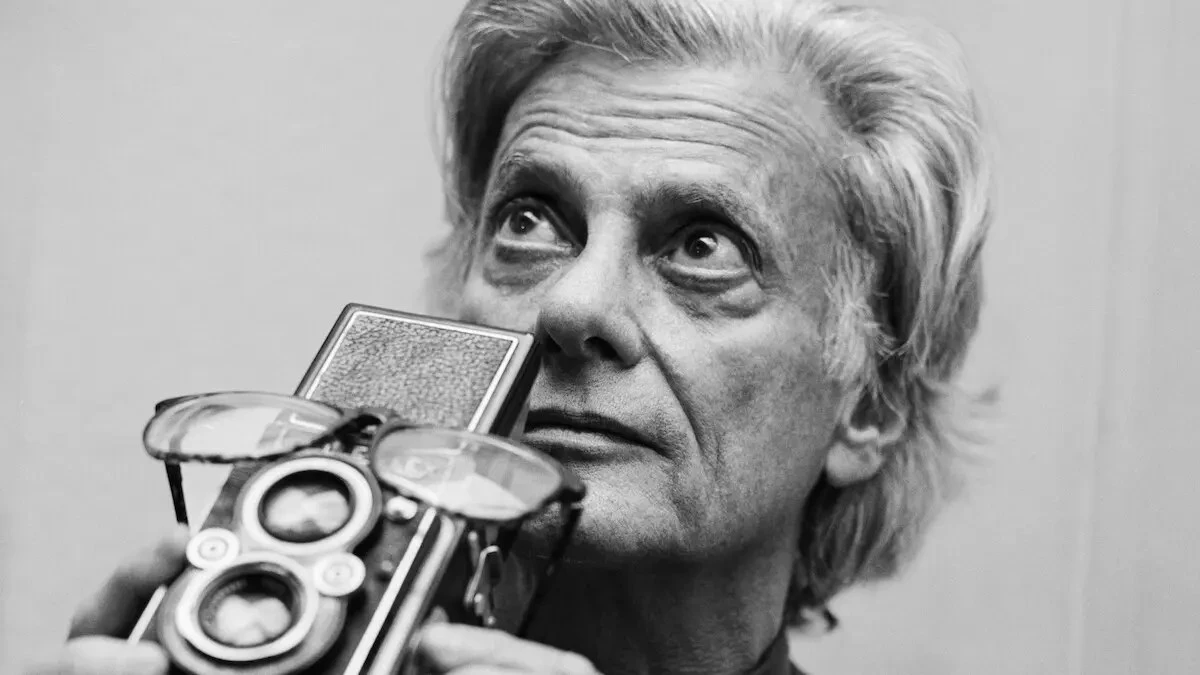
In the pantheon of 20th-century visual artists, few figures loom as large—or as enigmatically—as Richard Avedon. Now, director Ron Howard has captured the essence of this titan in his latest documentary, Avedon. It is not merely a biography; it is a masterclass in the art of the moving image. Howard, building on his previous successes, has crafted what is arguably his finest documentary to date, surpassing even the kinetic energy of The Beatles: Eight Days a Week. Through the expert editing of Andrew Morreale, the film weaves hundreds of Avedon’s iconic photographs into a tapestry that feels less like a historical retrospective and more like a musical composition of light and shadow.
The Metaphysics of the Snapshot: Core Facts
At its heart, Avedon explores a profound paradox: how a man synonymous with the exclusionary, high-gloss world of Vogue and Harper’s Bazaar could simultaneously serve as the ultimate democratic humanist. Avedon did not just take pictures of the famous; he stripped them of their public armor.
The documentary posits that Avedon fundamentally altered the metaphysics of photography. He shifted the world’s collective gaze from the staged, stiff portraiture of the early 20th century to a raw, existential encounter. The film effectively argues that Avedon’s technique was not found in his cameras or his f-stops—subjects about which he remained notoriously indifferent—but in the psychological space he carved out between the lens and the subject. By isolating his subjects against a stark, white background, Avedon removed the context of class, setting, and artifice, leaving only the humanity of the person standing before him.
A Life in Focus: Chronological Evolution
The trajectory of Richard Avedon’s life is a testament to the idea that genius often finds its footing in the most mundane of crucibles.
The Merchant Marine Origins (1940s)
Born in New York in 1923, Avedon’s aesthetic obsession began in childhood. He would often blink while walking down the street, keeping his eyes closed for a fraction of a second to "save" the image he had just seen, a precursor to the act of capturing a frame. However, his formal training was born of necessity. During his service in the U.S. Merchant Marines at age 19, he was assigned to the photography department, where he shot approximately 100,000 ID photos.
This period served as his crucible. While he viewed the task as the "potato peeling" of photography, he began to notice the profound vulnerability of the human face when confronted with a neutral, white void. This military necessity became the signature of his career. As he famously noted, he followed no rules and no laws; he simply followed the face.
The Rise of the Legend (1950s–1970s)
By the 1950s, Avedon was a cultural force. His influence was so pervasive that the 1957 musical Funny Face centered on a fashion photographer clearly modeled after him. During this era, he moved between the ethereal world of high fashion—exemplified by his kinetic, leaping models—and the grit of reality.
He moved from the glossy pages of fashion magazines to the dark, introspective documentation of the Vietnam War and the raw, unvarnished reality of the American West. His 1980 project on Oklahoma oil workers was so startlingly authentic that it was initially rejected by New York galleries, a common occurrence for a man who was consistently decades ahead of the cultural curve.
The Final Chapters (1980s–2004)
The latter part of his career was defined by reconciliation and profound intimacy. The film recounts the poignant story of his aging father, a project that allowed Avedon to navigate the complexities of their relationship through the lens. Even as he pivoted to high-end commercial work, such as the surrealist-inflected Obsession perfume spots, the film illustrates that there was no "selling out." Whether he was shooting a supermodel or a laborer, the goal remained identical: to force the viewer to see.
Supporting Data: The Anatomy of a Session
The documentary provides a rare, granular look at the sheer volume and methodology of Avedon’s career. The Richard Avedon Foundation, helmed by executive director James Martin, granted the filmmakers access to an archive spanning 60 years of activity.
- Output: 16,000 sittings recorded between 1944 and 2004.
- Averages: Despite the thousands of frames, Avedon rarely shot more than ten photos per session.
- The Methodology: As Isabella Rossellini recounts in the film, Avedon’s process was an exercise in patience and redirection. He did not chase the image through rapid-fire clicking; he waited for the subject to grow weary of the performance. He would often spend thirty minutes drinking coffee, establishing a rapport, before spending the final five minutes capturing the "real" subject.
This method explains the "Avedon touch"—the feeling that the subject is not being posed, but rather caught in a moment of existential honesty. Whether it was Charlie Chaplin using his hands to create devil horns in a spontaneous moment of play, or Marilyn Monroe drooping at the end of a long, performative day, Avedon captured the person behind the mask.
The Consensus: Expert and Personal Testimony
Howard draws upon an impressive roster of luminaries to contextualize Avedon’s impact. The film features:
- Artistic Contemporaries & Critics: Hilton Als, Adam Gopnik, and John Lahr provide the intellectual framework for understanding Avedon’s place in art history.
- The Industry: Figures like Tina Brown, Calvin Klein, and Larry Gagosian discuss his command of the media landscape.
- The Personal: Most moving is the contribution of his son, John Avedon, who offers an insightful, tender look at a man who was often described as "sleek" and "commanding," but who also navigated the deep, tragic waters of family mental illness and complex, troubled marriages.
Implications: The Legacy of the Unfiltered Lens
The implication of Avedon is that we are currently living in a post-Avedon world, yet we have lost his specific brand of magic. In an era of digital filters, AI-generated images, and the performative nature of social media, Avedon’s insistence on the "white paper" background—the removal of everything but the subject—feels radical.
Ron Howard’s film suggests that the "ineffable dance" between the photographer and the subject is a dying art. By archiving the process of his sittings, the documentary provides a blueprint for what it means to truly observe another human being. It frames Avedon not just as a technician of the camera, but as a chronicler of the human condition.
The film ultimately serves as a reminder that the most powerful images are not those that capture how a person looks, but those that capture who they are when they believe no one is watching. By deconstructing the myth of the "famous" and the "fashionable," Avedon revealed that everyone—from Orson Welles to a transient worker in the American West—possesses the same depth, the same sadness, and the same fleeting, beautiful reality. As the film concludes, it is clear: Richard Avedon did not just change photography; he changed the way we look at our neighbors.