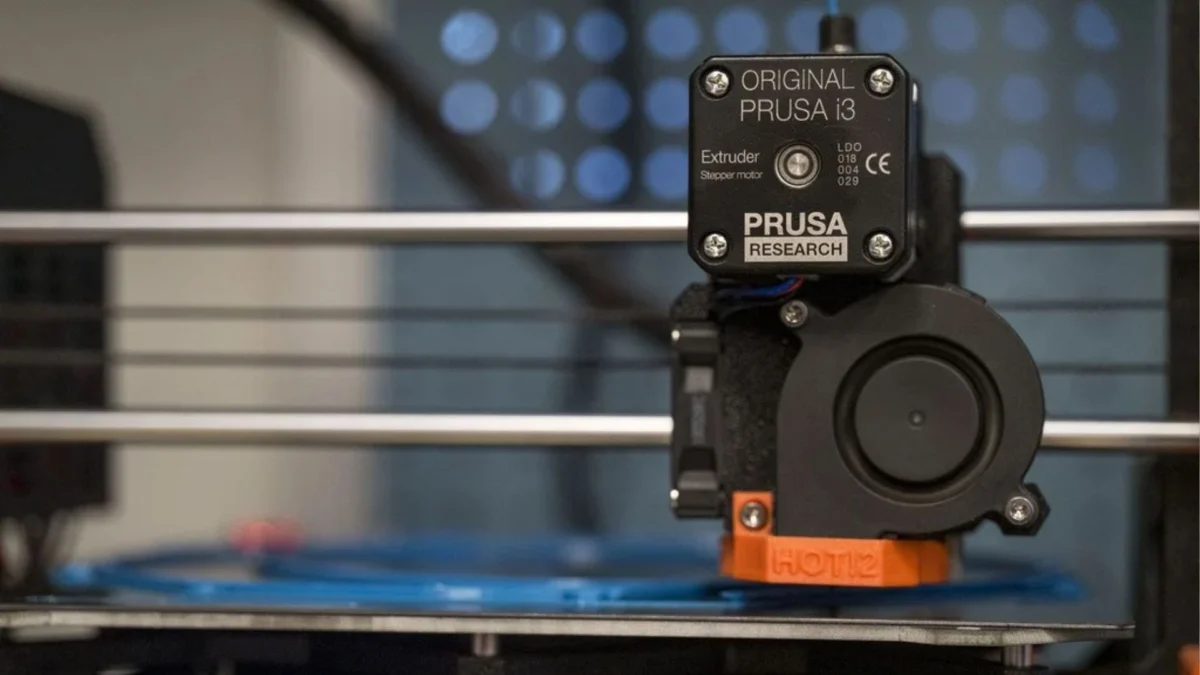
Prusa Research, a cornerstone of the global desktop 3D printing community, has officially expanded its high-performance material portfolio with the launch of Prusament PETG ESD. This new filament, which combines the structural benefits of carbon-fiber reinforcement with the critical properties of electrostatic dissipation, represents a strategic move by the Czech manufacturer to bridge the gap between hobbyist-grade 3D printing and industrial-scale electronics manufacturing.
Priced at $56.99 per kilogram, the material is positioned not merely as a novelty for makers, but as a specialized tool for engineers, technicians, and developers who work with sensitive electronic components prone to damage from static discharge.
The Core Innovation: What is PETG ESD?
At its core, Prusament PETG ESD is an engineered composite. PETG (Polyethylene Terephthalate Glycol-modified) is already a staple in the 3D printing world, favored for its balance of ease of printing, chemical resistance, and mechanical durability. By infusing this base polymer with a precise blend of carbon fibers and carbon nanotubes (CNTs), Prusa has created a material that satisfies the demanding requirements of ESD safety.
Understanding Electrostatic Dissipation (ESD)
Electrostatic discharge—the sudden flow of electricity between two electrically charged objects—is the silent killer of modern electronics. Even a minor discharge that goes unnoticed by a human can instantly destroy microchips, MOSFETs, and delicate sensor arrays. In professional electronics manufacturing, components are handled in strictly controlled environments to mitigate this risk.
Prusament PETG ESD provides a path for manufacturers to 3D print custom jigs, fixtures, and enclosures that safely conduct static electricity to ground, rather than allowing it to accumulate and arc onto sensitive circuitry. This is a game-changer for companies that require "one-off" or low-volume specialized tooling without the high overhead costs of traditional CNC machining or injection molding.
A Brief Chronology of Material Innovation at Prusa
To understand why this release is significant, one must look at the trajectory of Prusa Research’s material division, Prusament.
- 2018: The Inception of Quality: Prusa launched the Prusament brand, promising unprecedented quality control in filament manufacturing. This set a new industry standard for diameter consistency and material purity.
- 2020: The Carbon Fiber Pivot: As the Prusa i3 series of printers matured, the company began exploring high-performance composites, introducing Carbon Fiber-filled filaments that offered higher stiffness and better dimensional stability for mechanical parts.
- 2022-2023: Industrial Integration: Prusa began shifting its focus toward the "prosumer" and small-business markets, releasing materials designed for longevity and specific industrial applications, such as high-temperature resistance and chemical durability.
- 2024: The ESD Milestone: With the release of PETG ESD, Prusa has moved into the realm of functional electronics manufacturing. This marks a pivot where the printer is no longer just for prototyping mechanical shapes, but for creating components that function as part of an electronic assembly environment.
Supporting Data: Performance and Cost Analysis
The introduction of this filament arrives with a surprising pricing strategy. At $56.99, it is positioned more competitively than Prusa’s existing "Prusament PETG Carbon Fiber."
Mechanical vs. Electrical Properties
While the carbon fiber content provides excellent structural integrity, the inclusion of carbon nanotubes is the "secret sauce" for its ESD performance. Unlike traditional anti-static coatings which can wear off or flake, the conductive path in this filament is baked into the polymer matrix itself.
- Surface Resistivity: The material is engineered to fall within the optimal range for ESD safety, preventing the buildup of charge while maintaining enough resistance to avoid creating short circuits.
- Printability: Prusa has optimized the filament for standard hardened-steel nozzles, which are mandatory when printing with carbon-filled materials, as they are highly abrasive and will quickly degrade standard brass nozzles.
- Cost Efficiency: By offering an industrial-grade material at a price point accessible to small-scale workshops, Prusa is effectively lowering the barrier to entry for ESD-safe manufacturing. Traditionally, conductive filaments were either prohibitively expensive or notoriously difficult to print without specialized industrial equipment.
Official Perspective and Market Positioning
Prusa’s internal documentation emphasizes that while the material is fully capable of being used by a hobbyist to print a custom enclosure for a Raspberry Pi or an ESP32 microcontroller, the design intent is far more serious.
"We are moving toward a future where the 3D printer is a standard piece of equipment on the factory floor," a representative from the company noted. By providing technical data sheets and ensuring the material is consistent, Prusa is catering to engineers who need to perform stress-testing and quality assurance before integrating a 3D-printed part into a production line.
The company acknowledges that hobbyists are the backbone of their ecosystem, but they are clearly aiming to capture the "pro-sumer" market—the small boutique electronics manufacturers who are currently underserved by the massive, expensive industrial additive manufacturing machines.
The Broader Implications for the Electronics Industry
The launch of Prusament PETG ESD signals a shift in how electronics are manufactured.
1. Democratization of ESD Tooling
Previously, companies needed to outsource custom ESD-safe tooling to specialized plastic injection molding shops. This process is expensive and time-consuming, often taking weeks to get a prototype part. With a Prusa printer and a roll of PETG ESD, an engineer can design a specialized jig in the morning and have a functional, ESD-safe tool on the assembly line by the afternoon. This radical reduction in lead time is the primary advantage.
2. Customization of Enclosures
In the world of IoT (Internet of Things) and embedded systems, custom enclosures are a persistent challenge. Standard enclosures are rarely a perfect fit for a project that includes custom sensors or complex cable routing. Now, hobbyists and developers can build custom, static-shielded housings that protect their boards from the environment and from accidental static discharge, adding a layer of professional-grade reliability to DIY projects.
3. Sustainability and Waste Reduction
Because 3D printing is an additive process, it produces significantly less waste than subtractive manufacturing (CNC machining). For companies looking to reduce their carbon footprint while manufacturing low-run specialized tools, the combination of a sustainable material choice and additive manufacturing offers a clear path toward "greener" factory operations.
Challenges and Considerations
While the material is impressive, it is not without its limitations. Users must be aware that printing with carbon-fiber-filled filaments requires a hardened-steel nozzle. Printing with a standard brass nozzle will lead to the abrasive carbon fibers "drilling" through the nozzle, resulting in inconsistent extrusion and, eventually, a total failure of the print.
Additionally, ESD-safe materials often require higher print temperatures and specific bed adhesion settings to avoid warping. Users will need to calibrate their printers carefully. Prusa provides specific profiles for their machines, but users of third-party printers will need to invest time in testing their retraction settings and cooling speeds to achieve the high-quality finish necessary for functional parts.
Conclusion: A New Standard for Functional Printing
Prusament PETG ESD is more than just a new plastic; it is a declaration of intent. Prusa Research is doubling down on the idea that 3D printing is not just for toys, statues, and prototypes, but for real-world, high-stakes industrial applications.
By providing a reliable, cost-effective, and highly functional material, Prusa is empowering the next generation of engineers to build better electronics faster. As the line between "hobbyist" and "professional" continues to blur, tools like the Prusament PETG ESD will become the invisible, essential building blocks of the modern workshop. Whether it is used for a complex factory production line or a high-end personal electronics project, this filament represents a significant leap forward in the utility of desktop additive manufacturing.