Rifan Muazin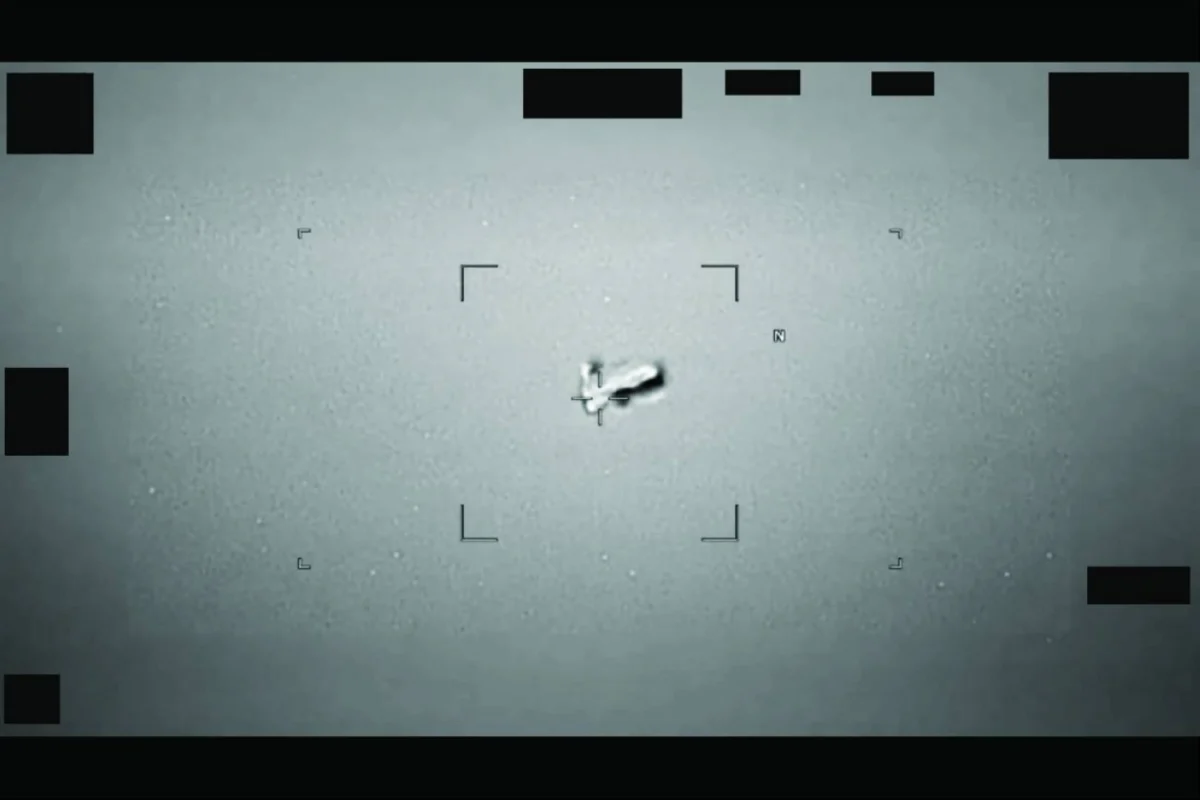
In a landmark shift toward governmental openness, the United States Department of Defense has officially declassified and released a significant collection of previously restricted documents and visual media concerning Unidentified Anomalous Phenomena (UAP). Among the most compelling pieces of evidence in this inaugural release are two high-definition infrared videos captured near Japanese airspace in 2024, providing a rare, unfiltered look at objects that defy conventional aerodynamic explanation.
The release, authorized under a direct mandate from the White House, marks a pivot in how the U.S. military handles reports of mysterious aerial objects. By moving away from the culture of opacity that characterized the mid-20th century, the Pentagon is now signaling a strategy of “maximum transparency,” encouraging not just internal analysis but a collaborative, public-facing effort to understand the nature of these sightings.
The Japan Incidents: A Close-Up Look at the Unexplained
The centerpiece of the declassified files is a two-minute infrared video, cataloged as DOW-UAP-PR47. Captured by sensors aboard a U.S. military platform operating within the Indo-Pacific Command’s theater of operations, the footage shows an object described by military observers as “football-shaped.”
Unlike typical drone or aircraft movement, the object displayed in the footage maintains a peculiar stability. The sensor data tracks three distinct points of high thermal contrast, which remain in a fixed orientation relative to one another regardless of the object’s velocity or maneuvers. This lack of visible propulsion—such as exhaust plumes, control surfaces, or heat signatures associated with combustion engines—has fueled intense debate among aerospace experts and defense analysts.
According to the accompanying military logs, the sighting occurred in 2024 near Japanese territorial waters. The proximity to key Japanese and U.S. military assets has raised concerns regarding potential incursions into sovereign or protected airspace, adding a layer of national security urgency to what was previously dismissed as "fringe" curiosity.
A Chronology of the Disclosure Movement
To understand the weight of this release, one must look at the timeline of the U.S. government’s evolving relationship with UAP sightings:
- 2017: The New York Times publishes leaked footage of UAP, including the famous "Gimbal" and "GoFast" videos, forcing the Pentagon to acknowledge the existence of the Advanced Aerospace Threat Identification Program (AATIP).
- 2021: The Office of the Director of National Intelligence (ODNI) releases its first preliminary assessment on UAP, admitting that of the 144 reported incidents, only one could be explained with "high confidence" (a deflating weather balloon).
- 2023: A massive surge in reports across the Indo-Pacific leads to the creation of the All-domain Anomaly Resolution Office (AARO), tasked with centralizing data collection across all military branches.
- 2024: The "Japan Incident" occurs. Military platforms track multiple UAP, leading to the high-resolution footage now released to the public.
- 2026: The current administration authorizes the mass declassification of the DOW-UAP-PR47 report and associated files, fulfilling a campaign promise to provide the American public with the same information available to intelligence agencies.
Supporting Data and Technical Challenges
The Pentagon’s release includes more than just video; it provides the technical telemetry associated with these encounters. For scientists and engineers, the data is arguably more important than the visuals.
The infrared imagery captured in the Japan incidents reveals objects that do not generate typical heat signatures. In standard aeronautics, an object moving at high speed through the atmosphere generates significant friction and thermal energy. The objects in the DOW-UAP-PR47 files, however, appear "cold" relative to their surroundings, even while moving at speeds that would otherwise produce significant drag.
Furthermore, the "three points of contrast" noted in the report suggest a structural integrity that does not match any known airframe. Electromagnetic interference (EMI) logs from the tracking platforms indicate that as the sensors locked onto the object, there was a brief, localized disruption in the tracking system’s signal—a phenomenon frequently cited in historical UAP reports but rarely documented with such precision.
Official Responses and the Geopolitical Landscape
The reaction from the international community has been swift. The Japanese Ministry of Defense has issued a statement confirming that they are working in "close coordination" with U.S. Indo-Pacific Command to identify the origin of the objects. While the Japanese government has been careful not to attribute the sightings to any specific foreign adversary, the implication of unauthorized foreign surveillance or advanced technological testing is palpable.

Domestically, the Pentagon’s stance is one of calculated neutrality. A spokesperson for the Department of Defense stated: “The President’s order is designed to provide maximum transparency to the public. We are releasing these files so that the American people—and the scientific community at large—can make up their own minds about the information contained herein. We are not drawing conclusions; we are presenting the data as it exists.”
This "data-first" approach is intended to mitigate the wild speculation often associated with UFO culture, grounding the discourse in empirical observation rather than conjecture.
Implications for Science and National Security
The declassification of these files creates a profound paradigm shift in three key areas:
1. Scientific Inquiry
By opening these files to the public, the Pentagon is effectively crowdsourcing the analysis of UAP. Academic institutions, aerospace engineers, and independent researchers now have access to data that was once locked behind top-secret clearances. This could lead to breakthroughs in our understanding of sensor technology, atmospheric physics, or even novel propulsion systems.
2. National Security and Defense
The recurring nature of these incidents near U.S. and allied military bases suggests that the UAP are not merely random occurrences but are perhaps interested in military operations. Whether these are highly advanced surveillance drones from a nation-state actor or something more exotic, the inability to identify or intercept these objects represents a significant vulnerability in current air defense systems.
3. The Public Trust
Transparency is the primary antidote to conspiracy. By acknowledging that these incidents are real, documented, and officially recognized, the government is attempting to regain the trust of a public that has long suspected that their elected officials were hiding the truth. While this release may not contain "the smoking gun"—evidence of extraterrestrial contact—it acknowledges that the skies are filled with things we do not yet understand.
Looking Forward: The Path to Resolution
The Pentagon has announced that the DOW-UAP-PR47 release is only the first installment. Future tranches of documents are expected in the coming months, covering incidents reported from 2020 through early 2026.
As we move forward, the focus will likely shift from simply proving that UAP exist to determining their intent. Are they reconnaissance tools? Are they a new form of natural atmospheric phenomenon? Or are we observing technology that is fundamentally beyond our current understanding of physics?
For now, the images of the football-shaped object hovering silently near Japan serve as a stark reminder that the frontier of human discovery is not just in the deep reaches of space, but in the atmosphere above our heads. The curtain has been pulled back, and the work of understanding the unknown has only just begun. The global community is now tasked with interpreting the data, and for the first time in history, the government is inviting us all to take a seat at the table.


 Neng Nana
 Asro
Asro