

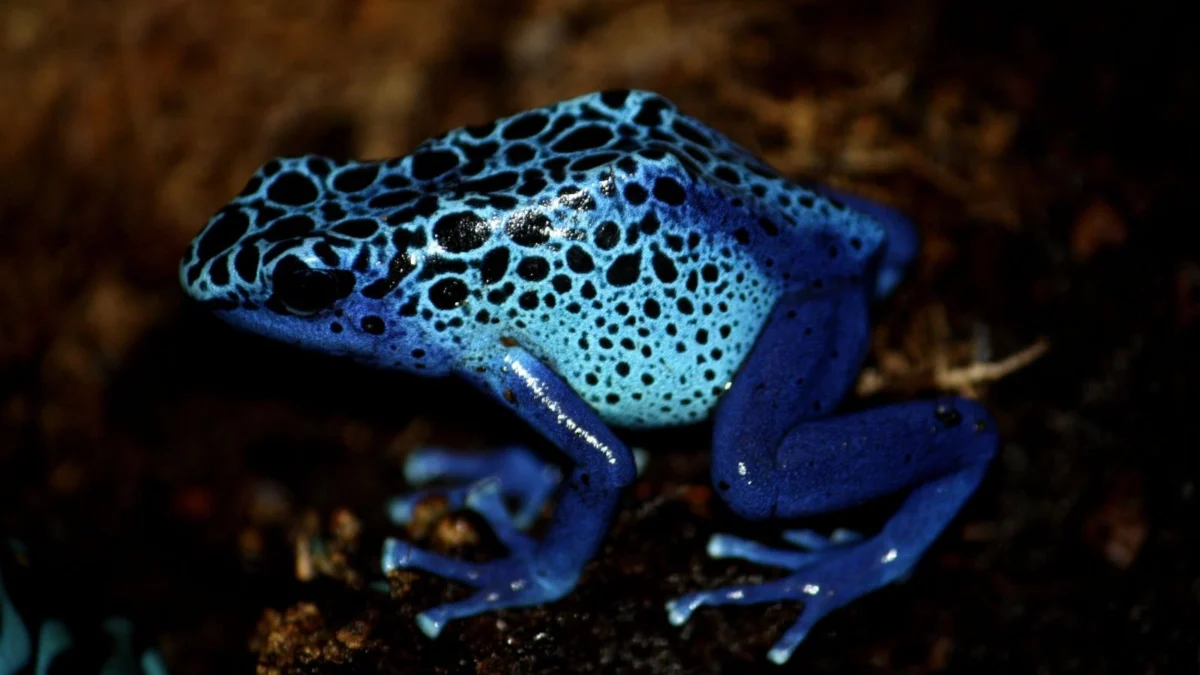
In a startling incident that has shed light on the clandestine and dangerous world of exotic wildlife trafficking, authorities at Amsterdam’s Schiphol Airport recently uncovered a cache of highly toxic animals abandoned in a public restroom. The discovery of six vibrant poison dart frogs, left to fend for themselves in a discarded plastic container, has triggered an investigation into the sophisticated yet reckless methods employed by wildlife smugglers.
The Discovery: An Unlikely Encounter
The incident began not with a high-tech security scan, but with a simple observation by an alert passenger. While navigating the busy terminal near a departure hall restroom, a traveler noticed a brightly colored amphibian navigating the sterile floor. The creature, far from its natural habitat, was immediately flagged to airport staff.
Customs officials, responding to the report, conducted a thorough search of the immediate area. Their investigation led them to a discarded plastic box tucked away in a bathroom waste bin. Inside, they found five additional frogs, huddled among a damp layer of moss—a makeshift environment designed to keep the amphibians hydrated and alive during the stresses of international transit.
According to preliminary assessments by customs authorities, the smuggler likely abandoned the illicit cargo in a frantic final moment before passing through the airport’s stringent security screening checkpoints. Realizing that the container would be flagged by X-ray machines or physical inspections, the perpetrator seemingly chose to dump the animals rather than risk arrest.
A Career-Defining Moment for Customs Officials
For the customs officers at Schiphol, who are accustomed to the routine seizure of contraband—ranging from illicit narcotics to prohibited agricultural products—this case stands as an outlier. One veteran officer, boasting 18 years of experience on the front lines of border security, spoke to the Dutch broadcaster NOS about the gravity of the situation.
"In my nearly two decades of service, I have encountered many strange things, but this is entirely unprecedented," the officer noted. While Schiphol is a major global hub that occasionally sees the seizure of exotic pets, the brazen nature of leaving live, toxic animals in a high-traffic public space suggests a level of desperation and carelessness that has shocked even seasoned professionals.
The Illicit Trade: Identifying the Species
According to reports from the NL Times, the six recovered frogs exhibit the tell-tale vivid hues—a striking combination of blue, black, and yellow—consistent with the Dendrobatidae family. Specifically, experts believe the group includes specimens of the Dyeing poison dart frog (Dendrobates tinctorius) and the Yellow-banded poison dart frog (Dendrobates leucomelas).
These species are native to the dense, humid tropical rainforests of Central and South America. In their natural environment, these frogs possess a fascinating evolutionary defense mechanism: their skin secretes potent alkaloid toxins. These toxins are not produced by the frogs themselves but are sequestered from the ants, mites, and other insects that make up their diet.
The vibrant, high-contrast patterns on their skin serve as a biological "warning sign" to potential predators—an evolutionary signal known as aposematism. In the illegal pet trade, however, these very colors—which scream "danger" in the wild—become a primary selling point for collectors seeking "living jewels."
The Legal and Ethical Framework
The global trade in poison dart frogs is strictly regulated under the Convention on International Trade in Endangered Species of Wild Fauna and Flora (CITES). This international treaty exists to ensure that the cross-border movement of plants and animals does not threaten their survival in the wild.
Moving these species across international borders requires rigorous permitting, including documentation that proves the animals were bred in captivity rather than poached from their native habitats. Without such paperwork, the frogs are considered black market commodities. The demand for these creatures is driven by a niche but lucrative market of private collectors who prize rare morphs and specific colorations.

A Global Epidemic of Wildlife Trafficking
The Schiphol incident is far from an isolated event. It is a single, visible symptom of a multi-billion-dollar global industry that views endangered species as disposable inventory.
The scale of this trade is immense. In a high-profile case from January 2024, law enforcement officials at Bogota’s El Dorado International Airport apprehended a woman attempting to smuggle 130 critically endangered harlequin poison dart frogs. The smuggler had packed the tiny, fragile creatures into small photographic film canisters, intending to transport them to Brazil. Each of those frogs, if successfully sold on the black market, could fetch upwards of $1,000, underscoring the massive profit margins that motivate traffickers to risk the lives of the animals and their own freedom.
Furthermore, the creativity—and cruelty—of smugglers knows few bounds. Just last week, a teenager was apprehended at a Bangkok airport after being discovered with 30 tortoises strapped to their body, hidden beneath their clothing. These incidents collectively illustrate that wildlife smuggling is a pervasive, borderless crime that requires constant vigilance.
The Aftermath: Rehabilitation and Rehousing
Following their discovery at Schiphol, the six frogs were immediately transferred to the custody of the Netherlands Food and Consumer Product Safety Authority (NVWA). These agencies are tasked with ensuring the welfare of seized animals and navigating the complex legal processes of wildlife forfeiture.
The frogs are currently being held in a specialist care facility, where they are undergoing quarantine and medical evaluation. Because these animals have been removed from their natural ecosystem and subjected to the high-stress environment of international travel, their health is fragile. Specialists in amphibian husbandry are working to stabilize their condition, ensuring they receive the appropriate diet—which, in captivity, is often supplemented to mimic their natural, toxin-rich intake—and environmental humidity required for their survival.
Implications for Airport Security and Biodiversity
The Schiphol incident raises significant questions regarding the intersection of aviation security and wildlife protection. As airports become more adept at identifying conventional threats, smugglers are increasingly attempting to move unconventional contraband through passenger terminals.
The Ecological Cost
The removal of even a small number of frogs from the wild has a cascading effect on rainforest ecosystems. These amphibians play a vital role as both predators of small insects and prey for larger organisms. When poachers strip populations for the pet trade, the ecological balance of these sensitive habitats is disrupted.
The Security Challenge
For airport security, the challenge is two-fold. First, they must detect the movement of live animals, which often involves identifying heat signatures or unusual shapes in luggage. Second, they must manage the public safety risk. While a poison dart frog is only dangerous if handled or ingested, the presence of such animals in a public space poses a liability risk that airport authorities must address with urgency.
Future Outlook: A Call for Stricter Enforcement
As the investigation into the Schiphol discovery continues, officials are looking into flight manifests and CCTV footage to identify the individual responsible for abandoning the creatures. However, tracking wildlife smugglers is notoriously difficult. Many traffickers operate within decentralized networks, using "mules" who may be unaware of the broader legal consequences or who view the animals as nothing more than low-risk, high-reward cargo.
Environmental advocacy groups are using this event to call for enhanced international cooperation. They argue that until the profit motive is removed—through stricter enforcement, heavier penalties, and public education campaigns regarding the true cost of "exotic" pets—the trade will continue to thrive.
The six frogs found in that Schiphol bathroom bin serve as a poignant reminder of the hidden costs of our globalized world. Behind every "exotic pet" in a display case, there is often a harrowing story of capture, transit, and abandonment. As authorities move forward, the hope is that these six survivors will serve as ambassadors for their species, highlighting the urgent need to protect the world’s most vulnerable wildlife from the reach of the black market.












No comments yet. Be the first to join the conversation!