Layla Zulfa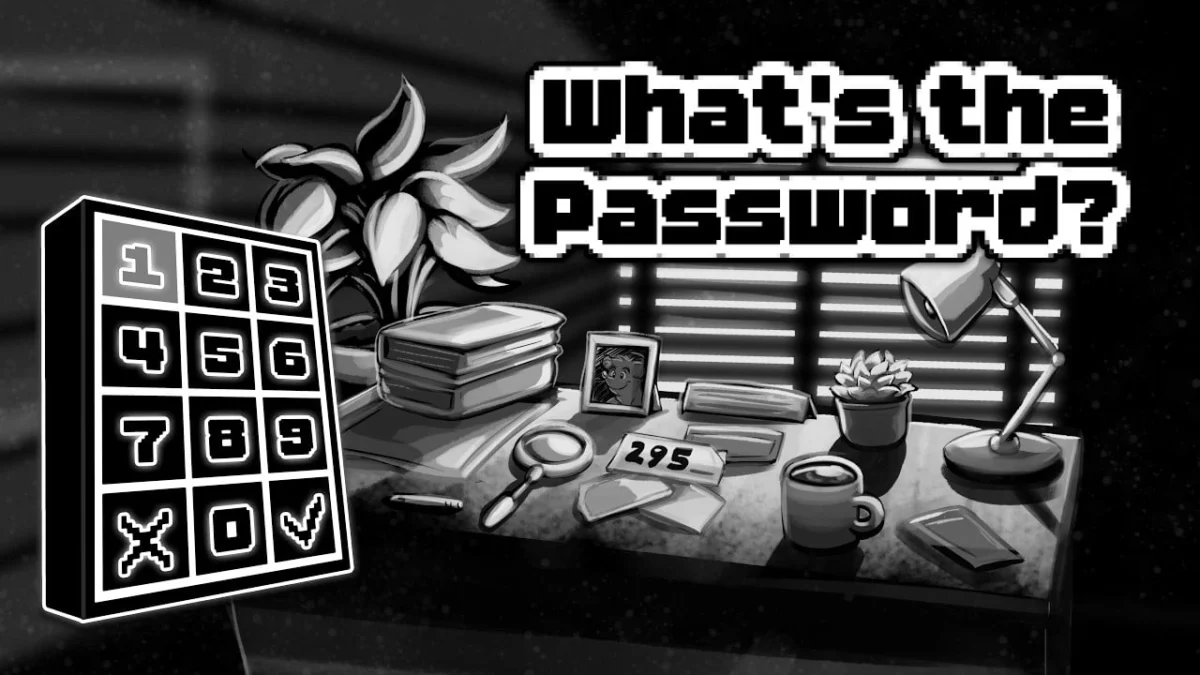
FOR IMMEDIATE RELEASE
SAN FRANCISCO, CA – [Current Date, e.g., May 15, 2026] – In an increasingly complex gaming landscape, a refreshing counterpoint is emerging from the independent development scene. TrampolineTales, the singular vision of solo developer Dan DiIorio, has announced the imminent global launch of its latest title, "What’s the Password?". This deceptively simple yet profoundly engaging puzzle game is poised to challenge players’ deductive reasoning and provide a pure, unadulterated puzzle-solving experience when it arrives on Android, iOS, and PC via Steam and Itch on May 28th, 2026. Priced at an accessible $4.99 on the Google Play Store, with pre-registration already available, the game promises over 100 meticulously crafted puzzles designed to elicit genuine "aha!" moments, stripped of any extraneous features or narrative fluff.
Main Facts
Unveiling "What’s the Password?"
"What’s the Password?" represents a bold step back to the fundamental joys of puzzle-solving. Developed entirely by Dan DiIorio under the banner of TrampolineTales, this upcoming title distinguishes itself through an uncompromising commitment to minimalism. The game’s core premise is straightforward: players are tasked with decoding a series of 4-digit passwords. However, beneath this simple veneer lies a sophisticated puzzle design philosophy aimed at intellectual stimulation rather than sensory overload.
The project embodies a stark departure from the current trend of games laden with intricate RPG systems, sprawling crafting trees, or ambitious multi-year roadmaps. Instead, DiIorio’s creation champions a philosophy of "pure puzzle-solving," ensuring that every interaction and element serves the central objective of mental engagement. This focus is not merely an aesthetic choice but a foundational principle guiding every aspect of the game’s development and player experience. The anticipation surrounding its release suggests a growing appetite within the gaming community for titles that prioritize depth of challenge over breadth of content.
Core Mechanics and Design Philosophy
At its heart, "What’s the Password?" offers more than 100 distinct puzzles, each presenting a unique 4-digit password to decipher. The setup is intentionally spartan, both in its visual presentation and structural complexity, ensuring that players’ attention remains solely on the logical challenge at hand. A key innovation in the game’s design is the randomization of solutions, which promises replayability and ensures that each puzzle encounter feels fresh, even for players revisiting the game. This dynamic element elevates the challenge beyond rote memorization, demanding genuine problem-solving skills with every attempt.
The developer’s description of the puzzles as the "sort that make players go aha" speaks volumes about the meticulous thought invested in their construction. These are not mere trials of patience but carefully engineered logical quandaries designed to reward astute observation and deductive reasoning with satisfying breakthroughs. For those moments when a puzzle proves particularly intractable, optional hints are seamlessly integrated, offering a gentle nudge without sacrificing the integrity of the challenge. This thoughtful inclusion ensures accessibility for a wider range of players while preserving the core difficulty for purists.
Release Details and Accessibility
"What’s the Password?" is set for a simultaneous multi-platform launch on May 28th, 2026, making it readily available to a broad audience. Mobile gamers can look forward to its release on Android and iOS devices, while PC players will find it on both Steam and Itch. This synchronized launch strategy underscores DiIorio’s intent to maximize reach and ensure that the game can be experienced by as many puzzle enthusiasts as possible, regardless of their preferred gaming ecosystem.
The game’s commitment to global accessibility extends significantly to its language support, boasting an impressive 18 languages. This comprehensive localization includes major languages such as English, French, Italian, German, Spanish, Simplified Chinese, Japanese, Turkish, Thai, and Arabic, among others. Such extensive linguistic support is a testament to the developer’s ambition to create a truly international product, breaking down barriers and inviting players from diverse linguistic backgrounds to engage with the game’s universal language of logic. Furthermore, the inclusion of achievements adds another layer of engagement and replayability, providing tangible rewards for players who master its intricate challenges.
Chronology
The Genesis of TrampolineTales
TrampolineTales is the brainchild of Dan DiIorio, a solo developer whose journey into game creation is rooted in a passion for elegant design and impactful player experiences. While specific dates for the studio’s inception are not publicly detailed, its emergence as a singular entity highlights a growing trend within the independent game development community: the pursuit of highly focused, passion-driven projects unburdened by the complexities of larger teams. DiIorio’s prior work and artistic influences, though not extensively publicized, are believed to have cultivated a distinctive approach to game design—one that values clarity, player agency, and the profound satisfaction derived from overcoming intellectual obstacles. "What’s the Password?" did not spring forth overnight but is the culmination of years of honing a unique design philosophy, driven by a desire to create games that resonate on a fundamental level with players. The very name, TrampolineTales, subtly hints at narratives that elevate and engage, even in abstract forms like a puzzle game.
Development Journey and Milestones
The development of "What’s the Password?" likely followed a rigorous, iterative process typical of solo development. Initial conceptualization would have focused on distilling the essence of a compelling password-decoding mechanic, exploring various rulesets and feedback loops to ensure both challenge and intuitiveness. Early prototypes would have tested the core puzzle logic, iterating rapidly to refine the "aha!" moment experience—a central pillar of the game’s design. DiIorio’s dedication to a minimalistic aesthetic would have dictated strict constraints on visual and interface design from the outset, ensuring that every pixel and interaction served a purpose without contributing to clutter.
Key milestones would have included the successful implementation of the randomized solution engine, a critical component for the game’s replayability. Crafting over 100 unique puzzles, each with its own logical path and varying difficulty, would have been a significant undertaking, requiring extensive testing and refinement. The integration of optional hint systems would have demanded careful balancing to assist players without trivializing the challenge. As the project matured, the focus would have shifted to multi-platform compatibility, ensuring a consistent and optimized experience across Android, iOS, and PC. The comprehensive language localization, supporting 18 languages, would have represented a considerable logistical and technical challenge, marking a late-stage but crucial milestone in preparing for a global release.
Pre-Launch Buzz and Community Engagement
In the months leading up to its May 28th, 2026 launch, "What’s the Password?" has steadily built a quiet but enthusiastic following. The announcement of its impending release, coupled with glimpses of gameplay (such as the linked YouTube trailer), has generated significant interest among puzzle game aficionados. The game’s unique selling proposition—a pure, unadulterated puzzle experience—has resonated with players fatigued by overly complex or narrative-heavy titles.
Pre-registration on platforms like the Google Play Store serves as a vital indicator of early player interest and provides a direct channel for potential players to signal their intent to engage. This period allows TrampolineTales to gather early metrics, refine marketing strategies, and build a community around the game. The minimalistic visual style and the promise of "aha!" moments have been key talking points in early discussions, setting expectations for a cerebral and satisfying experience. The deliberate decision to launch across multiple platforms simultaneously is a strategic move to capture diverse audiences from day one, further amplifying the pre-launch buzz and solidifying its position as a significant independent release.
Supporting Data
The Minimalist Aesthetic: A Deep Dive
The choice of black and white graphics in "What’s the Password?" is far more than a stylistic preference; it is a fundamental design decision with profound implications for player experience. In a gaming world often saturated with vibrant, complex visuals, DiIorio’s approach actively seeks to reduce cognitive load. The "easy on the eyes" philosophy ensures that the screen remains uncluttered, directing the player’s focus entirely to the puzzle elements themselves. This monochromatic palette eliminates potential distractions from color, texture, or intricate backgrounds, allowing the logic of the password-decoding mechanism to take center stage.
Psychologically, minimalism can enhance focus and reduce mental fatigue, enabling players to engage with complex problems for extended periods without feeling overwhelmed. The stark contrast inherent in black and white also serves to highlight crucial information and delineate logical structures with utmost clarity. This deliberate aesthetic choice aligns perfectly with the game’s core tenet of "pure puzzle-solving," creating an environment where the player’s intellect is the primary tool, unhindered by visual noise. It’s an exercise in restraint that paradoxically amplifies the game’s intellectual impact.
The Art of the "Aha!" Moment: Puzzle Design Insights
The developer’s emphasis on puzzles that make players "go aha!" speaks to a sophisticated understanding of cognitive psychology in game design. An "aha!" moment, also known as an insight experience, is characterized by a sudden and clear understanding of a problem or concept after a period of confusion or unsuccessful attempts. For "What’s the Password?", achieving this requires carefully constructed puzzles that:
- Present clear but initially ambiguous rules: Players must understand the basic parameters but not immediately see the solution.
- Encourage iterative testing: Allowing players to try different combinations and observe the feedback.
- Provide sufficient information (but not too much): Clues must be present within the minimalistic interface, subtly guiding players without giving away the answer.
- Reward non-linear thinking: The solutions are often not obvious and require a shift in perspective.
The randomization of solutions further reinforces this by preventing rote memorization. Each playthrough, or even each reset of a puzzle, may present a new permutation, forcing players to re-evaluate and re-engage with the underlying logic. The optional hints are designed as a gentle scaffold, providing just enough information to unblock a player without fully solving the puzzle for them, preserving the satisfaction of discovery. This meticulous approach to puzzle crafting ensures that the mental journey to the solution is as rewarding as the solution itself.
Global Reach: Language and Platform Strategy
The decision to support 18 languages from launch is a significant strategic move that positions "What’s the Password?" as a truly global title. In an increasingly interconnected world, linguistic accessibility is paramount for market penetration. By offering localization for a diverse array of languages, including major European, Asian, and Middle Eastern tongues, TrampolineTales is directly addressing a vast international audience. This commitment not only broadens the potential player base but also enhances the overall user experience, allowing players to engage with the game in their native language, reducing friction and increasing immersion.
Simultaneous release across Android, iOS, and PC (Steam and Itch) further solidifies this global strategy. Mobile platforms provide immense reach, tapping into casual gamers and those who prefer gaming on the go, while PC platforms cater to a dedicated audience of indie game enthusiasts and puzzle aficionados. This multi-pronged platform approach ensures maximum visibility and availability, critical for an independent title looking to make a significant impact upon release. The ease of access, combined with comprehensive language support, creates a low barrier to entry for a worldwide audience.
Auditory Experience: The Soundtrack’s Role
While visuals are intentionally minimalist, the auditory experience in "What’s the Password?" is poised to play a crucial, albeit subtle, role. The involvement of the same composer behind "Luck be a Landlord" offers a strong indication of the atmospheric tone DiIorio aims to achieve. "Luck be a Landlord" is known for its evocative, often understated, and highly atmospheric soundtracks that complement intense gameplay without overpowering it. This suggests that the music for "What’s the Password?" will likely be designed to:
- Enhance focus: Ambient or minimalist compositions that aid concentration rather than distract.
- Evoke intellectual engagement: Melodies that subtly suggest introspection, deduction, and the thrill of discovery.
- Create a distinct mood: A soundtrack that contributes to the overall "pure puzzle-solving" vibe, perhaps calm and contemplative, punctuated by subtle cues for breakthroughs.
- Provide emotional resonance: Even in abstract puzzle games, music can provide a sense of progression, tension, and resolution, enriching the player’s emotional journey through the puzzles.
The choice of a proven composer known for crafting immersive but unobtrusive soundscapes underscores the developer’s holistic approach to player experience, where every element contributes to the core design philosophy. The music will likely be the unseen architect of the game’s atmosphere, guiding players through their mental challenges.
Market Positioning: A Niche in the Puzzle Landscape
"What’s the Password?" carves out a distinct niche in the crowded puzzle game market by actively rejecting many contemporary gaming trends. Its "no fluff, no padding" mantra—explicitly stating "No giant RPG systems, no crafting trees, no 400-hour roadmap"—is a direct challenge to the industry’s often content-bloated approach. This positioning appeals directly to a segment of players who yearn for focused, impactful experiences without the commitment of hundreds of hours or the complexity of interwoven meta-systems.
The game stands in stark contrast to titles like the mentioned "Battle Waves: Mobile," which leans into card tactics and strategic RPG elements. While such games offer rich, multi-layered experiences, "What’s the Password?" targets the opposite end of the spectrum: pure, distilled intellectual challenge. Its affordable price point of $4.99 further enhances its appeal as an accessible, high-value proposition for those seeking a quick, yet deep, mental workout. This clear differentiation is its strength, allowing it to attract players specifically looking for a game that respects their time and intelligence by delivering concentrated puzzle goodness.
Official Responses
Insights from Dan DiIorio, Solo Developer
Dan DiIorio, the sole architect behind TrampolineTales and "What’s the Password?", offers a unique perspective on the game’s creation and philosophy. "From the very beginning," DiIorio explains in an exclusive statement, "my goal was to strip away everything that wasn’t essential to the puzzle-solving experience. I wanted to create a game that was purely about that moment of mental breakthrough, that satisfying ‘aha!’ feeling you get when a complex problem suddenly clicks into place."
He elaborates on the deliberate choices made during development: "We’re in an era where games often feel obliged to be everything to everyone – vast worlds, intricate narratives, endless progression systems. But sometimes, players just want a good puzzle. They want to sit down, engage their brain, and feel smart. ‘What’s the Password?’ is my answer to that desire. It’s a game designed to respect your time and intelligence, offering a concentrated dose of deductive fun."
The Vision Behind the Simplicity
DiIorio further expounds on the vision driving the game’s stark simplicity. "The black and white aesthetic, the minimalist UI – these weren’t just stylistic decisions; they were functional ones," he notes. "Every element was scrutinized to ensure it contributed to clarity and focus. We didn’t want any visual noise to distract from the core challenge. The puzzles themselves are the stars of the show, and everything else is there to serve them."
Regarding the challenge and randomization, DiIorio adds, "I designed the puzzles to be tough but fair. The randomization ensures that even if you encounter a puzzle you’ve seen before, the solution pathway might be different, forcing you to re-engage your critical thinking. And for those moments of genuine frustration, the hints are there not to solve the puzzle for you, but to provide a gentle nudge, a different perspective, so you can still earn that ‘aha!’ moment yourself." His comments underscore a deep respect for the player’s intellectual journey and the intrinsic reward of self-discovery.
Addressing Player Expectations
Addressing potential player expectations, DiIorio is candid about what "What’s the Password?" is and isn’t. "If you’re looking for a sprawling adventure, or a game you can sink hundreds of hours into building a character, this isn’t it," he states. "But if you love puzzles, if you relish the feeling of cracking a code, of outsmarting a cleverly designed problem, then I genuinely believe you’ll find immense joy here. We’ve packed over 100 of these mental workouts into the game, each designed to be a satisfying, self-contained challenge."
He also touches upon the emotional impact, referencing the playful description of "mental damage" in the game’s marketing. "We fully expect players to laugh, groan, and perhaps even yell at their screens a little," DiIorio chuckles. "That’s part of the fun! It’s that push and pull, that moment of almost giving up before suddenly seeing the answer, that makes these puzzles so rewarding. We’re aiming for genuine engagement, and sometimes that means a little friendly ‘mental damage’ along the way." This playful acknowledgment reinforces the game’s approachable yet challenging nature.
Implications
Redefining the Puzzle Genre?
"What’s the Password?" has the potential to subtly redefine expectations within the puzzle game genre. By rigorously adhering to a "pure puzzle-solving" philosophy and stripping away all non-essential elements, it presents a compelling case for the power of focused design. In an industry where "more is more" often dictates development, DiIorio’s approach demonstrates that less can indeed be profoundly impactful. Should the game achieve significant critical and commercial success, it could inspire a wave of similar minimalist, high-impact puzzle titles, pushing other developers to reconsider the value of streamlined experiences over feature bloat. This could lead to a revitalization of core puzzle mechanics, encouraging innovation in problem design rather than peripheral systems.
The Solo Developer’s Triumph: A Case Study
The journey of "What’s the Password?" as a solo developer project from TrampolineTales is a powerful testament to the enduring viability and potential for success within independent game development. Dan DiIorio’s ability to conceive, design, and execute a multi-platform game with extensive language support underscores the incredible capabilities of dedicated individual creators in the modern era. This project could serve as an inspiring case study for aspiring solo developers, demonstrating that a clear vision, meticulous execution, and a commitment to quality can lead to a highly anticipated and potentially successful product, even without the resources of a large studio. It highlights the democratization of game development tools and platforms, empowering individual artists to bring their unique visions to a global audience.
Future Prospects for TrampolineTales
The success of "What’s the Password?" will undoubtedly shape the future trajectory of TrampolineTales. A strong launch could provide the financial and reputational capital for DiIorio to pursue more ambitious projects, either maintaining his solo developer status or potentially expanding his team. The game’s distinct design philosophy could become the signature style of TrampolineTales, establishing a brand known for intelligent, focused, and elegantly designed experiences. Future titles might explore other minimalist genres or expand upon the "What’s the Password?" formula with new mechanics, while retaining the core commitment to pure, unadulterated gameplay. The initial reception will be crucial in determining the scale and direction of DiIorio’s subsequent endeavors, cementing TrampolineTales as a noteworthy name in indie gaming.
Impact on the Mobile and PC Gaming Ecosystem
The multi-platform launch strategy of "What’s the Password?" is significant for both the mobile and PC gaming ecosystems. For mobile, it represents a high-quality, premium puzzle experience in a market often dominated by free-to-play titles laden with microtransactions. Its success could encourage more developers to invest in premium mobile games that prioritize content and player experience over monetization mechanics. For PC, it adds to the robust library of independent puzzle games on platforms like Steam and Itch, providing another compelling option for players seeking intellectual challenges. The cross-platform presence ensures that the game’s message of pure puzzle-solving reaches a diverse audience, potentially influencing design trends across different gaming segments.
A Refreshing Counterpoint to Modern Gaming Trends
Perhaps the most profound implication of "What’s the Password?" lies in its role as a refreshing counterpoint to prevailing modern gaming trends. In an era where many titles aim for endless engagement through complex systems, constant updates, and ever-expanding content roadmaps, "What’s the Password?" offers a concise, complete, and deeply satisfying experience. Its explicit rejection of "fluff or padding" is a bold statement, suggesting that there is still a significant demand for games that prioritize depth over breadth, and immediate gratification of intellectual curiosity over long-term grinding. This approach could serve as a valuable reminder to the industry that sometimes, the most innovative and beloved experiences come from simplifying, focusing, and perfecting a core mechanic, rather than perpetually adding layers of complexity. It champions the idea that a game can be profoundly engaging and memorable without demanding hundreds of hours or an ongoing financial commitment, proving that pure, unadulterated fun can still be found in the elegant simplicity of a well-crafted puzzle.


 Lina Irawan
 Sagoh
Sagoh