

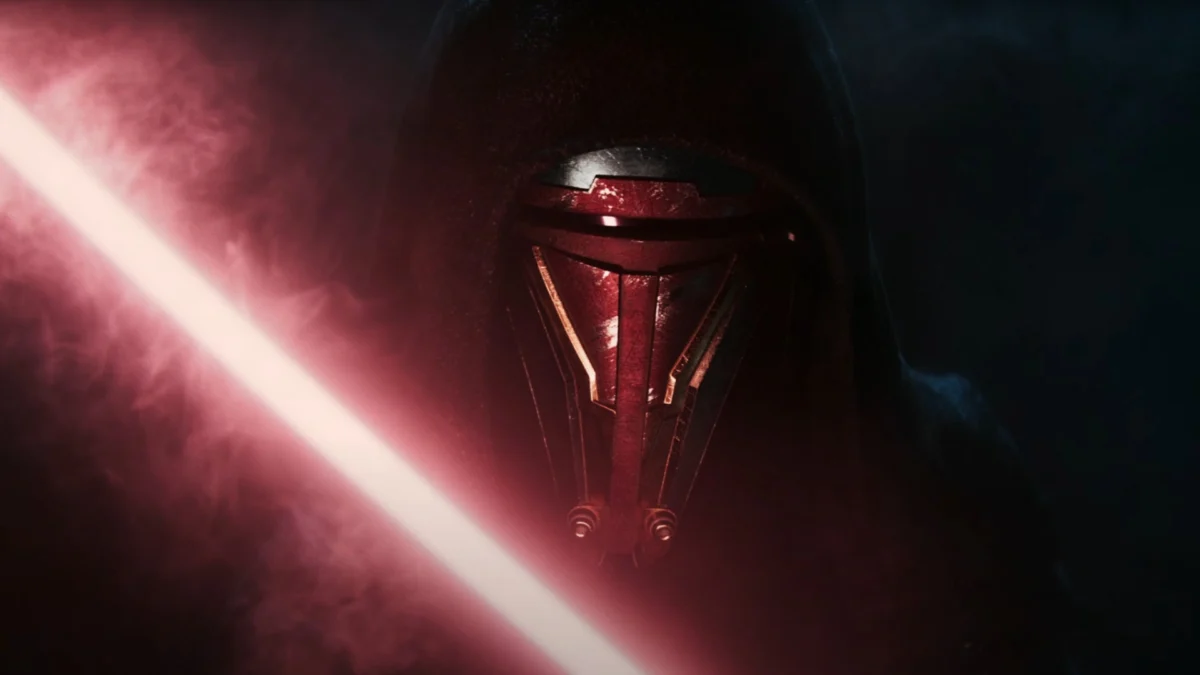
The saga of the Star Wars: Knights of the Old Republic (KOTOR) remake is fast becoming as legendary and labyrinthine as the Force itself. What was initially heralded as a triumphant return to one of the most beloved role-playing games in history has devolved into a multi-year narrative of corporate restructuring, internal turmoil, and indefinite delays. The latest chapter in this unfolding drama involves the emergence of raw, early-development footage that offers a rare—and at times unintentionally humorous—glimpse into the project’s turbulent past.
The Leak: A Rare Look Behind the Curtain
Recently, footage surfaced online via the portfolio of a former animator who had been employed at Aspyr Media, the studio originally tasked with breathing new life into the 2003 BioWare classic. The clip, which features placeholder "robo-person" models navigating an early-production cinematic, provides a stark reminder of the "pre-alpha" state the project occupied before its well-documented setbacks.
In the footage, blue and purple-skinned placeholder characters are seen performing basic animations—sliding through corridors and interacting with environments—while sporting a rather memorable, albeit unintended, lack of attire. While the sight of "bare-bottomed" placeholder models might elicit a chuckle, the significance of the leak lies in what it reveals about the production’s trajectory. The audio, which features a single voice actor portraying multiple characters—including the iconic Carth Onasi and Trask Ulgo—suggests that at the time of this build, the team was focused on blocking out scene choreography rather than finalized narrative delivery.
A Chronology of Chaos: From Announcement to Limbo
To understand the current state of the KOTOR remake, one must look at the timeline of a project that has shifted hands more often than a thermal detonator in a cantina.
- September 2021: During a PlayStation Showcase, the gaming world erupted in cheers with the announcement of a ground-up Star Wars: Knights of the Old Republic remake. It was to be a timed console exclusive for the PlayStation 5 and a PC release, helmed by Aspyr Media.
- July 2022: The first tremors of trouble were felt when Bloomberg’s Jason Schreier reported that the project had been placed on indefinite pause. The report indicated that an internal demo, presented to Lucasfilm and Sony, failed to meet expectations, leading to the departure of key personnel, including the studio’s art and design directors.
- August 2022: Reports surfaced that the project had been shifted from Aspyr to Saber Interactive, a move intended to stabilize the development process under the umbrella of the Embracer Group.
- 2023–2024: Throughout this period, the project remained in a state of purgatory. Despite rumors of total cancellation, executives from Saber Interactive, including CEO Matthew Karch, repeatedly insisted that the game remained "alive and well," though they offered little in the way of concrete release windows or gameplay demonstrations.
- December 2025: Further reporting suggested that development duties had shifted once again, with Mad Head Games—the studio behind Scars Above—taking on a primary role in the remake’s ongoing development.
The Burden of Expectation: Why KOTOR Matters
The KOTOR remake is not just another remaster; it is a high-stakes reimagining of a foundational pillar of modern RPG design. The original 2003 title established the "BioWare formula" of party-based interactions, moral alignments (Light vs. Dark Side), and a twist-heavy narrative that remains a gold standard in science-fiction storytelling.
The difficulty in remaking such a title lies in the balance between modernization and preservation. Fans expect the cinematic fidelity of the Unreal Engine 5 era, but they are also fiercely protective of the original’s turn-based tactical combat and its specific narrative pacing. Every time a new "leaked" snippet of footage appears, it is scrutinized by a community that is equal parts hungry for a return to the Old Republic and terrified that the magic will be lost in a sea of corporate inefficiency.
Official Responses and Corporate Strategy
The narrative surrounding the KOTOR remake is inextricably linked to the broader financial struggles of the Embracer Group. After an aggressive period of acquisitions, the holding company began a massive restructuring initiative, resulting in layoffs and the closure of several prominent studios.
Saber Interactive, having split from the Embracer Group in a massive divestment deal, has attempted to project stability. Chief Creative Officer Tim Willits has been the public face of these efforts, offering brief, non-committal updates. "It is still in development; that’s all I can say," Willits noted in early 2024. These statements serve a dual purpose: they maintain the legal viability of the licensing agreement with Disney/Lucasfilm while attempting to quell investor anxiety regarding the viability of the project.
However, the lack of transparency has created a vacuum, which is inevitably filled by rumors. The involvement of multiple studios—Aspyr, Saber, and now reports regarding Mad Head Games—suggests a "franken-development" cycle where the project is being handed off like a relay baton, raising concerns about the final game’s cohesion and identity.
The Implications for the Industry
The saga of the KOTOR remake is a cautionary tale regarding the dangers of announcing projects too early. The "hype cycle" can be a powerful marketing tool, but when a project enters development hell, that same hype turns into a lingering shadow that can affect the perception of the game years before its release.
Furthermore, this situation highlights the precarious nature of licensed properties. Unlike original IPs, where a studio has total creative freedom to pivot or cancel, a Star Wars production must navigate the rigorous oversight of Lucasfilm. If the "vertical slice" of a game doesn’t align with the broader vision of the Star Wars brand, the consequences are immediate and often catastrophic for the development team.
Looking Toward the Horizon
Can the KOTOR remake survive its own history? The industry has seen "miracle" turnarounds before—projects that languished in development for years only to emerge as critical successes. However, those cases are the exception, not the rule.
If the game does eventually reach the finish line, it will be fighting a war on two fronts: it must satisfy a modern audience accustomed to the fluid combat of modern action-RPGs, and it must honor the legacy of a title that essentially defined the genre. The leaked footage, with its bizarre, bare-bottomed placeholder characters, serves as a poignant, if humorous, metaphor for the project itself—a work-in-progress, stripped of its polish, desperately trying to find its footing in a void.
For now, the Knights of the Old Republic remains exactly where it was a few years ago: in the stars, somewhere between legend and reality. Whether it emerges as a triumphant return or remains a "what if" in the annals of gaming history, the saga of its development will likely be studied by industry analysts for years to come. Until then, fans are left to sift through the digital debris of early builds, hoping that somewhere within those corridors, a finished game is finally starting to take shape.











No comments yet. Be the first to join the conversation!