

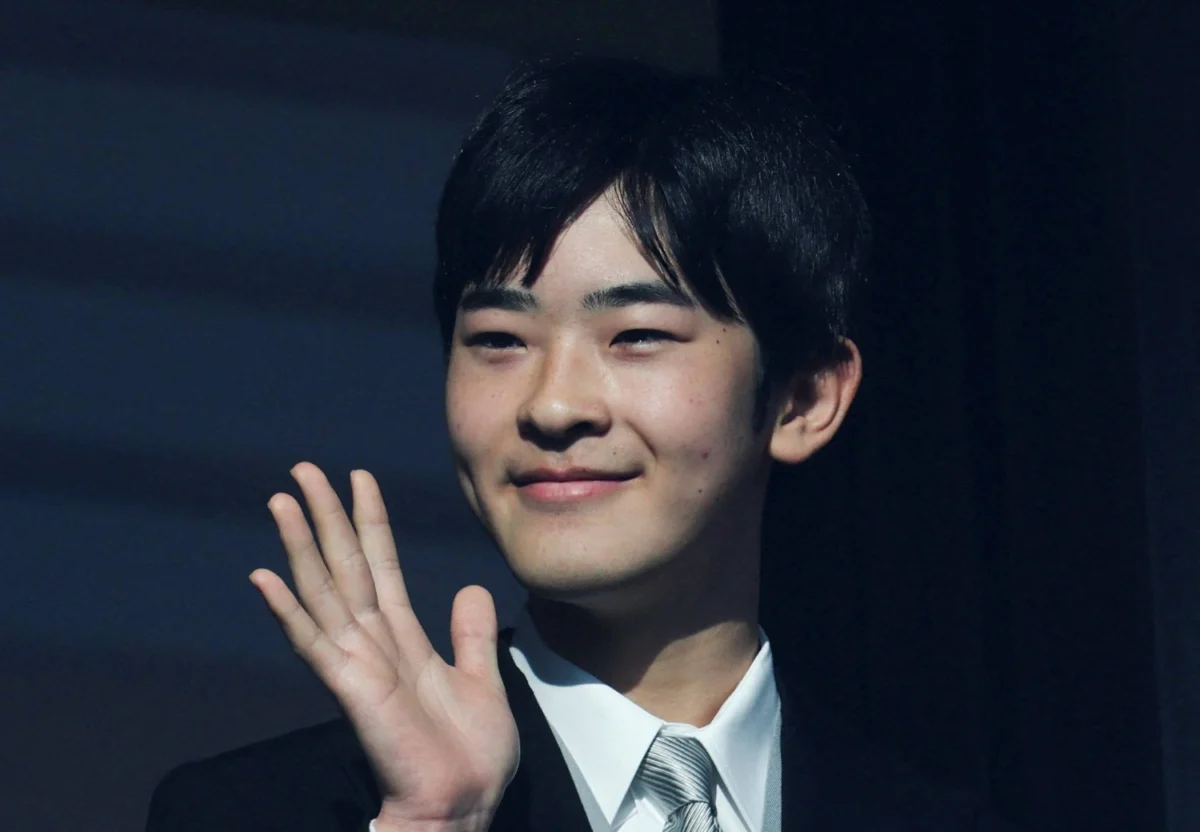
In a significant development for the Japanese Imperial family, the Imperial Household Agency (IHA) has officially announced that Prince Hisahito, the 19-year-old heir apparent, will attend a formal state banquet at the Tokyo Imperial Palace this Wednesday. The event, held in honor of Philippine President Ferdinand Marcos Jr. and First Lady Louise Araneta-Marcos, marks a pivotal transition for the young prince as he begins to assume the formal diplomatic responsibilities traditionally associated with his position.
Main Facts: The Prince’s Diplomatic Debut
Prince Hisahito, currently a sophomore at the University of Tsukuba, is the only son of Crown Prince Akishino and Crown Princess Kiko. His attendance at this week’s state banquet represents his first official participation in a high-level diplomatic reception hosted for a visiting head of state.
The banquet, a cornerstone of Japanese state hospitality, will take place within the opulent confines of the Imperial Palace. While the prince’s schedule is heavily anchored by his academic pursuits, the IHA has confirmed that the event has been carefully timed to ensure it does not conflict with his university curriculum. Following his final lectures of the day, the prince will transition from his role as a student to that of a representative of the Chrysanthemum Throne.
This invitation signifies more than a mere social formality; it is a carefully calibrated introduction to the world of international statecraft. By participating in the reception for President Marcos Jr., Prince Hisahito enters the diplomatic arena, reflecting his status as the second in line to the throne and the future of the Imperial line.
Chronology: Following in the Footsteps of Tradition
The IHA’s decision to involve Prince Hisahito at this stage of his life aligns with the precedents set by his immediate family members. The agency provided historical context to underscore that the prince’s debut follows a long-standing tradition of Imperial children transitioning into public life during their university years.
A Legacy of Early Participation
The trajectory of the prince’s siblings and his father serves as the blueprint for his current responsibilities:
- 1986 – Crown Prince Akishino: The current Crown Prince made his debut at a state banquet while a university student, attending an event held for the visiting leadership of Niger. This set the standard for the modern integration of young royals into state affairs.
- 2011 – Mako Komuro (Former Princess Mako): As the eldest sister, Mako represented the Imperial family at a state banquet for the King and Queen of Bhutan, marking her entry into the formal diplomatic sphere while balancing her academic commitments.
- 2014 – Princess Kako: Following her sister’s precedent, Princess Kako attended a state banquet for the Philippines during her own university years, establishing a recurring pattern of engagement with the Southeast Asian nation.
The choice of the Philippines as the focus for Prince Hisahito’s debut is particularly poignant, as it echoes his sister’s introduction to the same nation a decade prior, reinforcing the historical and diplomatic continuity between Japan and the Philippines.
Supporting Data: The Academic-Royal Balance
The logistical management of Prince Hisahito’s life is a subject of constant scrutiny, given the unique pressures placed upon him as the only male heir of his generation. Naomasa Yoshida, the Grand Master of the Crown Prince’s Household, addressed the press regarding the prince’s attendance, emphasizing that academic excellence remains the prince’s primary mandate.
The Balancing Act
The IHA has been transparent regarding the constraints imposed by the prince’s education. The University of Tsukuba, known for its rigorous academic environment, demands significant time and intellectual focus.
- Strategic Scheduling: The banquet is scheduled for a Wednesday evening, specifically chosen to ensure the prince can complete his university-mandated coursework before traveling to the Palace.
- Institutional Cooperation: The IHA maintains a close dialogue with university administrators to ensure that the prince’s royal duties do not jeopardize his progress toward his degree. This cooperation is essential in maintaining the image of a modern, educated prince who is as capable in the lecture hall as he is in the banquet hall.
This delicate balance serves as a microcosm of the broader challenge facing the Imperial family: evolving into a more relatable, modern institution while adhering to centuries-old ceremonial mandates.
Official Responses and Administrative Guidance
The announcement has been met with a measured response from the Imperial Household Agency, which views the event as a natural progression in the prince’s development.
"The prince is at an age where he must begin to understand the gravity of his role in our international relations," noted an IHA spokesperson. The agency emphasizes that the prince is being prepared not merely through academic study, but through "experiential learning"—witnessing the nuances of diplomatic protocol, conversation, and the soft power of the Imperial presence.
The administration’s focus is on ensuring that the prince’s transition is gradual. By limiting his public engagements to high-profile but structured events like state banquets, the IHA protects the prince from the overwhelming glare of constant publicity while providing him with the necessary exposure to foreign dignitaries.
Implications: The Future of the Chrysanthemum Throne
The significance of Prince Hisahito’s debut cannot be overstated, particularly given the ongoing debates regarding the future of the Japanese Imperial line.
A Symbol of Continuity
As the only son of the Crown Prince, Prince Hisahito is central to the survival of the male-line succession. His presence at the state banquet sends a clear message to both the domestic public and the international community: the Imperial institution is stable, and the next generation is prepared to uphold its traditions.
The Evolution of Imperial Diplomacy
The decision to include the prince in this specific banquet highlights the importance of Japan-Philippine relations. In the current geopolitical climate, the Philippines is a critical partner for Japan in the Indo-Pacific region. By involving the young prince in a reception for President Marcos Jr., the Imperial family is signaling the high value it places on this bilateral relationship. It is a subtle but powerful gesture of respect that reinforces the political ties between Tokyo and Manila.
Preparing for a Modern Monarchy
Prince Hisahito’s education and his entry into public life are being observed as a barometer for how the Japanese monarchy will function in the coming decades. Unlike his predecessors, he is navigating a society that is increasingly critical of traditional hierarchies. The IHA’s emphasis on his university education suggests a desire to frame the prince as a modern, intellectual, and grounded individual.
By integrating him into the state apparatus while he is still a student, the Palace is aiming to bridge the gap between the insular world of the Imperial family and the reality of 21st-century Japan. The hope is that this "slow-exposure" approach will cultivate a leader who is both deeply rooted in the history of the throne and equipped to interact with a rapidly changing global landscape.
Conclusion
The upcoming state banquet is far more than a social event; it is a milestone that marks the beginning of Prince Hisahito’s formal public life. As he stands alongside the Emperor, Empress, and his parents, the young prince will represent the future of one of the world’s oldest continuous hereditary monarchies.
While the eyes of the nation—and the world—will be on him, the event also highlights the quiet, disciplined preparation that defines the prince’s daily life. Whether he is analyzing complex subjects at the University of Tsukuba or exchanging pleasantries with a head of state at the Imperial Palace, Prince Hisahito is learning the multifaceted nature of his future responsibility. For the Imperial Household Agency, this is a successful step in the long-term project of ensuring that the throne remains a relevant and respected symbol of Japan in the years to come.











No comments yet. Be the first to join the conversation!