Main Facts: A Fresh Start in the Atlantic
For the professional creative, the environment is not merely a backdrop; it is a fundamental component of the production process. Last year, the renowned cosplay duo Benni and Kamui made the transformative decision to shutter their long-standing studio in Bavaria, Germany, and relocate their entire operation to the island of Madeira, Portugal.
The move was driven by a confluence of professional and personal factors. While the artistic output of the duo has remained globally influential for two decades, the logistical and climatic realities of Central Europe—specifically the extended, gray winters and the increasing burden of German bureaucratic requirements for the self-employed—began to stifle their creative momentum. By relocating to Madeira, the artists have traded the constraints of northern winters for one of the world’s most consistent climates, ensuring year-round sunshine and a renewed focus on their primary passion: high-end costume fabrication and prop design.

Chronology: From Bavaria to the Atlantic
The transition was a monumental task that required months of meticulous planning and physical labor. The chronology of the move highlights the sheer scale of a professional cosplay studio.
- Decision Phase (Early 2023): Facing burnout from administrative overhead and the psychological toll of cold weather, the duo decided to pursue a location that offered both inspiration and a better quality of life.
- Logistical Preparation: The couple faced the daunting task of auditing 20 years of accumulated materials, props, and heavy machinery. Large-scale costumes, life-sized mannequins, and specialized crafting tools were cataloged, packed, and eventually moved via international shipping containers.
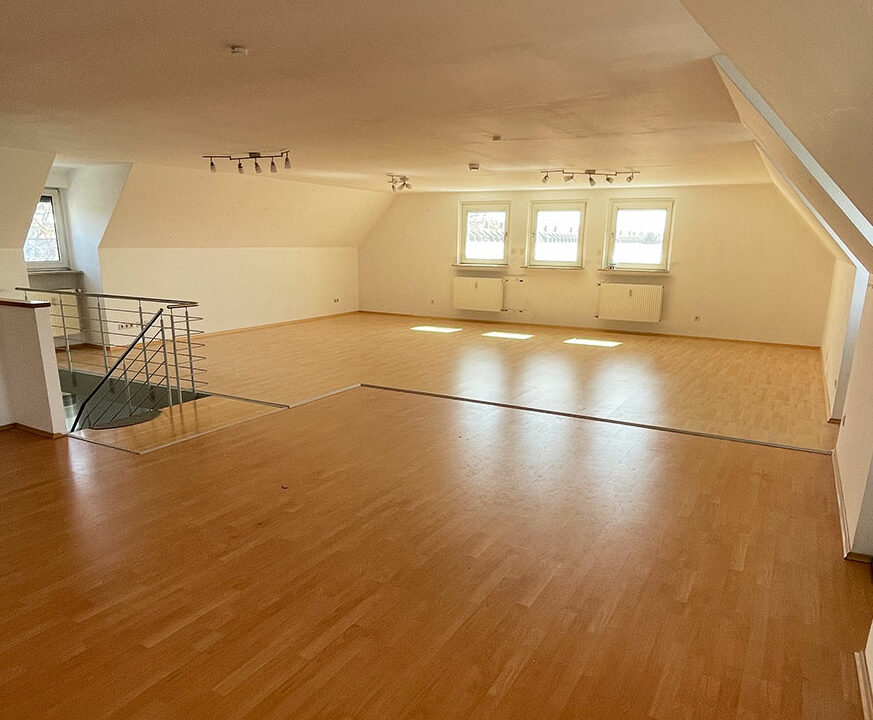
- The Search for Space: Upon arrival in Madeira, the priority was finding a property that could function as both a home and a professional-grade workshop. They adopted a strategic architectural approach: they repurposed the property’s largest living space into their primary creative studio, electing to utilize a smaller bedroom as their living area.
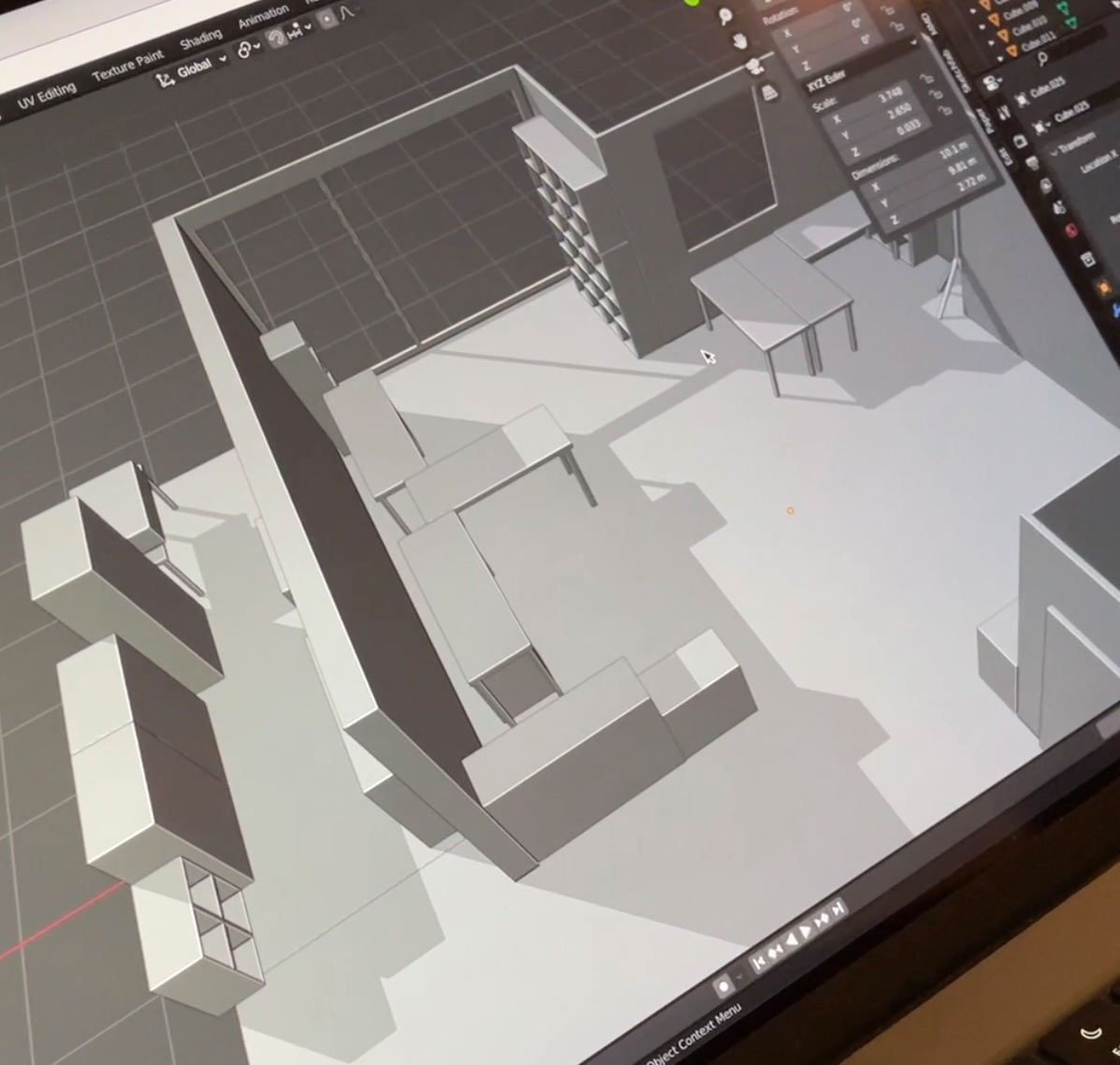
- Digital Blueprinting: Before moving a single box, the duo utilized Blender—the open-source 3D modeling software—to map the new floor plan. This allowed them to simulate the flow of the workshop, ensuring that the layout for heavy machinery, storage units, and presentation areas was optimized for efficiency.
- Final Setup (Early 2024): After weeks of assembly and organization, the new workshop reached completion, providing a dual-zone environment that separates clean, high-visibility display spaces from "dirty" zones dedicated to sanding, painting, and 3D printing.
Supporting Data: The Anatomy of a Professional Workshop
The new Kamui Cosplay studio is a masterclass in spatial efficiency. The decision to use Blender for the design phase was rooted in the need for professional-grade precision. As the artists note, most commercial interior design apps lack the granularity required for industrial-grade crafting setups.
Strategic Zoning
The studio is divided into two distinct functional zones to manage workflow and safety:
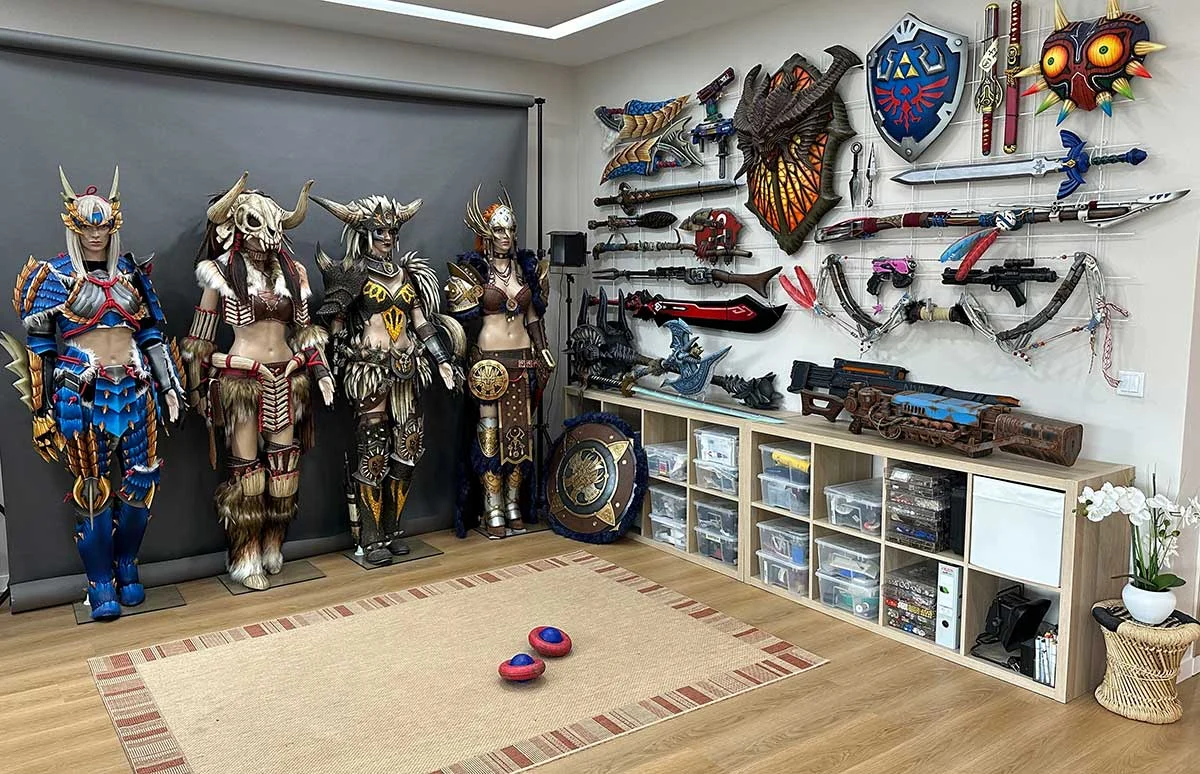
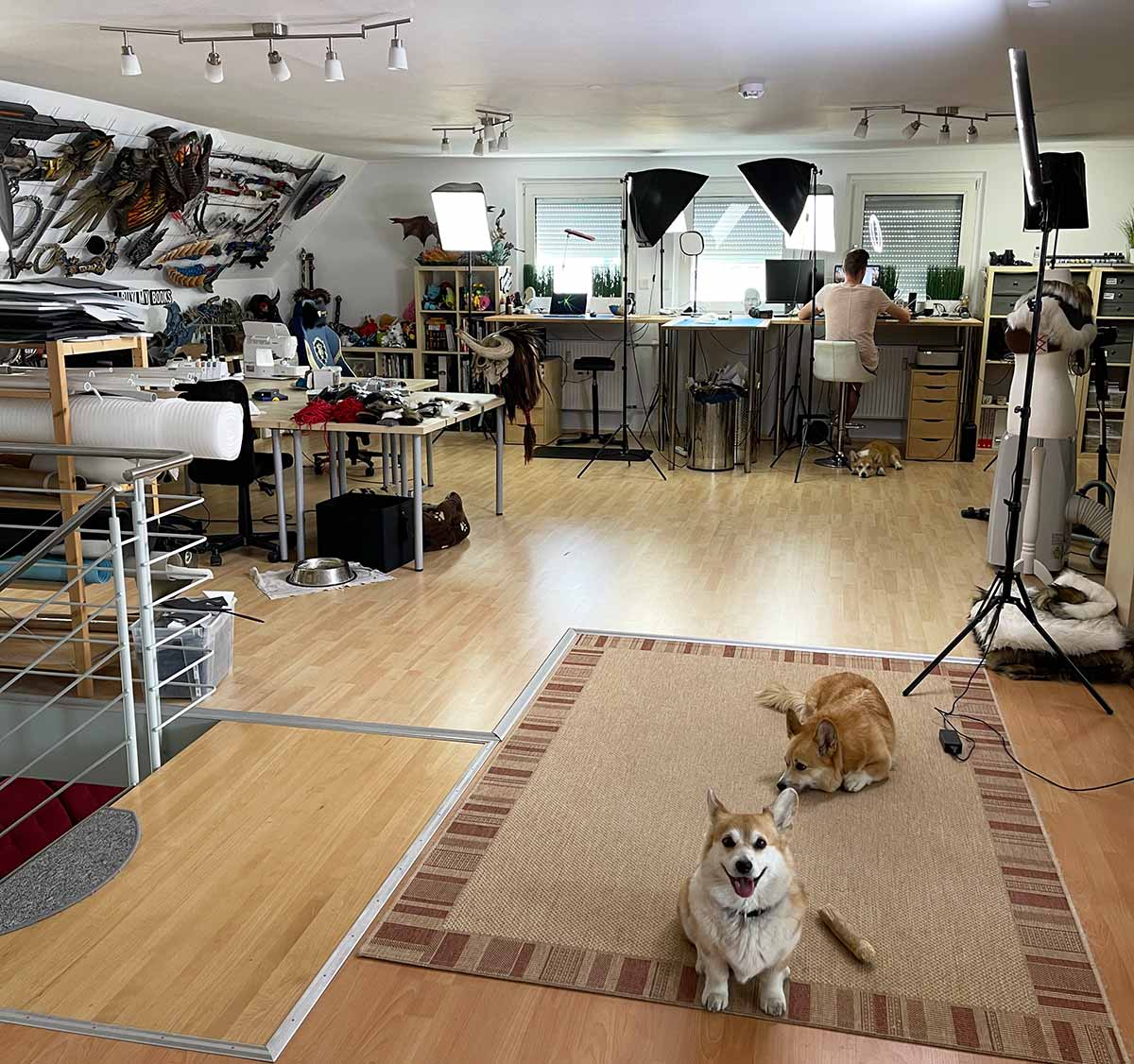
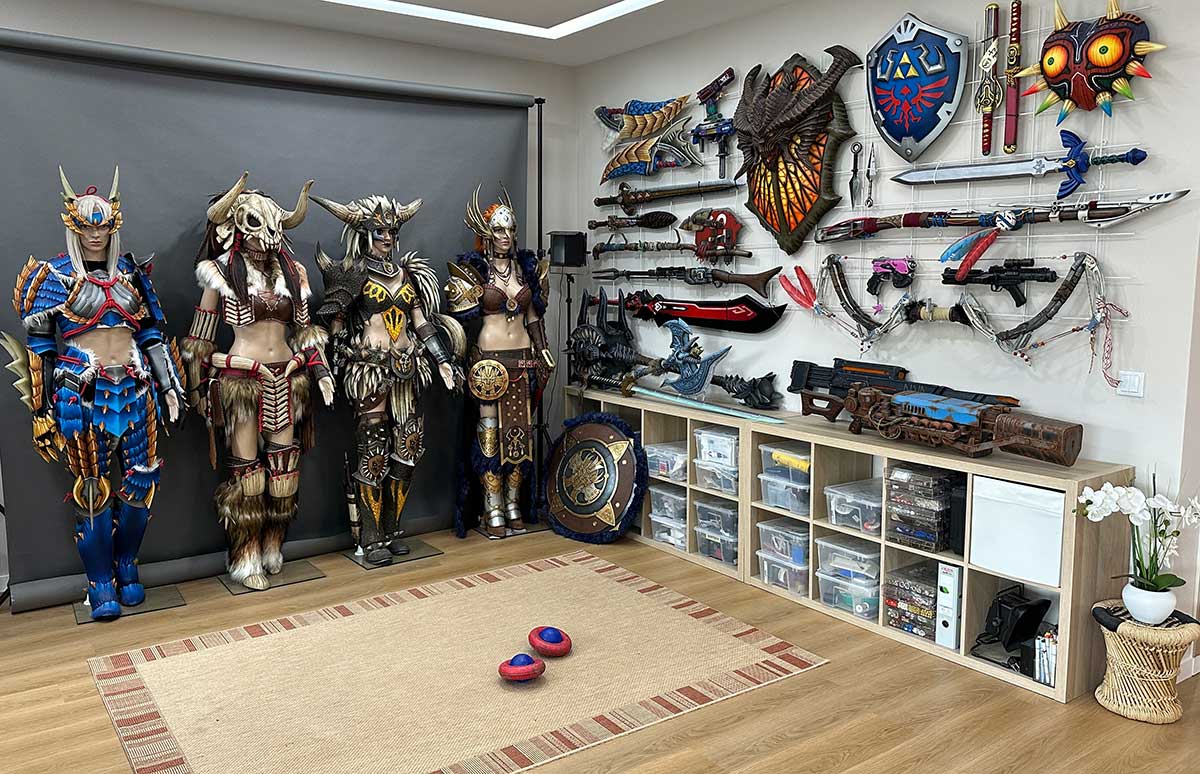
- The "Gallery" Zone: This large, bright area is dedicated to final assembly, content creation for their YouTube channel, and the exhibition of finished props and costumes. It is designed to be the "public face" of their work.
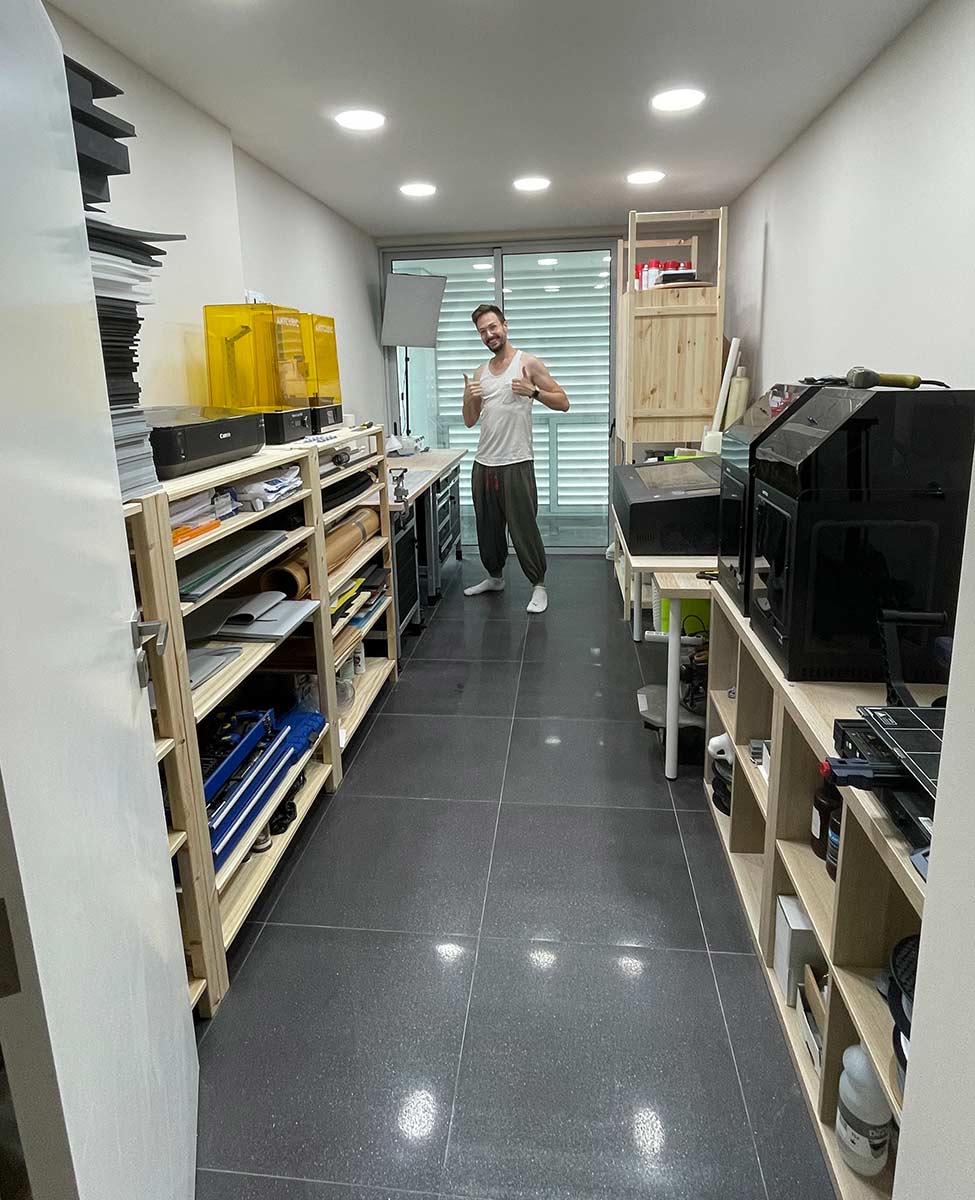
- The "Dirty" Zone: A dedicated, secondary room is used for hazardous or messy tasks. This includes 3D printing—which requires isolation to manage toxic fumes—as well as airbrush painting and high-dust sanding. This physical separation prevents contaminants from entering the living or display areas.
Furniture and Storage Infrastructure
The duo relies heavily on modular storage systems to manage their vast array of materials. They cite IKEA’s Kallax and Ivar series as the gold standard for high-volume cosplay storage. The Kallax units serve as the primary structural support for heavy statues and display items, while the Ivar shelving is favored for the heavy-duty, rough-handling of materials like EVA foam sheets, thermoplastic rolls, and industrial paints.
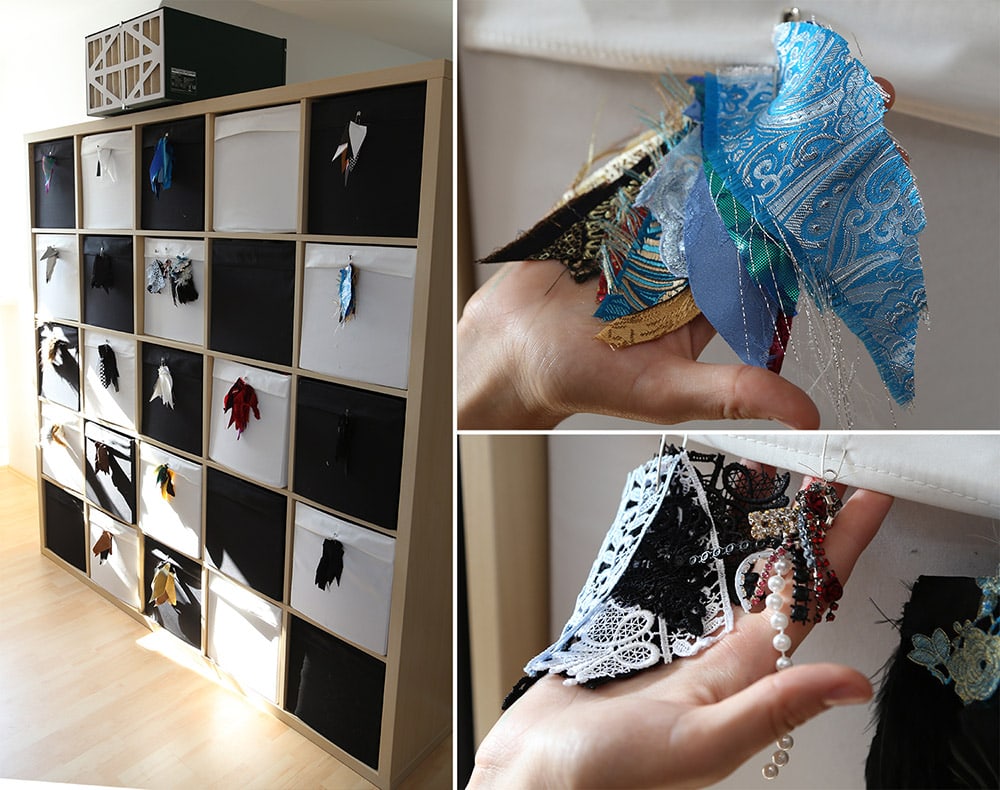
To maintain order, the duo has implemented a system of translucent storage boxes labeled with material samples. This ensures that the artists can visually verify their stock without unboxing every container, a vital practice for preventing the double-purchasing of expensive materials.
Official Insights: The Philosophy of "Letting Go"
A significant part of the duo’s relocation involved a "purging" phase. Over two decades of professional work, the accumulation of remnants—fabric scraps, half-used paints, and outdated electronics—had become a source of clutter.
In an official statement regarding their process, the artists emphasized the importance of detaching from the "hoarding" mentality that often plagues the crafting community. "At some point, you have to let it go," the duo shared. Their approach was to donate surplus materials to local cosplay clubs and community crafting centers in Germany before their departure. By offloading these resources, they ensured that their legacy of materials continued to foster creativity in the community they left behind.
Implications: The Evolution of the Professional Crafter
The move to Madeira serves as a case study for the evolution of the independent creator. The duo acknowledges that a workshop is not a static entity; it is an organic space that evolves alongside the artist.
The 20-Year Growth Arc
The transition from a small shared corner in a bedroom to a dedicated, professional-grade facility highlights the importance of scaling. The duo’s equipment progression—moving from a sewing machine and heat gun in 2009 to the integration of 3D printers and professional airbrush systems by 2015—demonstrates that high-level proficiency is built through incremental investment.
Accessibility and the Future of the Craft
For the aspiring cosplayer, the lessons from this relocation are twofold. First, the physical environment must facilitate mental health as much as it facilitates technical output. By prioritizing sunlight and a favorable climate, the artists have demonstrated that the creator’s well-being is the most critical tool in the workshop. Second, the use of 3D modeling for spatial planning is an emerging standard for serious hobbyists. By learning to map their space digitally, creators can avoid the costly mistakes of improper furniture selection or inefficient workflow paths.
Conclusion: A Blueprint for Success
The Kamui Cosplay relocation is more than a change of address; it is a calculated professional pivot. By leveraging digital design tools, modular furniture, and a strict adherence to material management, the duo has created a space that is prepared for the next decade of their artistic journey.
As they settle into life in Madeira, the invitation remains open to their global audience to engage with their process through their ongoing YouTube documentation. For those looking to replicate their organizational success, the message is clear: start with what you have, curate your materials ruthlessly, and treat your workshop as a dynamic, evolving sanctuary for your art. The transition proves that with the right planning, even the most daunting of life changes can be the catalyst for the most significant creative breakthroughs.
As Benni and Kamui look toward their future on the island, they continue to encourage their community to reflect on their own spaces: "How does your dream crafting workshop look? Would you do anything differently?" It is a question that challenges every maker to treat their environment with the same level of design and intention as the costumes they create.