June has arrived, and with it, the relentless momentum of the 11th annual Self-Published Fantasy Blog-Off (SPFBO). As the sun sets on another month of intense evaluation, the judging panel has reached a pivotal juncture in the competition. Today marks the announcement of the "Fourth Fall"—the elimination of three additional titles from the current roster. With the field narrowing, the anticipation is mounting; only eight books remain on the chopping block before the team shifts its collective focus toward the final selection of the four semi-finalists.
The Philosophy of the Cut: Subjectivity in the Arena
For those unfamiliar with the SPFBO format, it is essential to understand that this is not a clinical assessment, but a human one. The panel does not read books in a specific rank-ordered sequence, nor do they treat the elimination process as a march from "worst to best." Instead, the competition serves as a curated journey. Each round involves deep-diving into a selection of titles until the semi-finalists emerge, at which point those books receive the rigorous, dedicated analysis they deserve.
It must be emphasized that reading is inherently subjective. A manuscript that falters under the scrutiny of one judge may resonate deeply with another, or—more importantly—it might be the perfect discovery for a reader outside the contest’s echo chamber. The following reviews are presented not as definitive judgements on the quality of an author’s craft, but as reflections of a specific team’s engagement with these narratives. We extend our profound gratitude to every author who braved the arena this year. Putting one’s creative soul on display for public critique requires immense courage, and the contribution of every participant is held in high esteem.
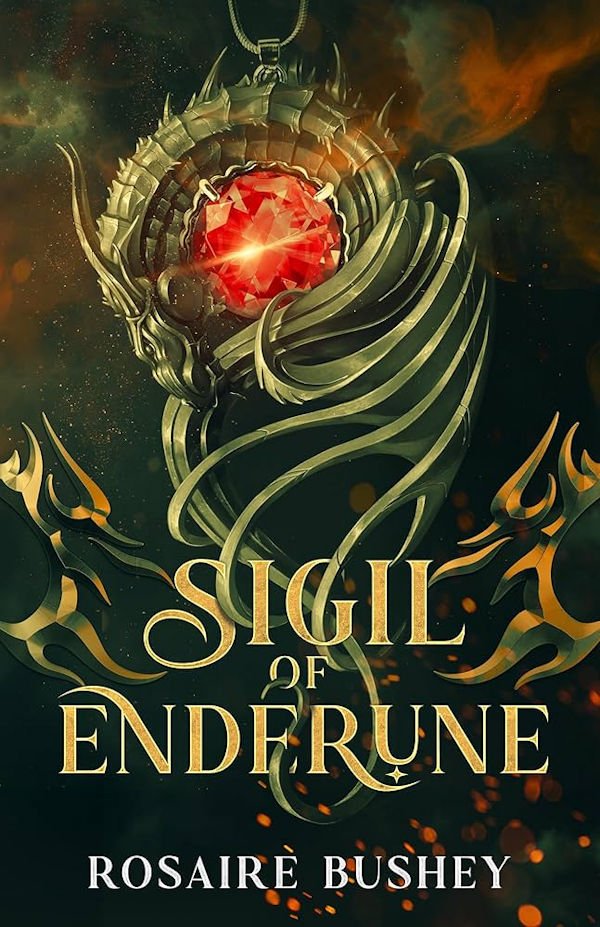
Sigil of Enderune by Rosaire Bushey: The Art of the Ink
The first title under the microscope this month is Sigil of Enderune. Set in the world of Revin, the narrative posits a fascinating premise: magic is not an inherent biological trait, but a disciplined art form that must be meticulously transcribed in ink. The history of this world is haunted by the legacy of the only true "Artificer"—a legendary figure capable of wielding magic through mere thought, utilizing a long-lost artifact. This mythical "Sigil" acts as a magnet for power-seekers, driving the central conflict.
A Masterclass in Magic, A Struggle in Structure
The team’s reception of Sigil of Enderune was notably polarized. On the side of praise, the worldbuilding and the unique magic system were standout elements. The intricate rules governing spells—where the color of the ink, the type of brush, and the direction of the strokes dictate the outcome—provided a refreshing, tangible layer of immersion. Furthermore, the political machinations and the subplot concerning a secret rebellion provided the necessary momentum to keep several judges invested. The "Snapdragons"—small, spirited creatures—emerged as a fan favorite, described by one judge as a highlight that compelled them to finish the novel in a single sitting.

However, the structural integrity of the manuscript proved difficult to reconcile. Several judges reported a "barrier to entry," noting that the opening chapters lacked the necessary grounding to distinguish key players or clarify the immediate stakes. This confusion was compounded by inconsistent characterization; male leads often felt interchangeable, and the primary female lead struggled to carve out a distinct identity. The technical execution also suffered from "head-hopping"—shifting perspectives within a single scene—and the sudden, unintroduced reappearance of characters, which hindered the narrative flow.
The most persistent criticism involved the editing. Awkward sentence construction and blatant contradictions were frequent, including the baffling choice to spell a character’s primary codename in two different ways throughout the text. Given that this is the author’s ninth novel, the panel held the work to a higher standard of polish. While the bones of a great story exist within Sigil of Enderune, it serves as a reminder that even the most innovative magic systems require a sturdy, well-edited vessel to truly shine.
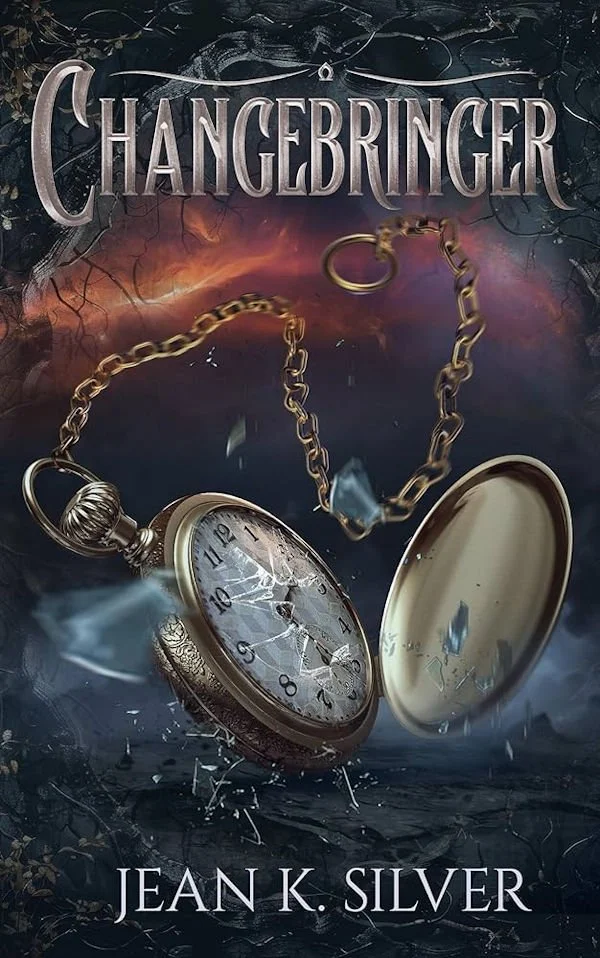
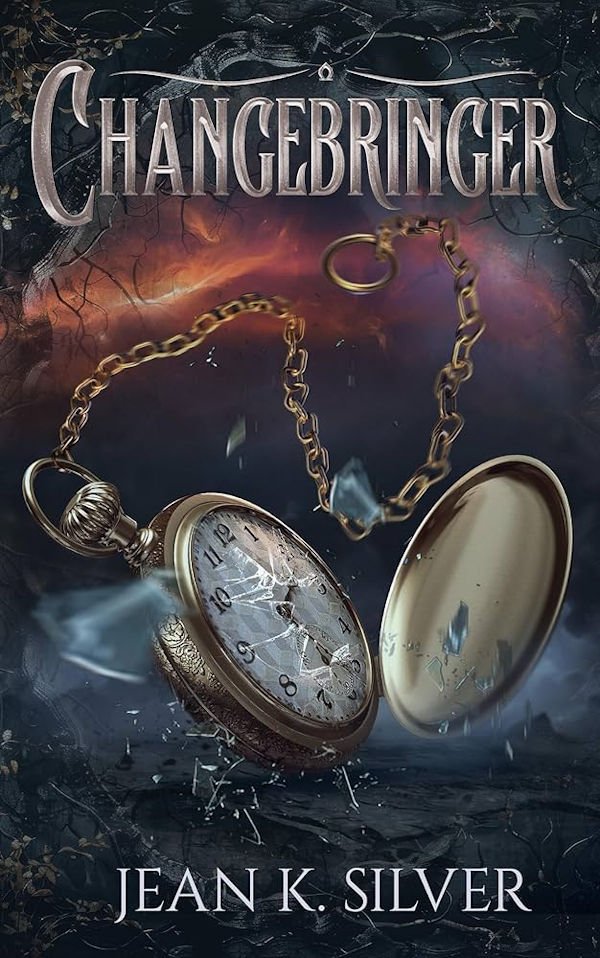
Changebringer by Jean K. Silver: A Romantasy Experiment
Changebringer presents a high-concept premise that sits squarely in the "Romantasy" sub-genre. Aurelia, a devout priestess serving the Lord of Time, is tasked with the solitary burden of stitching together the fabric of reality and executing renegade mages. Her lonely existence is shattered by the arrival of Vlad, an immortal vampire who claims their destinies are inextricably linked.
The Time-Travel Paradox: Repetition vs. Romance
The panel’s reaction to Changebringer was a study in genre preference. The concept—a time-traveling romance spanning centuries—is inherently ambitious. However, the execution hit a wall for several judges. One primary point of contention was the language: in an age-spanning narrative, the use of distinctly modern colloquialisms by a character supposedly rooted in the 1600s proved to be an insurmountable immersion-breaker.
For those who persisted, the pacing emerged as the central antagonist. The narrative fell into a "rinse and repeat" cycle; Aurelia would find herself in peril, only to be saved by Vlad or a convenient stroke of luck. Despite the epic scope implied by time travel, the settings often felt trapped in a generic medieval fantasy aesthetic, failing to leverage the potential for historical diversity.
The Verdict from the Bench: Julia’s Perspective
Judge Julia, who typically avoids the romance genre, provided a nuanced perspective. She noted that while the time-travel mechanics often felt rushed and the pacing repetitive, the romance itself was surprisingly grounded. "There is no endless cycle of loving and hating, no cheating, and no conflict built purely on miscommunication," Julia noted. "The characters are adults who actually talk to each other." While the prose occasionally suffered from over-ornate phrasing, the protagonist’s moral flexibility—how she balances her duty with her heart—provided a depth that the team appreciated. Ultimately, Changebringer is a book that will find a passionate audience among those who crave high-stakes devotion, but it failed to overcome its structural inconsistencies for the majority of the panel.
Keeper of the Gate by Margaret Feuerman: The Noblebright Standard
Finally, we turn to Keeper of the Gate, a quintessential example of "noblebright" fantasy. The story follows Bess Sonnenberg in a world besieged by a noxious, soul-corrupting fog known as the "Froth," unleashed by an imprisoned dark god. It is a story of intergenerational struggle, where the virtuous fight to keep the gates closed and humanity intact.
A Case for Hope
EG, the primary champion for this title on the panel, praised the book’s clear, steady pacing and its emotional resonance. Watching Bess evolve from a child forced to wield a sword to the queen her people require was, in EG’s estimation, "extremely well executed." The worldbuilding felt earned, with a culture that reflected the trauma of centuries of conflict.
Conversely, other judges found the characters to be overly simplistic, lacking the psychological complexity required to keep them fully engaged. The writing style was perceived by some as scattered, and the plot—while consistent—was often viewed as predictable. Keeper of the Gate is a litmus test for the reader: if you are looking for moral ambiguity and dark, grit-heavy realism, this may leave you at arm’s length. However, for those who find comfort and inspiration in the classic struggle of good against evil, it serves as a faithful entry in the noblebright tradition.
Implications for the Competition
With these three titles departing the contest, the field has been significantly pruned. The SPFBO 11, now in its eleventh year, continues to demonstrate the sheer breadth of the self-published landscape. The themes identified this month—the necessity of professional-grade editing, the fine balance of pacing in romance, and the specific audience requirements for genre-purity—will serve as guiding lights for the remaining twelve books.
As we look toward the final stages of the competition, the judges remain committed to their task. The full list of 300 entrants remains accessible via the official SPFBO portal on Mark Lawrence’s blog, and we encourage readers to explore these works for themselves.
The panel—comprised of Adawia Asad, Eva Geraghty, Evelyn Grimald, Julia Kitvaria Sarene, Karen Lucia, Kerry Smith, Kit Caelsto, Maureen Neuman, Robert Max Freeman, Sara Rosevear, Sherry Cammer, Stacey Markle, Tianna Twyman, and Yaniv Rosenfeld Cohen—continues to act as a bridge between authors and the reading public. For those following the contest, stay tuned: the road to the semi-finals is narrowing, and the intensity is only set to increase.
For inquiries regarding the competition, please reach out to editor Jennie Ivins via Bluesky or Threads.