

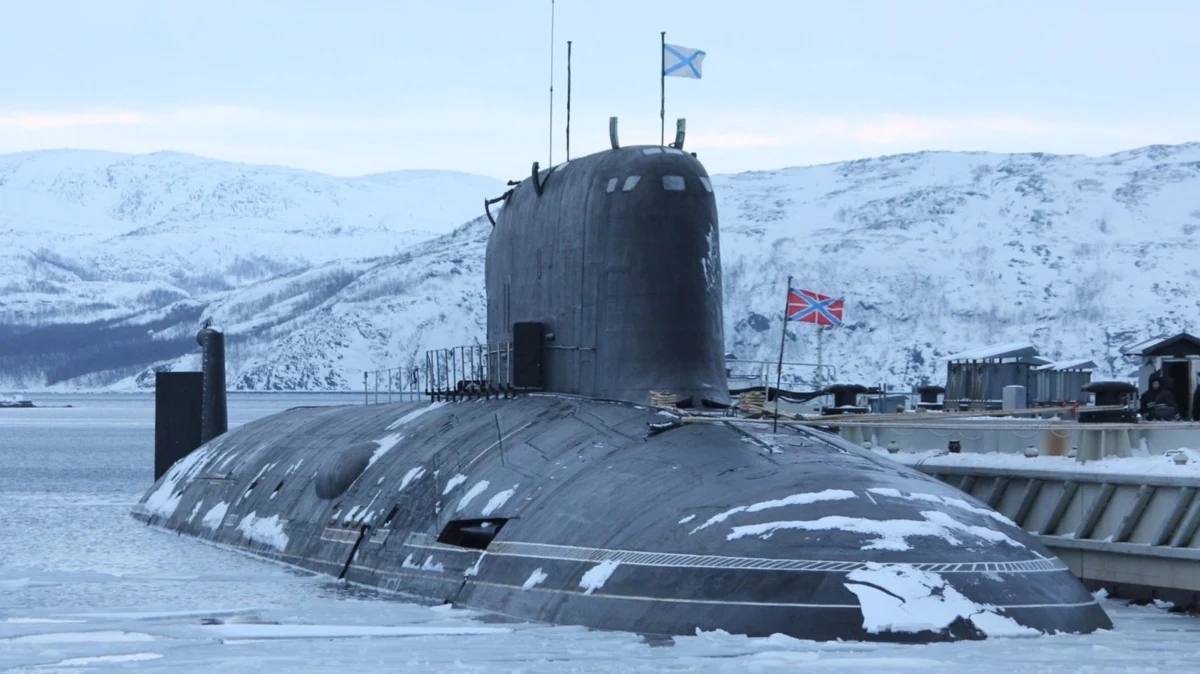
In the modern theater of global geopolitics, the silent domain of the deep ocean has once again become a primary stage for power projection. While the United States Navy maintains a formidable presence with its expansive fleet of nuclear-powered submarines, the Russian Federation is aggressively modernizing its own underwater capabilities. The most recent and significant development in this ongoing maritime competition is the commissioning of the Murmansk, a 13,800-ton Yasen-M class nuclear attack submarine that represents a qualitative leap in Russian naval engineering. Designed specifically to challenge the dominance of the U.S. Navy’s Virginia-class vessels, the Murmansk is not merely a replacement for aging Soviet-era hardware; it is a manifestation of Moscow’s intent to secure its maritime interests and project power far beyond its coastal waters.
The Murmansk: A New Pillar of the Northern Fleet
The Murmansk is the ninth vessel to emerge from the Yasen-class design lineage, though it belongs to the advanced "M" (Modernized) iteration. As Russia continues to refine its submarine construction program, the Murmansk serves as a benchmark for its domestic industrial capability. Currently, Russia operates five Yasen-M class submarines, with at least three additional hulls in various stages of construction at the Sevmash shipyard.
These vessels are the centerpiece of Russia’s Northern and Pacific Fleets. Their primary mandate is the protection of strategic maritime routes and the denial of access to adversary navies in critical choke points. By integrating advanced acoustic quieting technologies, modular weapon systems, and potentially game-changing hypersonic armaments, the Murmansk is positioned to be a persistent, difficult-to-track threat that forces Western naval planners to rethink traditional anti-submarine warfare (ASW) strategies.
Chronology of Development: From Project 885 to Yasen-M
The journey toward the Murmansk began with the conceptualization of the original Yasen-class (Project 885) in the post-Soviet era. The first boat of the class, the Severodvinsk, did not enter service until 2013, following a development cycle marred by economic instability and technological hurdles.
- Late 1990s – 2000s: Russia initiates the Project 885 Yasen design to replace the aging Akula and Oscar II classes. The focus was on multi-mission flexibility.
- 2013: The lead ship, Severodvinsk, is commissioned, showcasing a radical departure from Soviet submarine design by moving sonar arrays to the bow and centralizing the torpedo tubes.
- 2017: The first Yasen-M variant, the Kazan, is launched. This iteration introduced significant design refinements, including a shorter hull, improved propulsion, and modernized reactor cores.
- 2023 – 2024: The Murmansk enters the final stages of sea trials and commissioning, marking the acceleration of the production line.
- Future Outlook: Russia aims to sustain a construction cadence that ensures a constant rotation of these vessels into the Northern Fleet, countering the rapid modernization of NATO submarine forces in the North Atlantic.
Technical Specifications: Engineering a Silent Predator
The Murmansk is, by any objective metric, a masterpiece of naval architecture. Weighing in at nearly 14,000 tons, it holds the title of the world’s largest attack submarine. To put its size into perspective, the U.S. Navy’s Virginia-class submarines displace roughly 7,800 tons. This size differential is not incidental; it allows the Murmansk to house a massive payload of cruise missiles and sophisticated sensor suites that smaller boats cannot accommodate.
Propulsion and Stealth
The vessel measures 430 feet in length with a 43-foot beam. Its propulsion system is a technological marvel, utilizing a fourth-generation nuclear reactor that provides virtually unlimited range and endurance. The integration of raft-mounted machinery and advanced acoustic coatings represents a major effort to minimize the vessel’s sonar signature. By decoupling mechanical noise from the hull and utilizing sound-dampening materials, Russian engineers have succeeded in making the Murmansk one of the quietest submarines in the Russian fleet’s history, significantly complicating the detection efforts of passive sonar arrays.
Weaponry and Lethality
The armament configuration of the Murmansk is optimized for both anti-ship and land-attack missions. The vessel features eight vertical launch system (VLS) cells, each capable of holding four missiles, allowing for a total loadout of 32 cruise missiles. The standard inventory includes the Oniks and Kalibr cruise missiles, both of which are proven systems.
However, the most pressing concern for Western military analysts is the inclusion of the Zircon hypersonic cruise missile. The Zircon is designed to travel at speeds exceeding Mach 8, making it virtually impossible for current naval defense systems to intercept. If the Murmansk is indeed fully integrated with this capability, it becomes the first attack submarine in the world to field an operational hypersonic strike package—a technological threshold that the United States has yet to cross with its own undersea fleet. Furthermore, the submarine retains ten torpedo tubes capable of deploying the heavy-duty UGST-M and Futlyar torpedoes, ensuring it remains lethal in close-range underwater engagements.
Official Perspectives and Strategic Silence
The Russian Ministry of Defense and state-run news agencies like TASS have framed the Murmansk as a necessary response to the "militarization of the Arctic" and the expansion of NATO infrastructure. By emphasizing the submarine’s ability to "protect maritime routes," Moscow justifies the significant financial expenditure required for its construction.
Conversely, Western military officials and independent observers maintain a posture of cautious observation. Because Russia keeps the specific acoustic profiles and electronic warfare capabilities of the Murmansk under a veil of secrecy, NATO navies are forced to rely on intelligence estimates. There is a prevailing acknowledgment in Washington that while the Virginia-class submarine is superior in terms of operational uptime and sensor integration, the Yasen-M represents a "near-peer" threat that can no longer be ignored or treated as a legacy Soviet asset.
Strategic Implications for Global Maritime Security
The deployment of the Murmansk and its sister ships signals a shift in the balance of power in the North Atlantic and the Arctic.
The "Submarine Gap"
For decades, the U.S. Navy relied on its ability to detect and track Russian submarines with relative ease. The advent of the Yasen-M class creates a potential "gap" in this surveillance network. If these submarines can successfully transit into the Atlantic undetected, they pose a significant risk to carrier strike groups and vital transatlantic shipping lanes.
The Hypersonic Factor
The integration of hypersonic missiles into a submarine-launched platform changes the geometry of missile defense. Traditionally, Aegis-equipped ships can track incoming subsonic cruise missiles. A hypersonic strike from a submerged platform provides almost zero reaction time for defenders, potentially neutralizing the defensive screen of an entire fleet.
The Arctic Theater
As the Arctic ice caps recede, the region is becoming a new frontier for mineral extraction and shipping. The Murmansk is perfectly suited for the cold, deep waters of the Arctic, serving as a silent sentinel for Russia’s claims over the Northern Sea Route. This places the vessel at the center of a potential flashpoint between Russia and the Arctic Council nations.
Conclusion: A New Era of Undersea Competition
The Murmansk is more than just a submarine; it is a symbol of a resurgent Russian naval strategy that prioritizes high-end technology to compensate for smaller fleet sizes. By focusing on mass, lethality, and stealth, the Russian Federation has ensured that its undersea forces remain a relevant and dangerous component of its military posture.
As the Murmansk begins its service life, the international community will be watching closely to see how it performs in exercises and patrols. For the United States and its allies, the lesson is clear: the era of uncontested maritime dominance is over. The deep ocean has become a hyper-competitive environment where the next major conflict may be decided not by surface visibility, but by the silent, unseen maneuvers of vessels like the Murmansk. In this high-stakes game of cat-and-mouse, the margin for error is shrinking, and the technological race for the next generation of submarine warfare is only just beginning.











