Layla Zulfa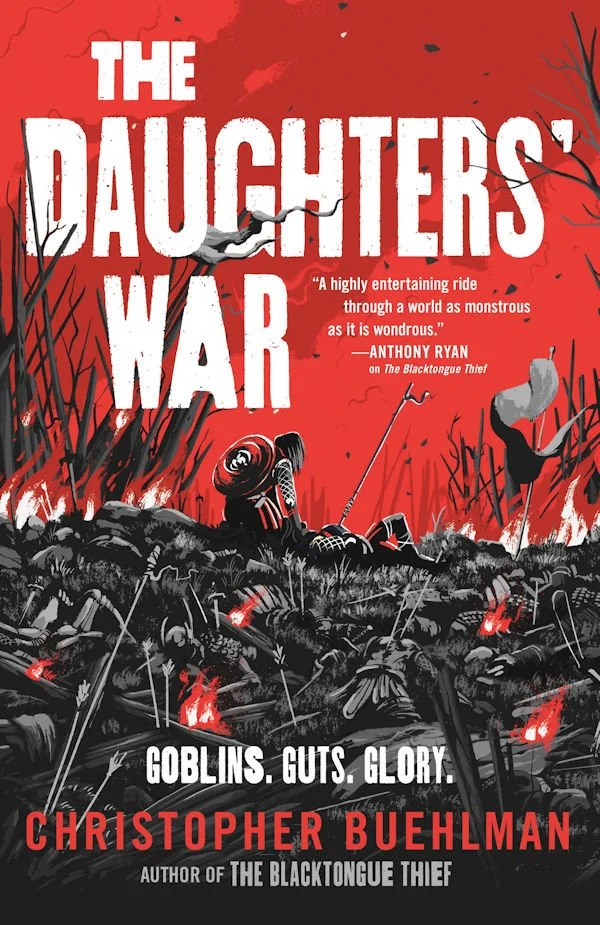
The landscape of modern grimdark fantasy has long been defined by the struggle between moral ambiguity and the relentless machinery of conflict. With the release of The Daughters’ War, Christopher Buehlman—the acclaimed mind behind The Blacktongue Thief—has returned to the blood-soaked soil of his established universe. This prequel is not merely a companion piece; it is a harrowing, visceral examination of a world on the brink of annihilation, viewed through the eyes of a woman forced to abandon her birthright for the front lines of a hopeless war.
Main Facts: A Prequel of Desperation
The Daughters’ War serves as an origin story for Galva, a central figure in the Blacktongue saga. Born into the influential Dom Braga family, Galva chooses to defy her aristocratic destiny, enlisting in the Raven Knights—an experimental, all-female military unit. Her journey takes her across a continent ravaged by a relentless goblin horde, known in the text as "the Biters."
The core conceit of the novel centers on the Raven Knights’ secret weapon: massive, magically-imbued war corvids. These avian predators, engineered through dark sorcery, are the only force capable of challenging the goblin swarm. As Galva navigates the trauma of the battlefield, the reader is thrust into a conflict that is less about geopolitical strategy and more about the raw, primal necessity of survival. The narrative is punctuated by the journal entries of Galva’s younger brother, Amiel, providing a poignant, idealistic counter-balance to the brutal pragmatism of the protagonist.
Chronology and Narrative Arc
The story unfolds with a deliberate, measured pace that distinguishes it from the typical high-octane fantasy romp. Buehlman avoids the temptation to rush into grand, sweeping set pieces, instead opting to force the reader to experience the suffocating atmosphere of a world besieged.
- The Inception: Galva’s departure from her home marks the transition from the safety of the nobility to the visceral reality of the "killing grounds."
- The Middle Descent: As the Raven Knights march toward a city under siege, the narrative deepens. The reader moves past the initial, somewhat stoic exterior of Galva, witnessing her evolution as she encounters the horrors of the Biters.
- The Climax: The story builds toward a high-stakes confrontation that balances extreme, graphic violence with profound emotional revelation. It is a finale that offers no easy absolution, only the resolution of a character forged in fire.
Supporting Data: The Anatomy of a Medieval Nightmare
To understand the weight of The Daughters’ War, one must examine how Buehlman treats his antagonists. The Biters are a departure from the "comic relief" goblins found in lesser works of fantasy. Drawing heavily from the darkest corners of folklore, these creatures are depicted as predatory, dehumanizing forces. They do not merely conquer; they treat the kynd (humanity) as chattel.
The Role of the Corvids
The war birds represent the book’s most compelling speculative element. They are not merely mounts or weapons; they are characters in their own right, reflecting the protective, albeit dangerous, bond between the Knight and her bird. These corvids serve as the anchor for the story’s tension, representing the uncertainty of human survival. Can humanity, in its desperation, afford to unleash such a dark, predatory force, even if it is the only way to stave off extinction?
Stylistic Execution
The novel’s strength lies in its sensory detail. Combat is not rendered through complex, tactical maneuvering, but through the visceral, immediate reality of carnage. Buehlman’s refusal to lean on traditional exposition forces the reader to inhabit the world alongside the characters, learning the "rules" of this dying reality through experience rather than lectures.
Official Perspectives and Critical Reception
While the work stands as a standalone achievement in grimdark literature, its function as a prequel has drawn significant praise. By grounding Galva’s character in this crucible of war, Buehlman adds a layer of tragic weight to her future appearances in The Blacktongue Thief.
Critics have noted that the "slow start" is a deliberate narrative choice, allowing for a deeper character study that pays off in the latter half of the book. The shift between Galva’s hardened, resolute perspective and Amiel’s sensitive, romanticized journals creates a dialectic on the nature of war—one that contrasts the brutality of the act with the memory of the humanity lost in the process.
Implications for the Series and the Genre
The release of The Daughters’ War serves as a grim reminder of the stakes involved in Buehlman’s literary universe. It challenges the reader to consider the cost of survival. When the line between humanity and the monster becomes blurred—whether through the use of dark magic or the hardening of one’s own heart—what is left to protect?
A Shift in Tone
By focusing on an all-female unit, Buehlman explores themes of resilience and female agency within a medieval context that is inherently hostile to them. Galva’s journey is not just a fight against goblins; it is a fight against the expectations placed upon her by her family and her society. Her eventual softening—expressed through her sexuality, her bonds with her brothers, and her connection to her corvids—offers a rare, humanizing thread in a tapestry of bleak violence.
Looking Forward: The Thrice-Bound Fool
The thematic resonance of this book is set to continue as the series progresses. With The Thrice-Bound Fool slated for release in October, the foundations laid in The Daughters’ War appear vital. If the prequel’s intent was to build a foundation for Galva, it has succeeded in making her one of the most compelling, if deeply scarred, figures in contemporary fantasy.
The phrase "Short life, bloody hand," which echoes throughout the novel, serves as a mission statement for the entire series. It is a grim promise of the path ahead, suggesting that in this world, there is no salvation to be found—only the grim, necessary work of surviving until the next sunrise.
Conclusion
The Daughters’ War is more than a prequel; it is a profound exploration of trauma and companionship in the face of inevitable destruction. By balancing the "grotesque" with the "human," Buehlman has crafted a story that is as intellectually stimulating as it is emotionally devastating. For those who can stomach the visceral realities of his world, the journey of the Raven Knights offers a masterclass in atmospheric storytelling. As we look toward the next installment of this saga, the impression left by Galva’s struggle is not easily shaken—a testament to the power of a story that refuses to flinch from the truth of the blade.


 Nila Kartika Wati
 Siti Muinah