

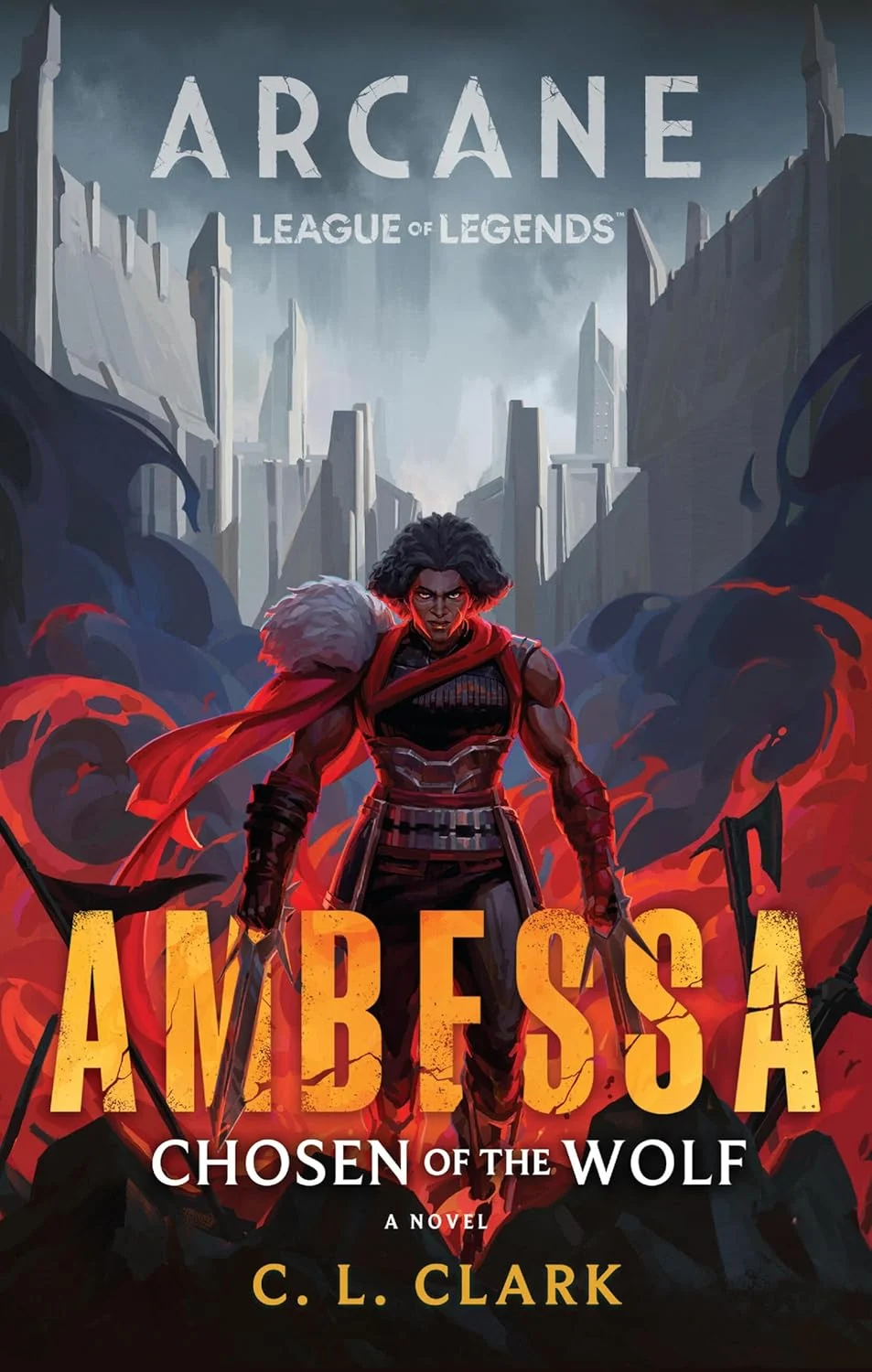
In the late months of 2024, the global cultural consciousness was dominated by the return of Arcane, the acclaimed animated series from Riot Games. For many, the second season served as more than just a television event; it was a watershed moment in queer media representation, cementing the "CaitVi" (Caitlyn and Vi) dynamic as a cornerstone of modern fantasy. Amidst this frenzy of fan art, cosplay, and algorithmic obsession, a distinct literary bridge was built between the high-octane world of League of Legends and the nuanced, character-driven landscape of contemporary military fantasy. The release of Ambessa: Chosen of the Wolf, authored by C.L. Clark, marks a strategic and creative intersection between one of the world’s largest gaming intellectual properties and the sophisticated, politically charged prose of one of the genre’s most promising voices.
The Algorithmic Awakening: Why Arcane Mattered
The timing of Ambessa‘s release—arriving six months before the third volume of Clark’s own Magic of the Lost trilogy—is no coincidence. It represents a deliberate strategy by Riot Games to leverage the "word-of-algorithm" success of Arcane.
For those uninitiated into the lore of Runeterra, Ambessa Medarda was introduced in Arcane as an intimidating, katar-wielding warlord matriarch. She is the embodiment of the Noxian empire: ruthless, calculating, and obsessed with the legacy of her clan. However, the fan reaction to the series revealed a deep hunger for the interiority of these characters. Viewers were not merely interested in the spectacle of the battle; they were fascinated by the queer tension, the butch-femme dynamics, and the psychological weight of empire. C.L. Clark, already a rising star in the literary world for her work on The Unbroken, was uniquely positioned to translate this on-screen intensity into prose.
Chronology of a Collaboration
The synergy between Clark and Riot Games began not in a boardroom, but through the author’s own engagement with the source material. Before Riot approached Orbit (Clark’s publisher) to secure an author for the Ambessa project, Clark had already noted the resonance between the warlord’s story and her own authorial preoccupations.
- 2021–2024: The rise of Arcane. The show captures a massive queer female audience, sparking a surge in fan-driven discourse that moves from social media to the mainstream.
- 2024: Riot Games scouts for authors who can handle the complexity of political fantasy and nuanced characterization.
- Mid-2024: C.L. Clark is tapped to write the prequel. Her background in writing colonial violence, anticolonial resistance, and sapphic desire makes her the ideal architect for Ambessa’s backstory.
- 2025/2026: The release of Ambessa: Chosen of the Wolf arrives as a bridge between the existing Arcane seasons and the future, rumored Black Rose-centric spin-offs.
Supporting Data: The Anatomy of a Franchise Novel
Writing a tie-in novel for a multi-billion dollar franchise presents a specific set of constraints. Unlike her original work, where Clark can linger on the "politics of dress" or the minute, subtext-heavy shifts in a conversation, Ambessa must move at a commercial, cinematic pace.
The Physicality of Power
A signature of Clark’s writing is her focus on the body—what strength training does to a woman’s arms, the mechanics of a sword fight, and the ways in which desire manifests in the context of combat. In Ambessa, this translates into a visceral portrayal of the warlord. Clark explores the character’s "monster heel" persona from the show and gives it human dimension, showing us the matriarch who enjoys a steaming bath and a handsome attendant just as much as she enjoys the carnage of the arena.
The Inclusion of Rell
One of the novel’s most intriguing narrative choices is the introduction of Rell, a character familiar to League players but a revelation to Arcane-only viewers. Rell, an arena fighter with iron-manipulating magic, serves as a foil to Ambessa. Through Rell, Clark is able to reflect on the life-course of a warrior, providing a mirror to Ambessa’s past and, by extension, the cyclical nature of violence in the Noxian empire.
The Metanarrative of the Arena
The recurring device of the arena in the novel is not merely a plot point; it is a metatextual nod to the origins of League of Legends. The arena is where Ambessa finds her warband, but it is also the site of supernatural trials that link the novel to the broader League mythos.
By grounding the story in these spaces, Clark acknowledges the nature of the IP. She recognizes that the reader is participating in a "commercial bargain": the reader gets a deeply textured, well-written story about a compelling villain, and in return, they are pulled further into the Riot Games ecosystem—be it their card games, their future animated series, or their licensed merchandise.
Implications: The Future of the Runeterra Universe
The success of Ambessa signals a shift in how Riot Games manages its intellectual property. By hiring authors of literary prestige to flesh out the "interior" of their characters, they are effectively deepening the emotional investment of their audience.
Bridging the Gap
The novel does not attempt to rewrite the canon of Arcane but rather expands the context. For instance, the rune magic that Mel Medarda reveals in the animated series is given more weight in the book. Readers who have engaged with both mediums are better equipped to understand the conflict between Piltover’s "scientific" revolution and the ancient, brutal magic of Noxus.
A New Standard for Tie-ins
Ambessa stands alongside works like V. Castro’s Aliens: Vasquez as a piece of "reparative" franchise fiction. It takes a character who might have been seen as a one-dimensional antagonist and gives her the depth, agency, and history she deserves. While the book lacks the slow-burn, deliberate political pacing of The Unbroken, it succeeds in proving that franchise novels do not have to be merely promotional material. They can be genuine extensions of an author’s voice.
Conclusion: A Mutually Beneficial Exchange
The existence of Ambessa is a testament to the power of fan-driven demand. The "word-of-algorithm" success of Arcane created an opening for a more literary, character-centric exploration of the world of Runeterra, and C.L. Clark was the perfect conduit for that exploration.
For the reader, the bargain is simple: you gain a deeper understanding of a complex, formidable character and a more robust view of the world she inhabits. For the publisher and the IP owner, the goal is to cultivate a loyal audience that will follow them into whatever comes next. Whether this leads to a broader, more diverse literary landscape within the gaming industry remains to be seen. However, if Ambessa is any indication, the future of franchise fiction is far brighter—and far more nuanced—than many skeptics once believed. By inviting authors like Clark into their world, Riot Games has done more than just sell a book; they have acknowledged that their players and viewers are readers, thinkers, and fans who crave the same complexity in their stories that they find in their favorite characters.










No comments yet. Be the first to join the conversation!