

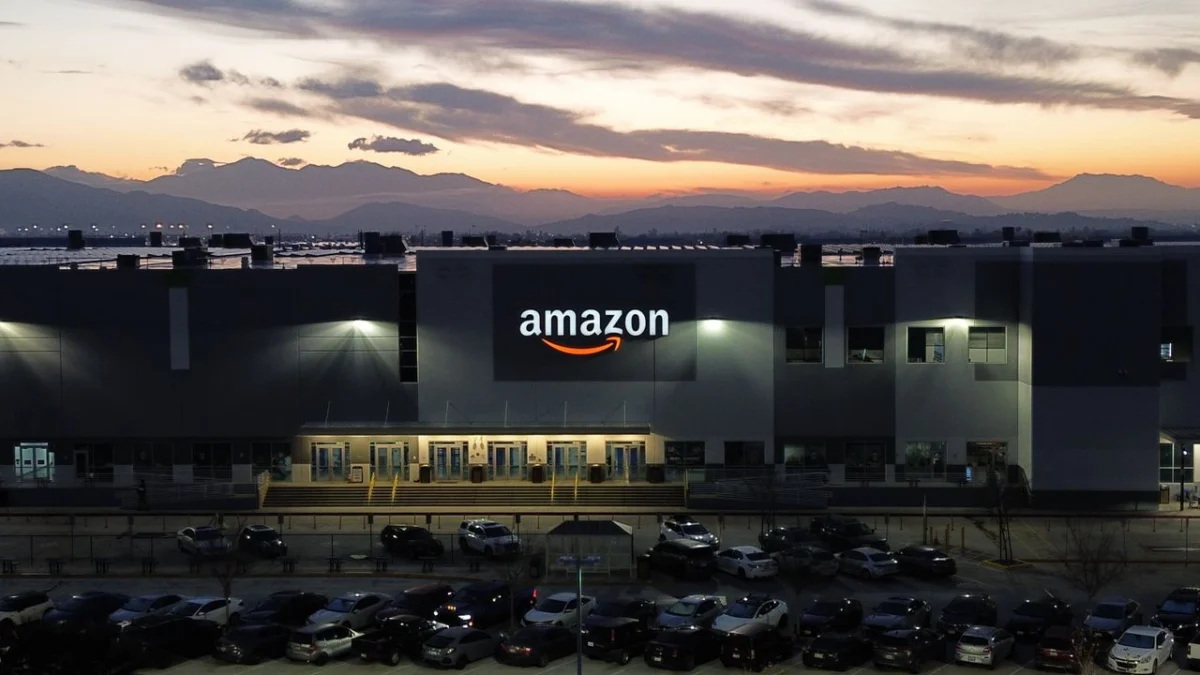
In the high-stakes arena of corporate climate action, Amazon has long positioned itself as a leader, spearheading the "Climate Pledge" and championing massive investments in renewable energy. However, the company’s 2025 Sustainability Report has cast a long shadow over those ambitions. With absolute emissions surging by 16% to a staggering 80.9 million tonnes, the retail and cloud computing giant now officially generates an annual carbon footprint comparable to that of an entire sovereign nation—specifically, New Zealand, which reported 77.8 million tonnes in 2024.
As Amazon navigates the conflicting pressures of an AI-driven technological revolution and a global mandate for decarbonization, the tech industry is watching closely. The surge in emissions marks the company’s most significant annual increase since the inception of its net-zero goals, forcing a critical re-examination of whether the current trajectory toward a 2040 net-zero target remains feasible.
The Core Conflict: AI Expansion vs. Environmental Stewardship
The primary engine driving this emissions spike is the rapid, aggressive scaling of Amazon Web Services (AWS) to meet the global hunger for Artificial Intelligence. As the infrastructure layer for much of the world’s generative AI development, Amazon has been forced to rapidly scale its data center footprint.
While AWS revenue grew by 20% in 2025—a testament to its dominance in the cloud market—this growth has come at a direct environmental cost. The company reports that its carbon intensity (CO2 emitted per dollar of revenue) increased by 3% year-over-year. While Amazon is quick to point out that this figure remains 38% lower than 2019 levels, the reversal of a downward trend is a worrying indicator that the efficiency gains of the past half-decade are being outpaced by the sheer volume of compute power required to train and run modern AI models.
A Chronology of the Emissions Climb
To understand how Amazon reached this juncture, one must look at the recent timeline of its infrastructure expansion:
- 2019: Amazon establishes its initial baseline for carbon reporting, focusing on efficiency and renewable energy procurement.
- 2020–2022: A massive acceleration in e-commerce and cloud demand during the pandemic leads to a sharp increase in total energy consumption, though offset by aggressive renewable energy purchasing.
- 2023: The "AI Gold Rush" begins. Amazon pivots its capital expenditure toward high-density data centers equipped with specialized hardware (GPUs) that require significantly higher cooling and power loads.
- 2024: Sustainability efforts face their first major test as grid capacity fails to keep pace with the energy requirements of new, larger AI-ready data centers.
- 2025: Amazon reports a 16% increase in absolute emissions, acknowledging that the energy demands of AI have surpassed internal projections for efficiency gains.
Deconstructing the Footprint: Where the Carbon Goes
A common misconception is that the majority of Amazon’s carbon footprint originates from the electricity used to run its servers. While electricity consumption is a major focus of media scrutiny, the 2025 report reveals a more complex reality.
The Supply Chain Reality
Approximately 76% of Amazon’s total emissions are derived from its supply chain—a massive, sprawling network of logistics, manufacturing, and third-party transportation. This category saw a 20% year-over-year increase, dwarfing the emissions generated by direct electricity consumption. This highlights a structural hurdle for the company: even if Amazon were to run its data centers on 100% clean energy, the "Scope 3" emissions—the carbon cost of the products it sells and the ships, planes, and trucks used to deliver them—remain the most difficult to decarbonize.
The Electricity Equation
Purchased electricity accounted for a 34% increase in emissions. However, within the context of the total footprint, this sector constitutes only about 5% of the total, underscoring the massive scale of the supply chain impact. Amazon’s strategy here has been to "green the grid" through massive investment. With 80 new renewable energy projects added in 2025, the company’s capacity has reached 42GW across 712 global projects.
Yet, as the industry moves toward 24/7 carbon-free energy, simply signing Power Purchase Agreements (PPAs) is no longer enough. The intermittency of wind and solar means that data centers are still frequently reliant on fossil-fuel-based grid power during peak demand hours, a challenge that remains unresolved.
Operational Efficiency: Amazon vs. The Competition
One of the most widely used metrics for data center efficiency is Power Usage Effectiveness (PUE), which measures the ratio of total facility energy to the energy used by computing equipment. A lower score indicates a more efficient facility.
Amazon’s current PUE sits at 1.14. While this represents a highly optimized operation compared to traditional legacy data centers, it highlights a competitive gap when measured against industry peers. For example, Google reported a PUE of 1.09 in 2024. While the difference of 0.05 may seem marginal, at the scale of Amazon’s global infrastructure, this represents a significant disparity in operational energy waste. The company has acknowledged that closing this gap is essential to its goal of reaching net-zero by 2040, as every fraction of a percent in efficiency translates to thousands of tonnes of avoided carbon.
Official Responses and Strategic Pivot
Amazon’s executive leadership remains steadfast in its defense of the 2040 net-zero target. In the forward to the 2025 Sustainability Report, the company emphasizes that the current emissions increase is a "temporary spike" necessitated by the infrastructure transition to AI.
The company is currently betting on three pillars to bring emissions back down:
- Lower-Carbon Materials: By mandating the use of low-carbon concrete and steel in the construction of its 61 new data center projects, Amazon aims to tackle the "embodied carbon" of its infrastructure.
- AI for Efficiency: Ironically, Amazon argues that AI will eventually be the solution to its own emissions problem. By using machine learning to optimize cooling and workload distribution, the company believes it can eventually drive PUE lower than its current levels.
- Grid Decarbonization: Continued reliance on massive, long-term renewable energy contracts, with an increasing focus on firm, carbon-free energy sources like nuclear and geothermal to support the 24/7 load of AI operations.
The Broader Implications
The findings in Amazon’s 2025 report have significant implications for the tech sector at large.
The Regulatory Pressure
As Amazon’s emissions reach the level of a mid-sized nation, the argument for stricter environmental reporting and accountability intensifies. Governments in the EU and the United States are increasingly looking at whether tech companies should be held liable for the climate impact of the infrastructure they build. If Amazon, with all its resources, struggles to keep emissions flat during an AI build-out, smaller firms may find it impossible to scale without significant environmental penalties.
The "Decoupling" Dilemma
Economists often speak of "decoupling" growth from carbon emissions. Amazon’s 2025 data serves as a stark reminder that this is easier said than done. When a company is in a period of hyper-growth—especially in a sector as energy-intensive as generative AI—the physical realities of power generation often clash with the promises of virtual efficiency.
Investor Sentiment
Investors are increasingly incorporating ESG (Environmental, Social, and Governance) metrics into their valuation of tech giants. While AWS revenue growth continues to satisfy the markets, the rising carbon intensity of that growth may create long-term financial risks. If regulatory bodies impose carbon taxes or stricter mandates on energy usage, the cost of operating these massive data centers could balloon, eating into the very margins that make AI expansion so attractive today.
Conclusion: A Turning Point for Tech
Amazon is at a crossroads. The 2025 Sustainability Report serves as a sobering reality check: the digital transformation of the global economy is not inherently carbon-neutral. To hit its 2040 goal, Amazon must do more than just build wind farms; it must fundamentally alter how its logistics supply chain functions and demand higher standards for the energy grids it operates on.
The path to net-zero is no longer a linear progression. It is a complex, multi-variable challenge that requires Amazon to reconcile its role as the world’s leading provider of AI infrastructure with its role as a steward of the environment. Whether the company succeeds will depend not on its ability to build, but on its ability to innovate—not just in the cloud, but in the physical, carbon-heavy world that sustains it. The coming years will be the definitive test of whether the "Climate Pledge" was a visionary blueprint or merely a corporate aspiration destined to fall victim to the insatiable energy demands of the future.











