

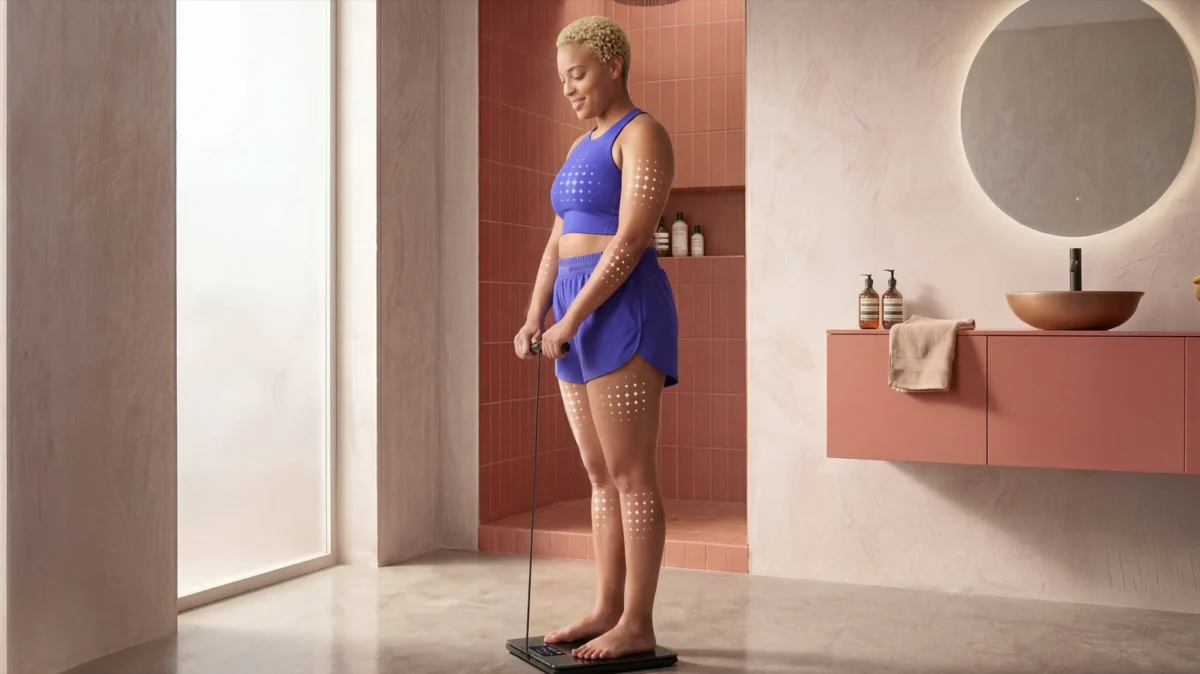
Withings, a pioneer in the connected health space, has long straddled the line between consumer convenience and clinical utility. While the company’s high-end "Body Scan" station has set a benchmark for at-home health monitoring at a $600 price point, a significant void has remained in the mid-range market. Today, the company looks to bridge that gap with the launch of the Withings BodyFit, a $280 smart scale specifically engineered to cater to the growing demographic of users currently prescribed GLP-1 agonists like Ozempic, Wegovy, and Mounjaro.
Main Facts: The New Standard in Mid-Range Health Tracking
The Withings BodyFit is designed to bring sophisticated body composition analysis to a wider audience without the prohibitive cost of the flagship Body Scan model. The device arrives at a critical juncture in the health and wellness industry, where weight loss medications have revolutionized treatment for obesity and metabolic disorders but introduced new challenges regarding body composition.
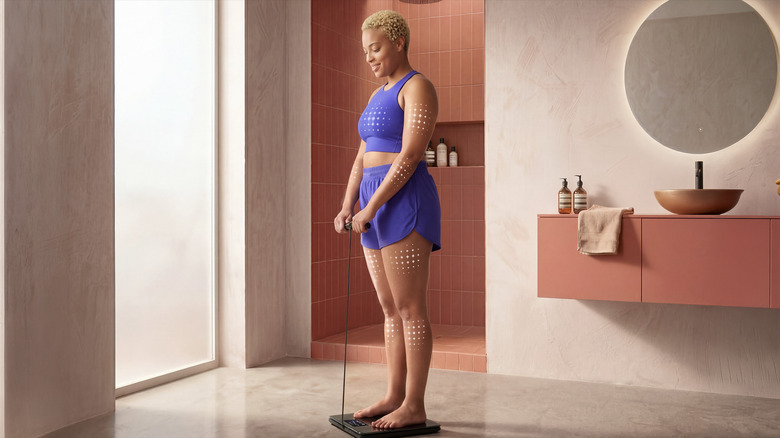
The scale features a retractable handle—a design element inherited from the flagship model—that allows for "six-segment" body composition analysis. By passing a low-level electrical current through the body, the device provides a detailed breakdown of fat and muscle mass in the torso, arms, and legs. Beyond mere weight tracking, the BodyFit includes a single-lead ECG feature, enabling users to monitor their heart rhythm and cardiovascular health daily. The device is available for purchase immediately via the Withings website and is expected to hit major retail channels in the coming months.
Chronology: The Evolution of Withings’ Smart Scales
To understand the significance of the BodyFit, one must look at the trajectory of Withings’ product development over the last decade.
- Early 2010s: Withings popularized the "Wi-Fi Scale," moving the bathroom scale from a simple analog weight-tracking tool to a connected device that synced to mobile applications.
- 2022: The company launched the "Body Scan," an ambitious "connected health station" that offered clinical-grade sensors, including a multi-frequency bioelectrical impedance analysis (BIA) and a six-lead ECG. At $600, it became the gold standard for health enthusiasts but remained a luxury item.
- 2023–2024: As GLP-1 usage surged—with estimates now citing over 30 million Americans on these medications—Withings recognized that general weight-loss tracking was insufficient. Users on these treatments often experience rapid weight loss, which frequently includes muscle atrophy, a condition known as "sarcopenic obesity" when not properly managed.
- Late 2024: Withings finalized the development of the BodyFit, a device that strips away some of the more niche medical sensors of the Body Scan while retaining the essential "tension-reel" handle technology necessary for precise segment-based muscle analysis.
Supporting Data: Validating the "Clinical-Grade" Claim
One of the primary criticisms of consumer-grade body scales is the lack of scientific rigor. Withings has sought to counter this skepticism by emphasizing the technology behind their Bioelectrical Impedance Spectroscopy (BIS).
To validate the BodyFit’s accuracy, Withings partnered with Mon Stade, a French sports clinic specializing in performance and physiological health. The goal was to benchmark the BodyFit against the industry’s "gold standard": the DEXA (Dual-Energy X-ray Absorptiometry) scan. A DEXA scan is a medical-grade imaging test used to measure bone density and body composition with high precision.
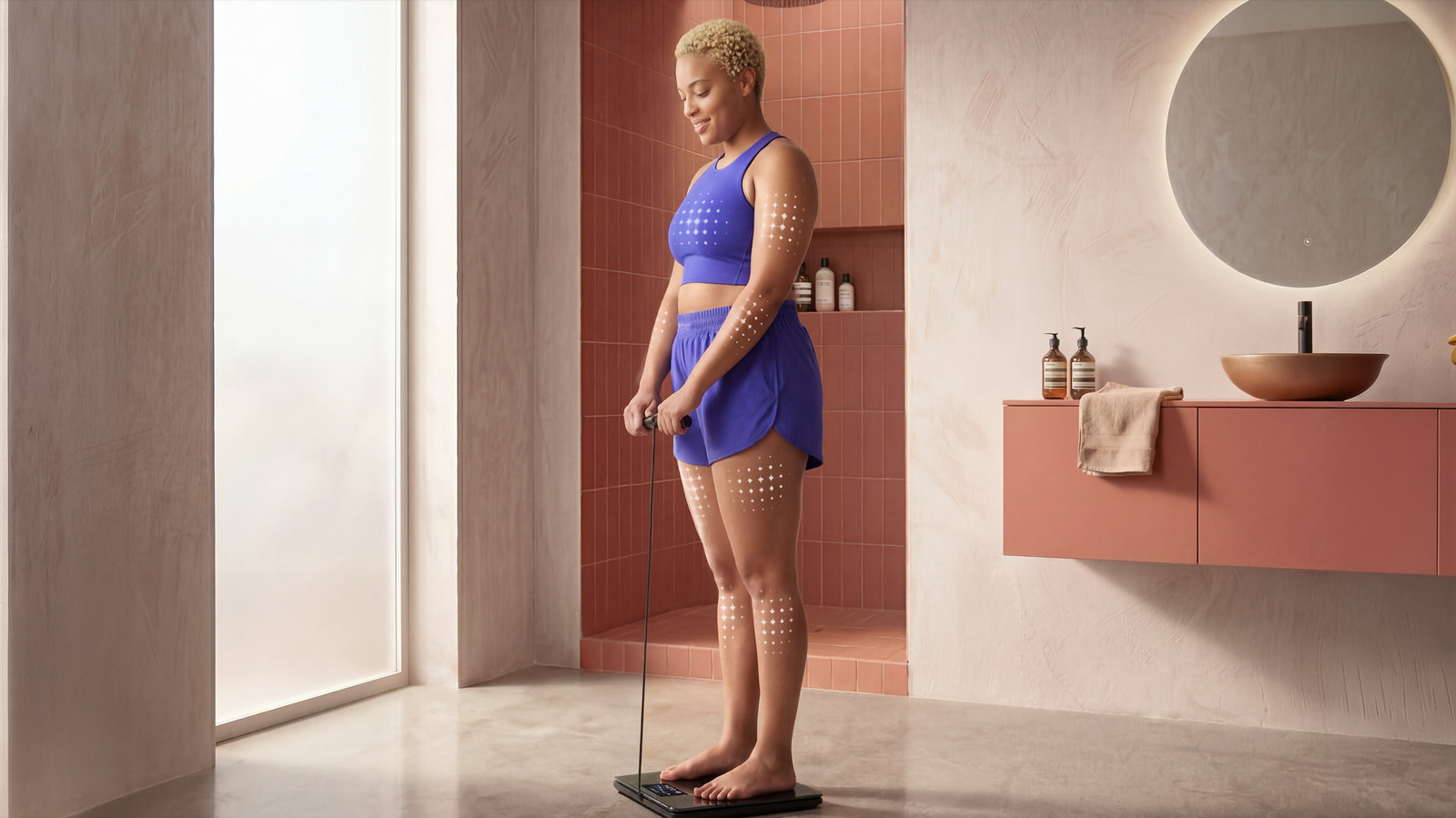
According to data released by Withings, the BodyFit demonstrated a 98 percent accuracy rate for muscle mass and a 99 percent accuracy rate for fat mass when compared to DEXA scan results. While these figures are impressive for a consumer device, they signify a shift in the market: consumers are no longer satisfied with simple BMI calculations; they are demanding granular data that tracks whether their weight loss is healthy (fat reduction) or detrimental (muscle loss).
The GLP-1 Implications: Navigating the Muscle-Loss Paradox
The rise of GLP-1 agonists has been nothing short of a medical revolution, but it has introduced a complex side effect profile. Clinical observation has shown that rapid weight loss can often lead to a reduction in lean muscle mass, which is vital for long-term metabolic health and physical function.
The BodyFit is not merely a piece of hardware; it is positioned as a coaching companion. Through the Withings app, users are provided with:
- Segmented Analysis: Identifying specifically where muscle is being lost—or ideally, maintained—in the limbs and core.
- Caloric and Metabolic Coaching: Offering insights into weight goals and balancing caloric intake with physical activity.
- Sustainability Metrics: By monitoring body composition rather than just total weight, users can adjust their protein intake and strength training routines, turning the scale into an actionable dashboard for health optimization.
This is a strategic pivot for Withings. By framing the scale as an essential tool for the 30 million-strong GLP-1 user base, they are moving away from "wellness" and into "medical necessity."
Official Responses and Strategic Vision
In a statement accompanying the launch, Withings executives emphasized the need for "data-driven" weight loss. "The number on the scale is an incomplete story," a company spokesperson noted. "For users on intensive weight-loss programs, it is imperative to know if they are losing fat or the muscle they need to sustain their metabolism."
The decision to price the device at $280 represents a tactical mid-range entry point. It is expensive enough to imply premium engineering and sensor quality, yet affordable enough to appeal to the millions of individuals currently investing significant monthly funds into their prescription medications. By providing a "middle ground," Withings is capturing users who find the $600 Body Scan excessive but are unwilling to settle for the inaccurate readings of standard $50 smart scales.
Future Outlook: The Intersection of Hardware and Healthcare
The launch of the BodyFit signals a broader trend in the smart home space: the "medicalization" of the bathroom. We are seeing a shift where the bathroom mirror, the scale, and even the toilet (as seen in Withings’ urine-analysis technology) are becoming nodes in a home-based diagnostic network.
The implications for the insurance and healthcare industries are profound. If patients can provide their physicians with accurate, consistent, and segmented body composition data, it could potentially allow for more personalized treatment plans for those on GLP-1s. Instead of waiting for a quarterly check-up to see how a patient is responding to a medication, a doctor could theoretically review data trends that show whether a patient is at risk of muscle wasting.
However, challenges remain. Privacy concerns regarding health data, the reliability of BIA in varied hydration states, and the psychological impact of constant, highly detailed physiological monitoring are all topics that will require ongoing discussion.
As Withings prepares for the wider rollout of the BodyFit, the company is effectively betting that the future of weight management is not found in the doctor’s office, but in the consistency of daily, at-home measurements. For the millions navigating the transformative, yet often difficult, journey of GLP-1 therapy, the BodyFit offers something more valuable than a weight measurement: it offers a sense of control over their own biological trajectory.












No comments yet. Be the first to join the conversation!