Neng Nana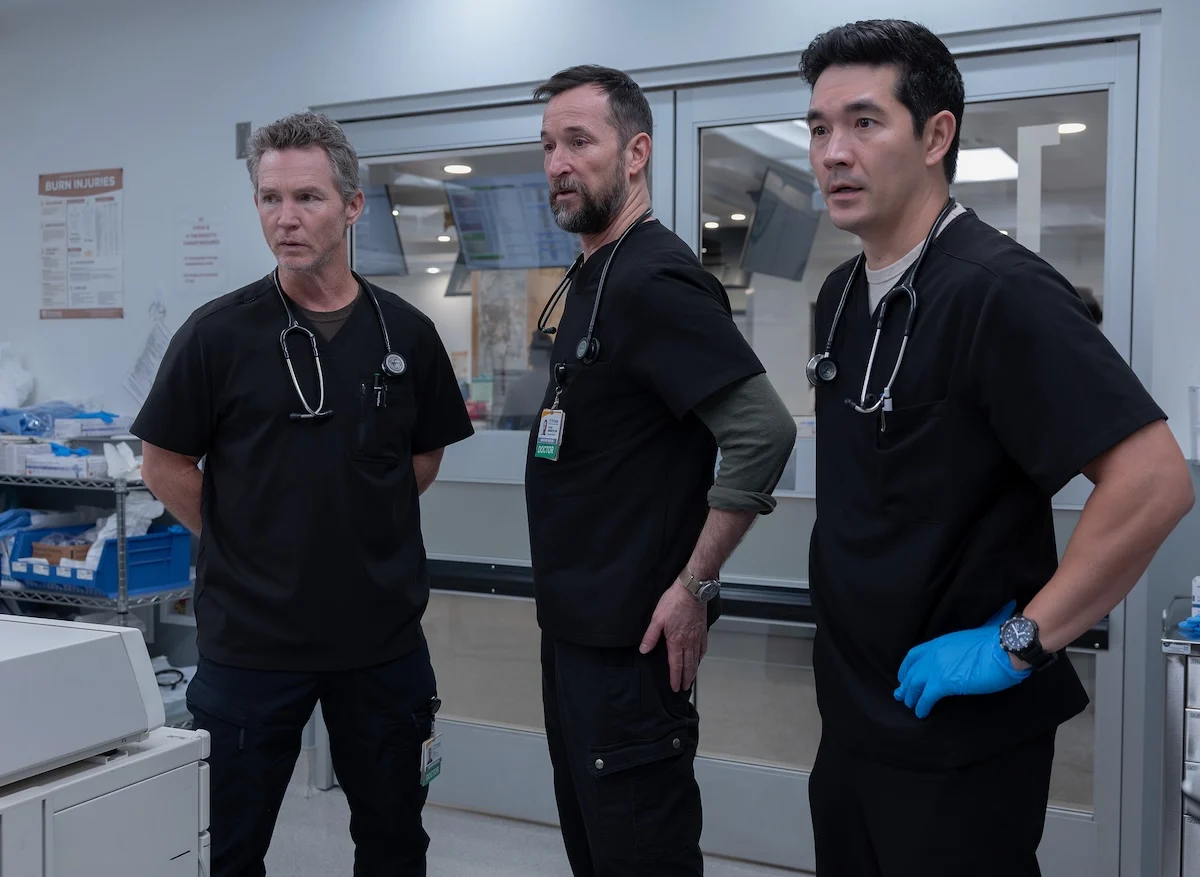
In an era of television defined by the "streaming entropy"—where acclaimed series often languish in multi-year hiatuses or succumb to the whims of algorithms—the medical drama The Pitt stands as a defiant anomaly. It is a show that functions with the steady, reliable pulse of the very hospital it depicts, returning to screens with a consistency that has become increasingly rare in the modern media landscape.
As the dust settles on a harrowing and emotionally resonant second season, creator R. Scott Gemmill is already looking toward the horizon. Even as viewers continue to unpack the finale’s high-stakes narrative threads, Gemmill and his dedicated writing team are already deep into the architecture of Season 3. For the creative force behind the Pittsburgh Trauma Medical Center, the secret to the show’s longevity lies in a simple, if demanding, philosophy: prioritize the humanity of the staff, and the medical intensity will follow.
The Character-First Paradigm
The prevailing wisdom in television production often suggests that a medical procedural begins with the "case of the week"—a rare disease, a tragic accident, or a complex surgery—that serves as a narrative puzzle for the protagonists. However, The Pitt flips this conventional wisdom on its head.
"We have these massive whiteboards where we map out individual episodes, and sitting right next to them is our ‘pool of ideas’—things that might be as simple as a ‘dog mauling’ or as complex as a historical medical anomaly like the resurgence of Polio," Gemmill explained during his appearance on the IndieWire Filmmaker Toolkit Podcast. "But we never start with the medicine. Whatever story we are telling medically is always designed to support something else, story-wise, for the character. We build the medicine around the character’s internal arc, not the other way around."
This commitment to "deep character work" is what elevates The Pitt above the standard fare of the genre. By utilizing medical crises as a pressure cooker for human emotion, the writers ensure that every procedure, every diagnosis, and every life-or-death decision feels earned.

Chronology of a Crisis: Anatomy of the Season 2 Finale
The Season 2 finale serves as the ultimate case study in this methodology. The episode, which sees Dr. Robby (Noah Wyle) enduring a grueling final day shift, is a masterclass in tension, punctuated by a catastrophic cyber-attack that forces the hospital to revert to analog systems.
The narrative choice to strip the hospital of its digital infrastructure was not merely a plot device to increase the chaos; it was a deliberate strategy to force the characters into a more intimate, tactile space. With the systems down, the ER was forced to rely on the "writer’s room" style of communication: physical whiteboards, handwritten charts, and the kind of direct, face-to-face interaction that technology often mediates.
The "Full Court Press" Strategy
Gemmill and his team were particularly interested in how this crisis would force an interaction between Dr. Robby and Dr. Abbott (Shawn Hatosy). The finale’s centerpiece—a high-stakes, multi-layered surgery involving a pregnant woman suffering from eclampsia—required a "full court press" of medical talent.
"We knew we wanted to do some sort of trauma that would pull everyone in and force Robby to interact with Abbott," Gemmill noted. The goal was to create multiple lines of action that would force the two men into the same orbit, even as Robby grappled with the encroaching, silent specter of his own mental health struggles.
The logistics of this sequence were staggering. Because the scene required a level of visual fidelity that could withstand the scrutiny of a modern audience, the team had to engage in meticulous planning. Casting for the pregnant patient occurred months in advance, specifically to facilitate the creation of complex prosthetics. "Those are things you never plan on having to figure out," Gemmill reflected, citing a specific challenge where the amniotic fluid from the prosthetic kept washing away the synthetic "goop" required to make the birth look authentic. It is this attention to detail—the realization that even a small, shiny baby can break the immersion of a scene—that underscores the dedication of the show’s special effects and production teams.

Supporting Data: The Rigor of Medical Authenticity
While the characters drive the story, the "rigorous medical accuracy" remains the show’s backbone. The Pitt is supported by a dedicated team of advisors who ensure that the near-continuous time in which the show unfolds remains plausible.
This authenticity serves a dual purpose. Firstly, it satisfies the show’s most knowledgeable viewers—medical professionals who watch with a critical eye. Secondly, it provides the writers with a consistent language of tension. When a character in The Pitt shouts a diagnosis or performs an emergency procedure, the audience trusts the stakes implicitly. The medical advisors do not just correct errors; they help the writers conceive of sequences that feel like genuine, lived-in experiences of a trauma center.
The show’s production design is another pillar of this success. By creating a physical space that allows for long, fluid takes, the series captures the "Day Shift" energy that has become its signature. It is a world that feels lived in, from the frantic, dimly lit corridors to the quiet, exhausted corners where doctors like Robby retreat to find a moment of peace.
Official Responses and Creative Intent
In conversations regarding the future of the series, Gemmill has expressed a desire to continue pushing the envelope. He acknowledges the "virtuous cycle" of the show: characters lead to situations, and situations force characters to confront their deepest flaws.
"We’re in that process now for Season 3," Gemmill said. "The medical cases are chosen to reflect something either that’s going on in the characters’ lives or to challenge them, to see a flaw."

This focus on flaws is perhaps the most compelling aspect of The Pitt. In an era where many shows strive for aspirational, perfect protagonists, The Pitt thrives in the gray areas of human fallibility. Whether it is Robby’s quiet internal battles or the power dynamics between the day and night shift teams, the show refuses to provide easy answers. Even the abstract idea of a "Mateo After Dark" spinoff—a concept Gemmill finds amusing—highlights the depth of the show’s bench; the supporting cast is so well-drawn that they feel capable of sustaining their own complex narratives.
Implications: The Future of the Procedural
The success of The Pitt offers a vital lesson for the television industry. In a world where the "prestige" label is often reserved for limited series or high-concept sci-fi, The Pitt proves that the procedural, when handled with genuine creative ambition and a commitment to character, remains one of the most potent formats in storytelling.
By eschewing the trap of "streaming entropy," the show has managed to build a loyal, engaged audience that views each season not as a standalone movie, but as a chapter in a larger, evolving epic. The production team’s refusal to rest on their laurels—or their accolades—suggests that Season 3 will likely continue to test the limits of what a medical drama can achieve.
As Gemmill stated, "Our first job is to entertain, and we really take that to heart." By maintaining a balance between the visceral, fast-paced nature of emergency medicine and the slow-burn evolution of human psychology, The Pitt has secured its place as a cornerstone of modern television. As the team moves forward, the audience can rest assured that, at the Pittsburgh Trauma Medical Center, there will always be more work to do, more lives to save, and, most importantly, more stories to tell.
The Pitt Season 2 is currently streaming on HBO Max.


 Sagoh
Sagoh
 Nana Wu