

Warning: This article contains major spoilers for the series finale of The Boys.
For seven years, Amazon’s Prime Video has carved out a unique identity in the crowded streaming landscape. While Netflix built its kingdom on algorithmic variety and Disney+ leaned heavily into the monolithic power of its legacy franchises, Prime Video successfully positioned itself as the home of the "prestige genre"—a mix of high-concept action, gritty deconstruction, and robust "dad TV." Yet, as the curtain falls on its most influential flagship series, The Boys, the platform finds itself at a pivotal, potentially volatile, crossroads.
The End of an Era: The Cultural Weight of ‘The Boys’
Since its debut in 2019, The Boys served as the definitive anchor for the Prime Video brand. Much like Stranger Things became synonymous with the Netflix subscription model or The Mandalorian defined the early growth phase of Disney+, The Boys offered something that established a "must-have" status for subscribers. It wasn’t just a show; it was a cultural phenomenon that utilized a visceral, cynical lens to critique the very corporate structures that Amazon itself embodies.
For five seasons, viewers remained tethered to the platform by the central, burning question: Would Billy Butcher finally succeed in his scorched-earth mission to eliminate Homelander? With the recent conclusion of the fifth season, that mystery has been solved. Butcher succeeded, the supes have been checked, and the Vought-led world has fundamentally shifted. However, with the departure of its biggest hit, Amazon faces a "void in the lineup" problem. The question is no longer about the survival of the characters, but the survival of the platform’s momentum.
Chronology of a Flagship: From ‘Alpha House’ to Global Dominance
To understand the stakes of this transition, one must look at the evolution of Prime Video’s original content strategy. Amazon entered the original programming space in 2013 with Alpha House, a modest political comedy that served as a testing ground. Throughout the mid-2010s, the streamer experimented with niche dramas and auteur-driven projects like Transparent and The Marvelous Mrs. Maisel.
However, the late 2010s marked a pivot toward high-budget, broad-appeal genre content.
- 2018–2019: The launch of Tom Clancy’s Jack Ryan established the "Dad TV" archetype, proving that older demographics would flock to the service for polished action thrillers.
- 2019: The premiere of The Boys changed the game. It proved that Amazon could produce "event television" that dominated social media discourse.
- 2021–2023: The expansion continued with the ultra-violent, animated Invincible and the gritty crime procedural Reacher, which arguably solidified Prime Video’s dominance in the action-thriller market.
- 2024: The massive success of Fallout demonstrated that Amazon could successfully translate beloved gaming IP into prestige television, providing a template for future expansion.
Supporting Data: The Economics of Retention
The streaming industry is currently undergoing a "correction" phase. The era of growth-at-all-costs has ended, replaced by a focus on profitability and subscriber retention. Prime Video occupies a distinct space in this economy; unlike standalone streamers, it is bundled with Amazon’s e-commerce ecosystem. While the convenience of free next-day delivery remains a powerful draw, the "content funnel" is essential for keeping users within the ecosystem.
According to industry analysts, "flagship" shows like The Boys act as a primary acquisition tool. Data consistently shows that subscribers are less likely to churn during the release window of a high-profile series. With the finale of The Boys, Amazon is losing a show that consistently landed in the Nielsen Top 10 streaming charts. The challenge now is whether the current library—comprised of Reacher, Invincible, and the newly cemented Fallout—can provide enough "event" gravity to replace the loss of Vought International’s chaotic world.
The Strategy of Offshoots: Beyond ‘Vought Rising’
Amazon’s initial reaction to the end of The Boys has been to lean into the franchise’s history. With the cancellation of the college-set spin-off Gen V, the platform is pivoting its marketing muscle toward Vought Rising. This prequel, which focuses on the origins of Soldier Boy and the early days of Stormfront, attempts to capitalize on the built-in audience of the main series.
However, historical trends in the streaming industry suggest that relying too heavily on spin-offs is a dangerous game. When a flagship show ends, audiences often experience "franchise fatigue." While Vought Rising will undoubtedly attract the "hangers-on" of The Boys fandom, it risks being seen as a secondary product rather than a tentpole event. Netflix faced similar headwinds while preparing for the post-Stranger Things era, testing various projects to see what would capture that specific, massive lightning in a bottle. Amazon must be careful; if the audience perceives these spin-offs as "leftovers," they may be more inclined to cancel their subscriptions rather than stick around for the next chapter.
Official Responses and Creative Directions
Amazon Studios leadership has remained characteristically tight-lipped regarding specific long-term projections, though recent comments from production heads suggest a focus on "diverse, genre-bending IPs." The success of Fallout—a show that managed to satisfy both die-hard fans of the Bethesda games and casual viewers—has provided a blueprint for the future.
The studio’s upcoming slate includes Blade Runner 2099, a project with significant pedigree that is designed to capture the sci-fi market. Furthermore, the high-profile adaptation of God of War is widely expected to be the "next big thing" for the streamer. By investing in established, high-concept properties, Amazon is attempting to build a library that doesn’t just rely on one hit show, but rather on a collection of "heavy hitters" that can rotate throughout the calendar year.
Implications for the Future of Prime Video
The conclusion of The Boys is not just a creative milestone; it is a financial inflection point. The implications of this transition are threefold:
- Diversification of Hits: Amazon can no longer rely on a single show to carry the platform’s reputation. The shift toward Fallout, Reacher, and Blade Runner 2099 signals a move toward a "portfolio" strategy, where no single IP is allowed to become the sole face of the service.
- The "Prestige" Ceiling: By leaning into shows like God of War and Blade Runner, Amazon is clearly aiming for the HBO-style prestige market. This implies a higher budget-per-episode threshold, which increases the financial risk for every new project launched.
- The Ecosystem Advantage: Because Prime Video is tethered to the retail giant, it has a "safety net" that standalone services like Max or Paramount+ do not. Even if a specific show fails to reach The Boys levels of success, the platform can afford to experiment, knowing that the retail side of the business keeps the lights on.
Conclusion: What’s Next?
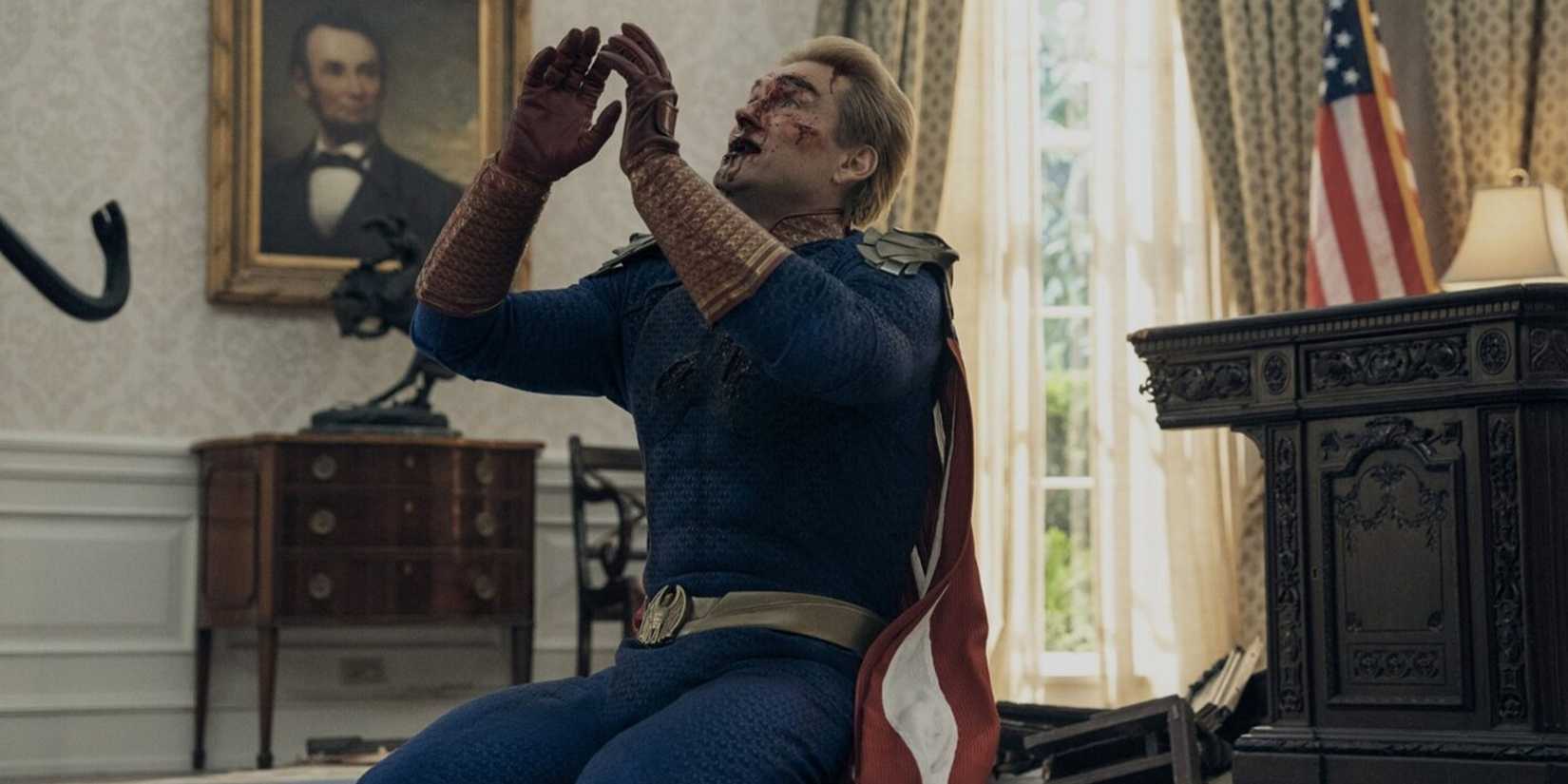
As the dust settles on the final showdown between Butcher and Homelander, the landscape of Prime Video is forever changed. While The Boys provided the platform with its most iconic, biting, and profitable era, the future of the streamer will be defined by its ability to pivot.
Whether the mantle is picked up by the wasteland survivors of Fallout, the sci-fi mystery of Blade Runner 2099, or a surprise dark horse, one thing is certain: the era of the singular, all-encompassing hit is fading. Amazon is moving toward a more mature, distributed model of content production. For subscribers, this means a wider array of high-budget experiences, but for the platform, it represents the ultimate test: can they prove that Prime Video is a destination for great television, regardless of whether a supe is currently on screen?
The era of The Boys may be over, but the war for the streaming subscriber’s attention has only just begun.











No comments yet. Be the first to join the conversation!