Asro
Asro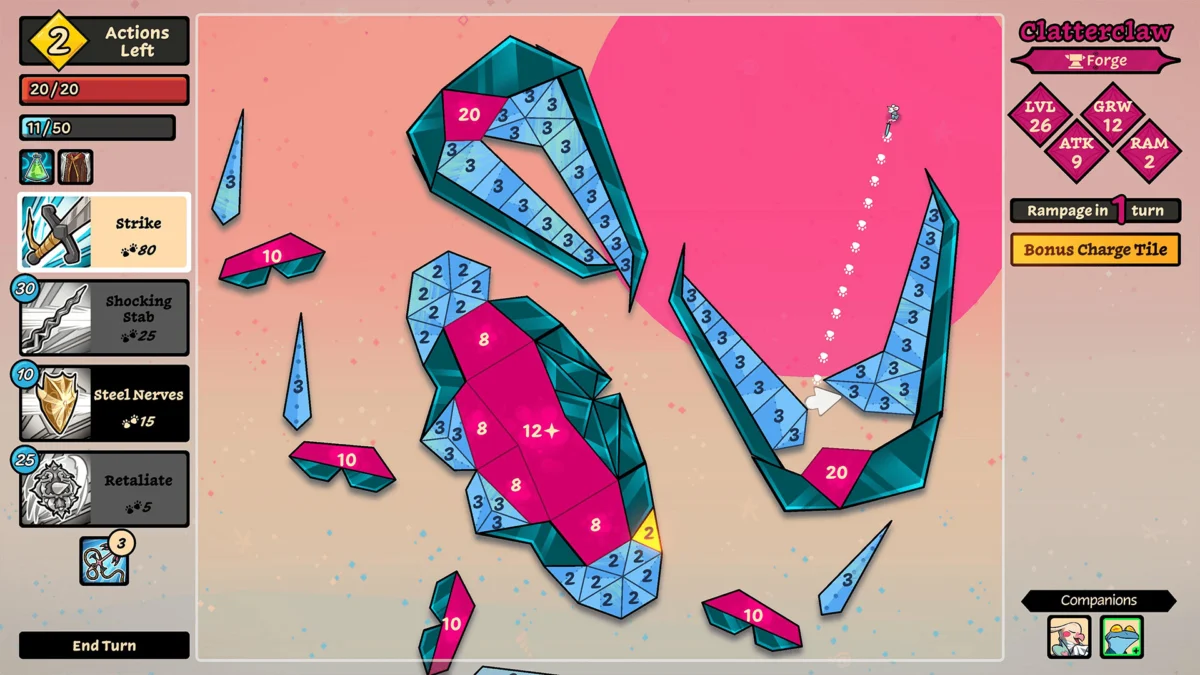
In the vast, often saturated landscape of indie gaming, it is rare to encounter a title that genuinely shifts the paradigm of its genre. Beast Breaker, a turn-based RPG that blends tactical depth with the kinetic energy of a pinball machine, is one such rarity. It is a game that defies the standard conventions of "action" by replacing frantic button-mashing with calculated trajectory planning and spatial awareness. For players who often find themselves overwhelmed by the reflex-heavy demands of modern action games, Beast Breaker offers a refreshing, cerebral alternative that feels both rewarding and deeply original.
Main Facts: A Mouse Against Titans
At its core, Beast Breaker is a story of unlikely heroism. Players step into the tiny paws of a mouse residing in the humble, quiet home of their grandmother. This modest domestic setting acts as a stark juxtaposition to the looming threat that drives the narrative: the village is under siege by colossal monsters. These beasts are not mere aesthetic obstacles; they are modular, multi-part threats constructed from shields, vulnerable weak points, and indestructible structural hazards.
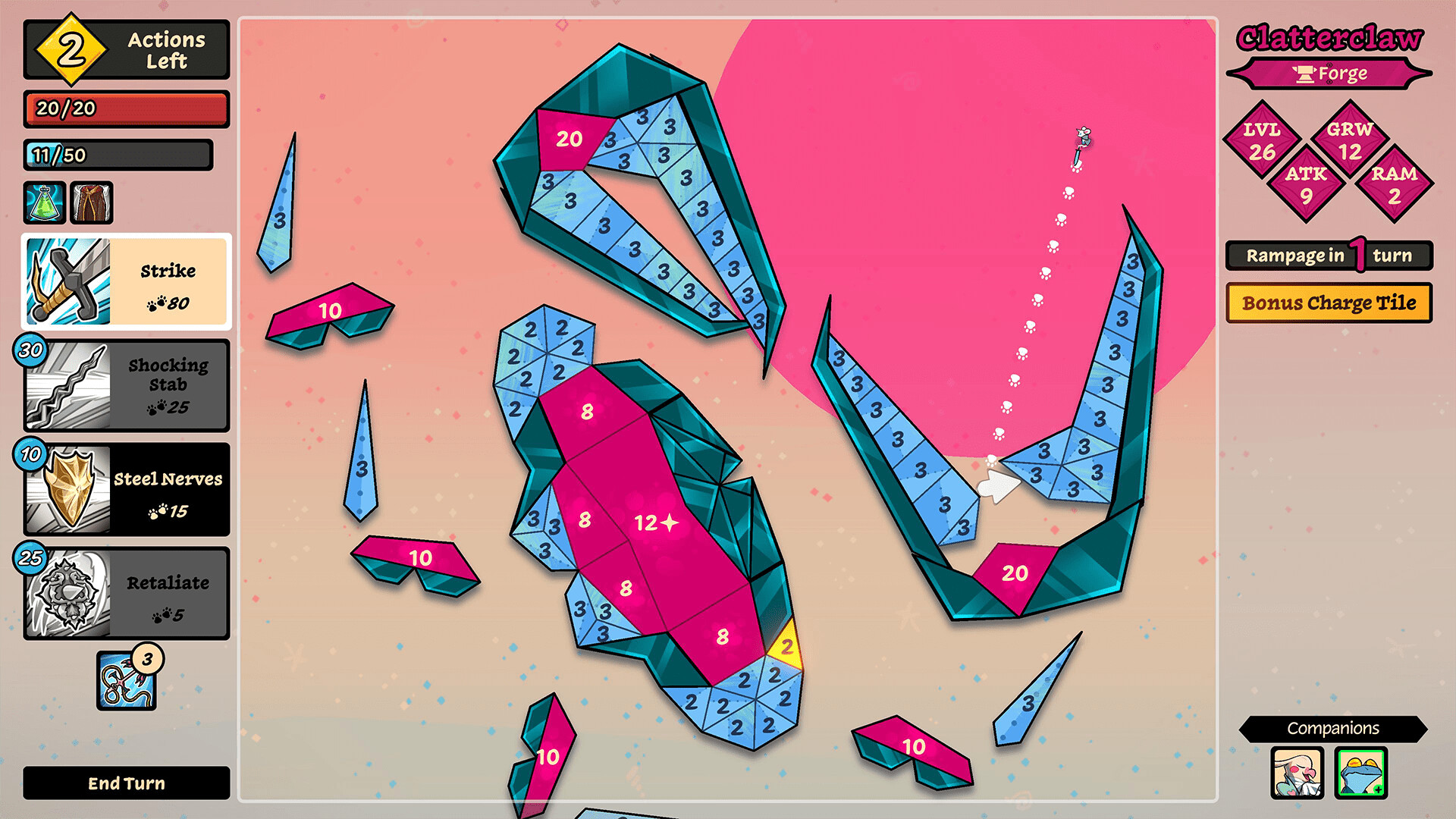
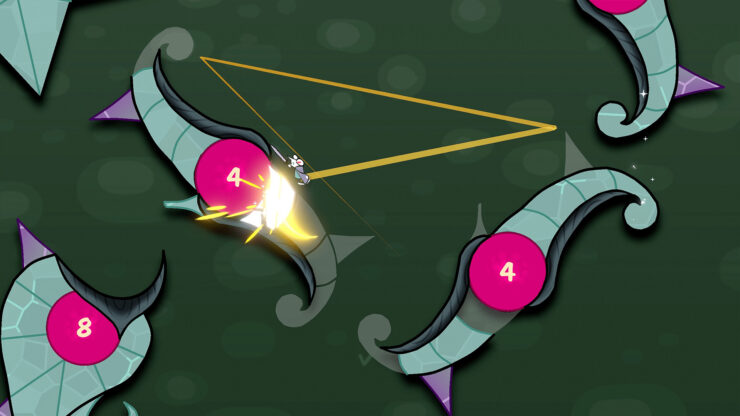
The gameplay loop is deceptively simple yet remarkably complex. You control the mouse, flinging yourself at these gargantuan enemies with the momentum and precision of a pinball. Every encounter is a puzzle of physics and strategy. You must navigate the board, avoiding impenetrable black segments and sturdy shields, to strike the glowing red weak points—each marked with a numerical value indicating how many hits are required to shatter them.
The stakes are elevated by a strict turn-based economy. Players are limited to three actions per turn. Once these moves are exhausted, the monster responds, shifting its position, transforming its layout, or unleashing a counter-attack. Failing to calculate the risks—such as ending your turn in a "red zone"—can lead to catastrophic damage. This mechanical constraint transforms every combat encounter into a high-stakes game of billiards, where your projectile—the protagonist—must be positioned perfectly to maximize damage while minimizing exposure.
Chronology: From Concept to Global Recognition
The development of Beast Breaker represents a significant achievement in indie game design. While the project began with a clear focus on physics-based mechanics, its evolution into a fully-fledged RPG was a deliberate effort to marry narrative progression with mechanical innovation.
The game’s journey to the public eye was marked by significant milestones. During its demonstration phase at DreamHack Birmingham, Beast Breaker became an instant conversation piece. Attendees found themselves captivated by the unique "flinging" combat system. It was here that the game transitioned from an interesting prototype to a must-play title, as players and critics alike noted the addictive quality of mastering the trajectory-based attacks.
Following the positive reception at major industry events, the developers refined the balance of the game’s arsenal. The introduction of diverse, unlockable weapons was a crucial turning point in the game’s development cycle. These weapons did more than just increase stats; they fundamentally altered the player’s movement and approach to the board. By adding abilities such as "dashing" through obstacles or manipulating the physics of the bounce, the developers ensured that the game remained fresh for dozens of hours, long after the initial novelty of the combat had worn off.
Supporting Data: The Mechanics of Momentum
To understand why Beast Breaker succeeds, one must analyze the architecture of its combat. The "three-move" limit is the primary driver of the game’s difficulty curve. It forces the player to move beyond simple target practice and into the realm of tactical forecasting.
The Physics of Destruction
The combat engine relies on environmental interaction. Because you cannot simply damage a monster at will, you must understand the "geometry of violence."
- Shield Segments: These are static obstacles. Striking them ends your movement without dealing damage to the beast’s health.
- Vulnerable Points (Red): These are the keys to victory. Each has an integer value. If a piece is labeled "3," you must strike it three times to remove it.
- Indestructible Segments (Black): These serve as the board’s permanent architecture, defining the arena in which you must operate.
Arsenal Diversity
The weapon system acts as a modifier for these base physics. Players can switch between different armaments that change their "physics profile." For instance, a heavy, blunt weapon might provide higher damage per hit but limited range, while an agile, blade-like weapon might allow for multi-part piercing. These choices create a layer of pre-combat strategy that is common in deep RPGs but rarely seen in physics-based games. The ability to customize your "bounce" style ensures that players can tailor the game to their personal playstyle, whether they prefer to play defensively or aggressively.
Official Responses and Developer Intent
The development team has been vocal about the intent behind Beast Breaker. Their goal was to create an experience that felt "at home" in the RPG genre while stripping away the typical reliance on twitch reflexes. By focusing on turn-based strategy, they opened the genre to a demographic that enjoys RPG elements—progression, story, gear management—without the fatigue associated with high-action combat.
At DreamHack and other industry showcases, the feedback centered on the game’s "tactile satisfaction." Players reported that the act of successfully calculating a complex, multi-hit bounce felt inherently rewarding. The developers have emphasized that they wanted the game to feel "weighty," where every decision to fling the character felt like a commitment. The inclusion of the "red zone" mechanic—where the monster threatens to attack—serves as the primary source of tension, ensuring that players never feel too comfortable, even when they are winning.
Implications: A New Path for Indie RPGs
The success of Beast Breaker holds significant implications for the future of indie game design. First, it proves that "physics-based" mechanics are not reserved for puzzle games or platformers. When integrated into an RPG, they can offer a level of tactical depth that rivals traditional grid-based combat.
Second, the game highlights the importance of accessibility through design. By removing the need for lightning-fast reactions and replacing them with a turn-based, thoughtful interface, Beast Breaker invites a broader audience to engage with complex systems. This is a vital lesson for developers: complexity does not have to mean difficulty in execution; it can mean depth in planning.
Furthermore, Beast Breaker stands as a testament to the "niche-first" design philosophy. By focusing on a very specific, unique feeling—the bounce—the developers created a "hook" that is instantly recognizable. In an age where discoverability is the greatest challenge for indie developers, having a mechanic that looks and plays like nothing else on the market is a massive competitive advantage.
Looking Ahead
As players continue to explore the diverse monster types and unlock the full breadth of the weapon roster, Beast Breaker is likely to be cited as a prime example of successful mechanics-first game design. It is a title that respects the player’s intelligence, rewards patience, and provides a distinct, satisfying experience that stands apart from the typical offerings on the Steam store.
Whether you are a seasoned RPG veteran looking for a new type of challenge or someone who generally shies away from the stress of action games, Beast Breaker offers an invitation to master a new kind of combat. It is a small game with a massive heart, proving once again that some of the most innovative ideas in the industry are coming from the most humble of beginnings.
Beast Breaker is currently available for purchase on Steam, providing a complete, polished, and highly distinct experience that demands to be played by anyone with an interest in the evolution of indie game design. As you guide your mouse-hero through the treacherous, shifting landscapes of these gargantuan beasts, remember: in this game, the best move is not the fastest one—it’s the smartest one.


 Ali Ikhwan
 Nana Wu