Ali Ikhwan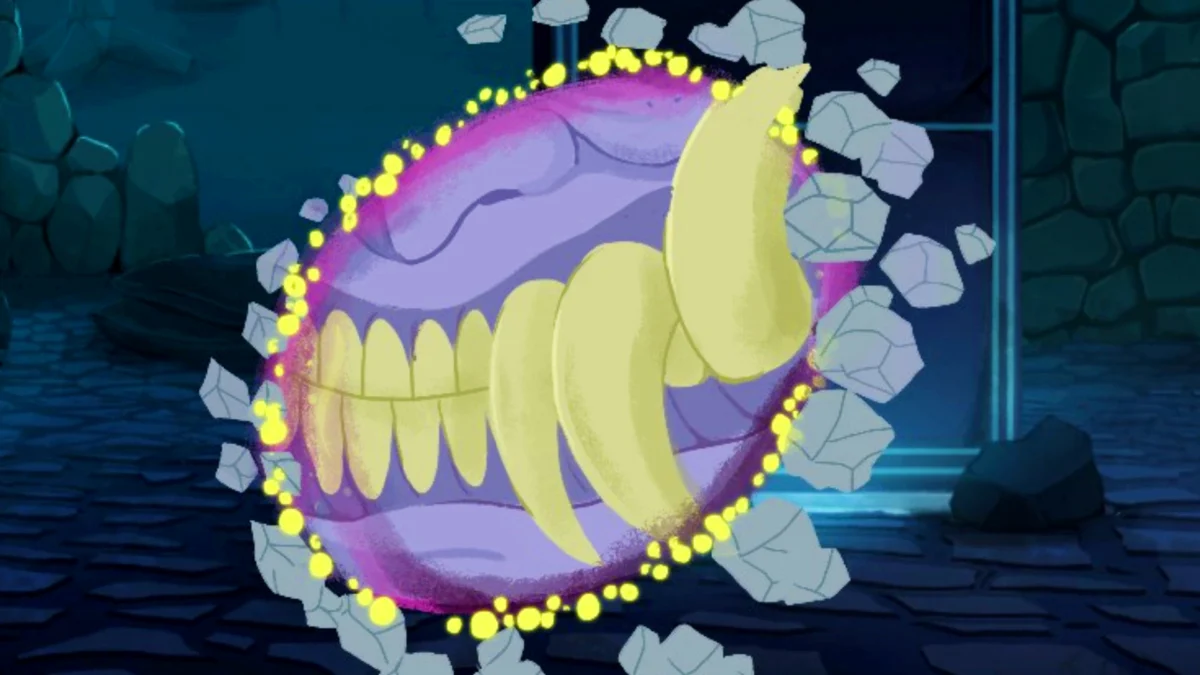
The roguelike genre is defined by its ability to marry systemic complexity with atmospheric world-building. Few titles have mastered this balance as effectively as Mega Crit’s Slay the Spire 2. As the highly anticipated successor to the genre-defining original continues its journey through Early Access, fans have become increasingly obsessed with the "why" behind its cast of nightmares.
Thanks to a recent edition of the developer’s "Neowsletter" blog, Mega Crit co-founder Casey Yano has finally pulled back the curtain on the creative process. From the influence of Valve’s competitive shooter Deadlock on the game’s most notorious boss to the hilarious, low-effort origins of an elegant fairy, the latest insights provide a fascinating glimpse into the chaotic, iterative, and occasionally mundane reality of game development.
The Evolution of the Bestiary: Documentation Meets Discovery
The recent implementation of the Bestiary in Slay the Spire 2’s second major update marks a significant milestone for the community. In a game where strategic mastery relies on understanding the granular nuances of every encounter, having a centralized repository for enemy data is invaluable.
Currently, the Bestiary serves primarily as a visual archive, allowing players to admire the intricate animations and character designs of the Spire’s inhabitants. However, Mega Crit has confirmed that this is merely the foundational layer. The roadmap includes the integration of comprehensive combat statistics, behavioral breakdowns, and—perhaps most anticipated—deep-dive lore entries.
While the mechanical data will undoubtedly assist players in optimizing their card synergies, the community has voiced a desire for the inclusion of the "developer commentary" style trivia recently shared by Yano. Transforming the Bestiary from a dry statistics page into a living history of the game’s design would elevate the player experience, turning every run into an exploration of Mega Crit’s creative journey.
Chronology: From Concept to Cut Content
The design process for Slay the Spire 2 has been anything but linear. The developers have frequently emphasized that the Spire is a volatile environment, and this volatility extends to the development team’s own workflow.
The Doormaker Debacle
Perhaps the most notable casualty of the development cycle was "Doormaker." Initially conceived as a high-tier boss, Doormaker became a focal point of frustration for the design team. Despite multiple iterations, finding a balance that felt "fair" while maintaining the necessary tension proved elusive.
The struggle to calibrate Doormaker reached a breaking point, leading to the boss’s total removal from the game. In its place, the team introduced "Aeonglass," a newcomer that successfully filled the mechanical niche left by its predecessor. When asked about the specific inspiration behind the original Doormaker—with many fans speculating a connection to the web serial Worm—Yano offered a surprising, contemporary explanation: "I was playing too much Deadlock." The admission highlights how modern gaming trends and competitive experiences often bleed into the creative subconscious of developers, even when they aren’t explicitly trying to emulate them.
The First Boss: The Ceremonial Beast
In contrast to the doomed Doormaker, the Ceremonial Beast stands as a triumph of initial design. As the first boss finalized for the sequel, it set the tone for the game’s aesthetic. Yano revealed that the creature was heavily inspired by the Forest Spirit from Studio Ghibli’s Princess Mononoke.
Interestingly, the team initially aimed for a "solemn and grotesque" aesthetic that leaned harder into the horror elements of the film. While the design evolved, fans have frequently drawn parallels between the Ceremonial Beast and Eikthyr from Valheim. Yano, a self-confessed fan of the survival hit, welcomed the comparison, noting that the design convergence was a natural byproduct of shared inspirations in dark fantasy.

Official Responses: On Naming Conventions and Aesthetics
A significant portion of Yano’s recent communication focused on the philosophy of nomenclature and the visual language of the game. For the Mega Crit team, naming is not just a labeling exercise; it is an act of world-building.
The "Kaiser Crab" Philosophy
Yano addressed the naming of the "Kaiser Crab," which serves as a critique of standard fantasy tropes. "I’m tired of things being ‘Emperor X’ and ‘King Y,’" Yano explained. He argued that the reliance on bland, Western-centric monarchical titles limits the perceived scale of the game world. By opting for "Kaiser," the team injected a specific historical flavor that distinguishes the creature from the generic "King Crab" variants found in other titles. It is a small detail, but one that emphasizes the developers’ intent to create a world that feels vast, culturally diverse, and intentionally curated.
The Nonupeipe Origin Story
Perhaps the most endearing reveal involves the "Ancient Nonupeipe," a fairy-like entity that players might mistake for a creature of high-fantasy lore. In reality, her name is the result of a humorous placeholder error.
During the early stages of internal testing, the development team used a simple icon labeled "NOPE" to signify missing assets. When two of these placeholders appeared in proximity—such as in the top UI bar—the display read "NONOPEPE." The team found the accidental portmanteau so charming that it was promoted from a bug to an official character name. It serves as a reminder that even the most "elegant" elements of a game are often born from the messy, utilitarian reality of early development.
Implications: Building for the Future
The transparency displayed by Mega Crit has significant implications for both the longevity of Slay the Spire 2 and the broader roguelike genre.
Community Engagement as a Development Tool
By sharing the "why" behind these design choices, Mega Crit is fostering a symbiotic relationship with its player base. When players understand the iterative process—the removal of Doormaker, the naming of Nonupeipe—they become more invested in the product’s success. This level of engagement turns the Early Access period into a collaborative experience rather than a one-way consumption model.
Technical Hurdles and Future Polish
The blog also touched on the technical side of the game’s ongoing development. Responding to concerns regarding multiplayer sessions—specifically the visual confusion when multiple players select the same character—Yano confirmed that the team is currently experimenting with color-coding and aesthetic variants.
This is a critical acknowledgment. As Slay the Spire 2 expands its mechanical scope, the importance of clarity in UI and character representation cannot be overstated. The team’s commitment to iterating on these "quality of life" features, even while developing deep-seated mechanical systems, demonstrates a disciplined approach to project management.
Conclusion: The Spirit of the Spire
The beauty of Slay the Spire 2 lies in its duality. It is a game of cold, calculated statistics and rigorous mathematical balance, yet it is simultaneously a product of human whim, accidental humor, and external influences ranging from anime films to competitive shooters.
As the Bestiary continues to grow, it will act as more than just a reference guide; it will be a testament to the development team’s history. Every entry, from the menacing bosses to the whimsical fae, tells a story of a team that is willing to discard what doesn’t work, embrace the happy accidents that do, and consistently challenge the genre’s standard conventions. For the fans currently scaling the heights of the Spire, these insights provide a deeper appreciation for the work behind the screen. Mega Crit has proven that in the world of game development, the most sinister threats and the most elegant designs often share the same, chaotic origin.

 Reynand Wu
 Pevita Pearce