Layla Zulfa
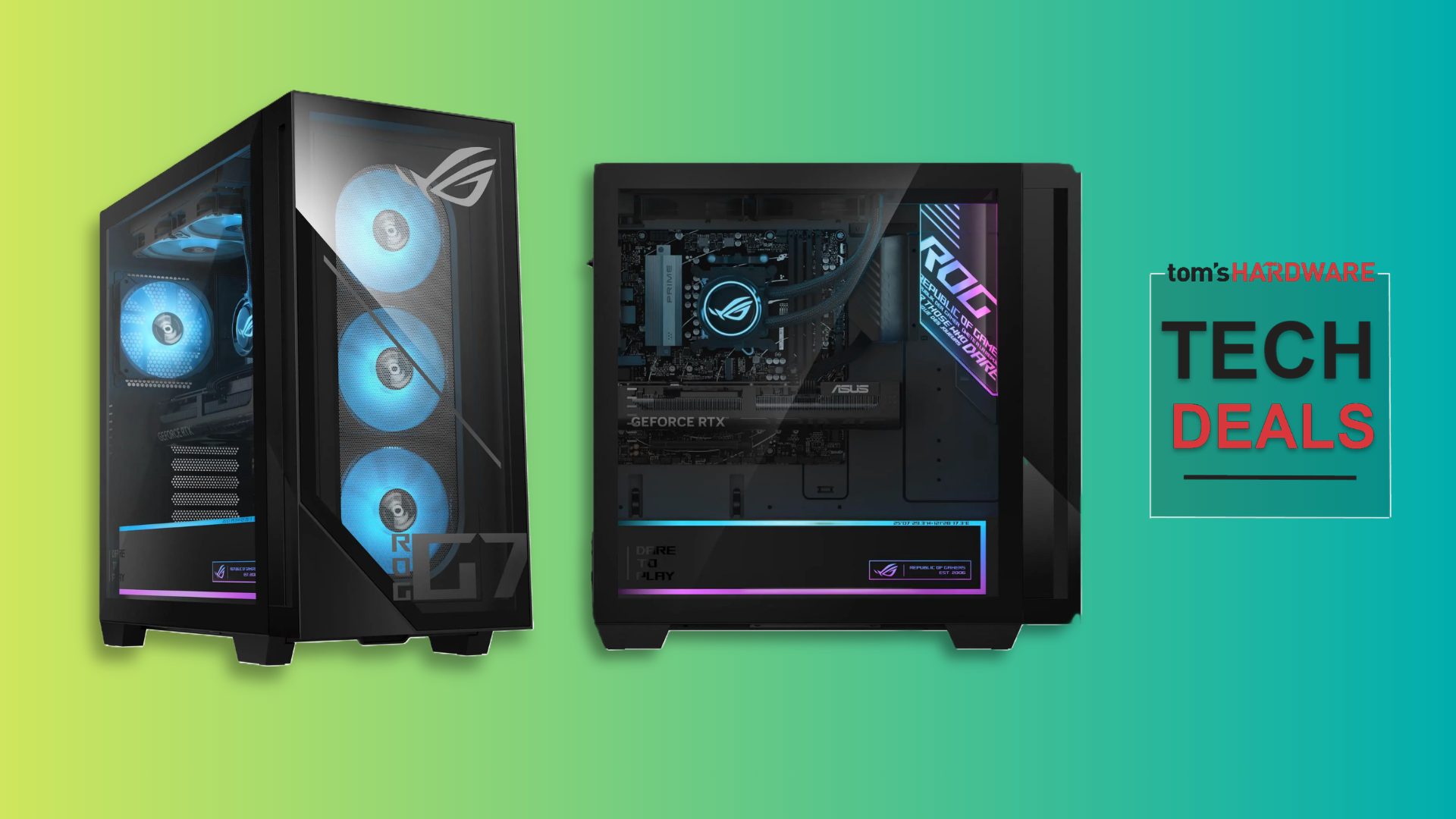
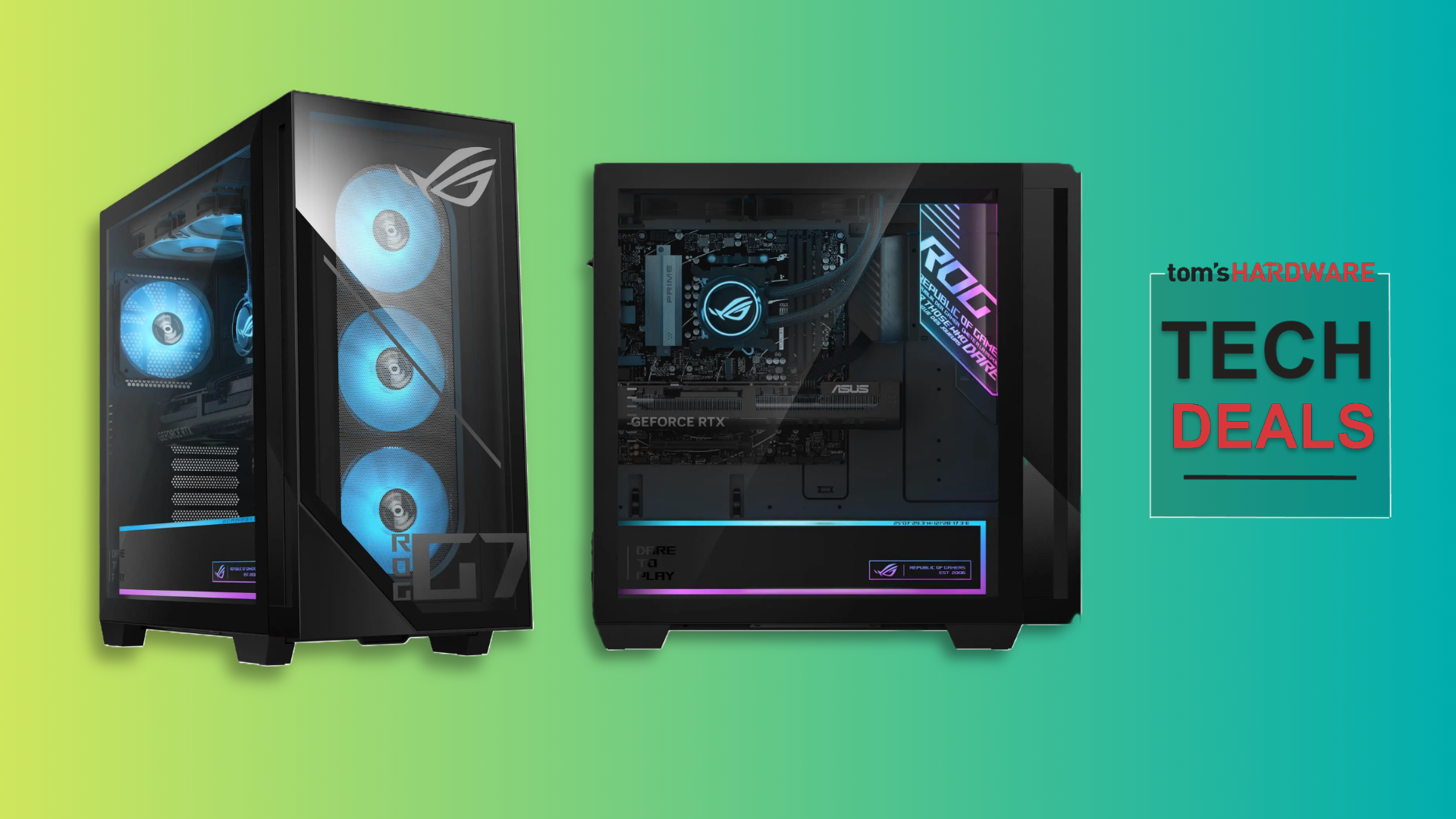
In an era where the cost of building a custom gaming PC seems to climb with every passing quarter, gamers and enthusiasts are increasingly turning their attention toward prebuilt systems. The market is currently saturated with "budget" offerings that compromise on critical components, leaving users with bottlenecked systems or proprietary parts that prevent future upgrades. However, a standout deal has emerged that challenges this trend: the Asus ROG GM700, currently retailing for $1,199.99 on Newegg.
By balancing high-end CPU performance with an enthusiast-tier GPU and a future-proof motherboard platform, this machine offers a compelling argument for those tired of chasing fluctuating component prices.
The Core Specs: A Mid-Range Powerhouse
At its current price point, the Asus ROG GM700 is not merely a "budget" machine; it is a calculated effort to provide 1440p gaming performance without the typical "prebuilt tax."
The Engine: AMD Ryzen 7 8700F
At the heart of the system sits the AMD Ryzen 7 8700F. As an 8-core, 16-thread processor from the Zen 4 architecture, this chip is designed for efficiency and high-frequency performance, boasting boost clocks of up to 5 GHz. While it is technically a repurposed laptop-grade silicon—essentially an 8700G stripped of its integrated RDNA 3 graphics—it provides a formidable foundation for both gaming and multitasking. Because it occupies the AM5 socket, the machine offers an accessible upgrade path for future generations of Ryzen processors, ensuring the motherboard won’t become an anchor for your PC’s longevity.
The Powerhouse: Radeon RX 9060 XT
The centerpiece of the graphical experience is the Radeon RX 9060 XT. In our internal benchmarking and industry analysis, this card has cemented its status as the premier choice for enthusiast-level value. The unit included in the GM700 is the full-fat 16GB model. In a market where 8GB cards are becoming insufficient for modern AAA titles at high settings, the 16GB of VRAM provides significant headroom for high-resolution textures and complex geometry. Powered by the RDNA 4 architecture, it supports advanced features like FSR 4, and it consistently outperforms its direct MSRP competitor, the Nvidia RTX 5060 Ti (8GB), in both rasterization and memory-intensive workloads.
Chronology of a Market Shift
To understand why the Asus ROG GM700 is a significant development, one must look at the recent volatility in the PC hardware market.
- Early 2024: Prices for individual components, particularly mid-to-high-tier GPUs, reached a peak as supply chain constraints and high demand for AI-adjacent hardware caused global market prices to fluctuate.
- Mid-2024: DIY enthusiasts found it increasingly difficult to build a "balanced" system for under $1,200. The cost of DDR5 memory and high-speed PCIe 4.0 storage added hundreds of dollars to base budgets.
- Late 2024: Asus pivoted their strategy for the ROG line, focusing on the "DIY-feel" prebuilt. By utilizing standard form-factor components—specifically the B650 motherboard—they allowed for a modular build that feels less like a restrictive OEM box and more like a custom-assembled rig.
- Present Day: The promotion on Newegg represents a rare convergence where the sum of the parts is actually lower than the cost of the assembled system, a stark contrast to the standard prebuilt premium of previous years.
Supporting Data: Why It Stands Up to Scrutiny
Beyond the headline specs, the Asus ROG GM700 is built with a level of attention to detail rarely seen in the $1,200 price bracket.
Memory and Storage
Users often find themselves bottlenecked by sluggish memory in prebuilts, but the GM700 ships with 32GB of DDR5 RAM. This is currently the "sweet spot" for modern gaming, providing ample bandwidth for open-world titles and productivity applications. Paired with a 1TB PCIe 4.0 NVMe SSD, boot times and game load times are minimized, meeting the high-performance standards of current-gen gaming.
Build Quality and Thermal Management
The chassis is arguably the machine’s most underrated feature. Asus has implemented a tool-free design, allowing users to easily swap out components as their needs evolve. The case aesthetic features a clean, professional look with pre-installed ARGB fans and subtle lighting accents on the PSU shroud. Crucially, the internal airflow is supported by a 600W 80+ Gold-rated power supply, providing clean, efficient power delivery that ensures stability even under heavy load.
Implications for the DIY Market
The release and subsequent pricing of the ROG GM700 send a strong signal to the industry. For years, the conventional wisdom among enthusiasts was that "prebuilts are for those who don’t know how to build." This system challenges that narrative.
The "DIY-Ready" Philosophy
By utilizing a standard B650 motherboard and a tool-free chassis, Asus is essentially creating a bridge for consumers. It is a system that allows a user to enter the high-performance space today, with the full intention of upgrading the GPU or CPU in three or four years. This lowers the barrier to entry for novice PC gamers who are intimidated by the complexities of building a custom water-loop or cable-managing a complex build, while still offering the modularity that veteran PC builders demand.
The Value Gap
At $1,199, the GM700 is currently priced below the cost of purchasing these parts individually. When you factor in the time saved on assembly, the included Windows license, and the peace of mind provided by a manufacturer warranty, the system becomes an incredibly attractive proposition. It forces a conversation about the diminishing returns of DIY builds when high-quality prebuilts are priced aggressively.
Official Stance and Future Outlook
While Asus has not officially commented on the long-term roadmap for the GM700 series, the strategy appears to be a clear attempt to capture the mid-range enthusiast market that has been alienated by the rising costs of enthusiast-grade hardware.
The integration of RDNA 4 and the AM5 platform suggests that Asus is positioning this system for a long lifecycle. As game developers continue to push the boundaries of graphical fidelity, the 16GB of VRAM in the RX 9060 XT will prove to be a crucial advantage, keeping the system relevant for years longer than competing 8GB configurations.
Conclusion: Is It Worth It?
If you are currently in the market for a system that can comfortably handle 1440p gaming at high frame rates, the Asus ROG GM700 is a contender that cannot be ignored. It succeeds where many prebuilts fail: it doesn’t cut corners on the "invisible" components like the motherboard, power supply, or memory.
By combining a capable 8-core CPU with a class-leading graphics card, Asus has created a machine that serves as a perfect starting point for any gamer. Whether you are a student looking for a productivity-capable gaming rig or a veteran builder looking for a solid base to customize over time, the current $1,199 price tag makes the GM700 one of the most logical purchases in the current PC landscape.
For those still weighing their options, we recommend keeping a close eye on the latest hardware benchmarks. As always, ensuring your monitor resolution and refresh rate match the capabilities of this system will ensure you get the absolute best value out of your investment.

 Nana Wu