Nila Kartika Wati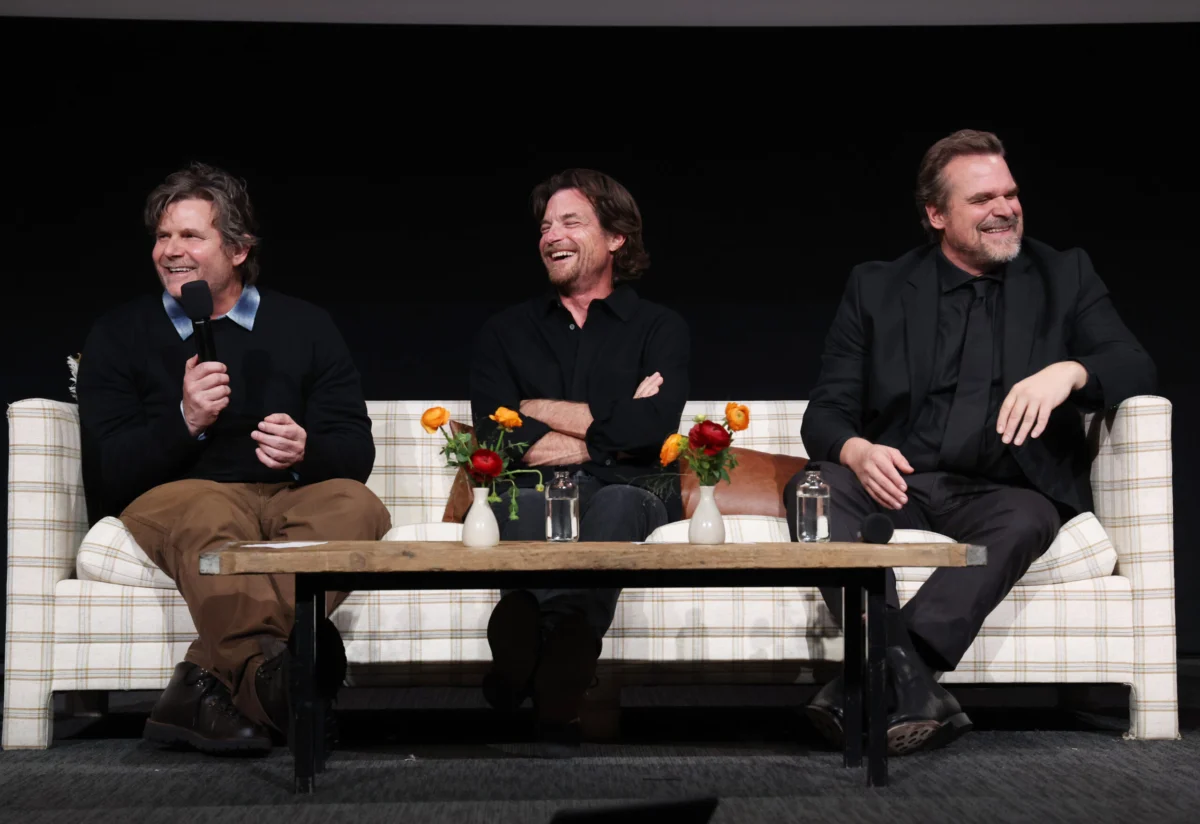
Welcome to "It’s a Hit!" In this series, IndieWire speaks to the creative minds behind television’s most compelling programs about the precise moment they realized their work had broken through the noise.
[Editor’s note: This article contains spoilers for the entirety of the HBO limited series "DTF St. Louis," including the finale.]
For auteur Steven Conrad, the creator behind critically lauded but often niche projects like Patriot and Ultra City Smiths, the experience of launching a hit series has historically been a lonely one. Known for his hyper-specific, idiosyncratic tone, Conrad has spent much of his career crafting art that exists in the periphery—beloved by a dedicated cult, yet largely ignored by the mainstream. However, with his latest HBO limited series, DTF St. Louis, that narrative has shifted.
The series, which blends the mechanics of a traditional murder mystery with the raw, uncomfortable intimacy of human desperation, has emerged as a rare breakout success. Averaging over 6.5 million viewers per episode, the show has defied the odds, proving that a complex, tonally daring drama can capture the zeitgeist.
The Crucible of Production: A Trial by Fire
The success of DTF St. Louis was by no means guaranteed, especially given the production’s high-wire act from the very first day. Conrad, who had spent the better part of four years working with a familiar, tight-knit ensemble on previous projects, found himself in unfamiliar territory. For the first time in years, he was leading a cast of relative strangers: Jason Bateman, David Harbour, and Linda Cardellini.

“DTF was a new thing for me because I had come off of two other TV shows that largely used the same ensemble,” Conrad explained. “I was on year four of working with people whose process I knew intimately. What I could do every day to give them the best chance to be great, this was all understood by me. Not true of my relationship to any of the cast of DTF St. Louis. We were all strangers. And the first thing that goes when you’re trying to make a plausible schedule is all that rehearsal time.”
The logistical constraints forced a high-stakes environment. In a move that would rattle most performers, Bateman was required to film the series’ first and last scenes on the very same day. Harbour, too, was thrown into the deep end, delivering a critical, character-defining speech to his on-screen stepson during his first day on set. Perhaps most dauntingly, Cardellini had to navigate what Conrad described as the show’s most intimate, complex scene—the “weight placement” sequence—within her first week of filming.
Despite the lack of traditional rehearsal, Conrad found that his leap of faith paid off. “Their first instinct for the volume or the dynamism of how to read these lines, it was really just right on,” he noted. “When I saw the comprehensive performances, I felt like, ‘Oh, there’s a chance now. We don’t have to score any of these jokes. We don’t have to over-score the tension, you can feel it all.’”
A Murder Mystery Defined by Desperation
At its core, DTF St. Louis was always designed as a subversion of the murder-mystery genre. Conrad didn’t want to rely on the standard "whodunit" tropes; he wanted to explore the "why."
“It was really the reason I took on this set of themes and this particular project at HBO,” Conrad said. “I was wanting to make something that had that question posed that we could explore episode by episode and then reveal in our own way: What was at the heart of that loss of life?”

He draws a clear line of inspiration from Alfred Hitchcock, not necessarily for the mechanical puzzles of a mystery, but for the psychological weight behind the crimes. “Ultimately, desperation is kind of it—it’s what you uncover as the reason behind someone taking someone else’s life,” he said. “In a story that deserves your attention, there’ll be some sort of desperation involved.”
This focus on the human condition allowed the show to avoid the typical "head fakes" of mystery television. Instead, the drama emerges from the choices made by characters like Clark and Carol, who, while potentially capable of violence, are ultimately revealed as people simply trying to maintain their own "interior light."
The Geography of Tension: Why St. Louis?
One of the most discussed elements of the series is its setting. In a television landscape dominated by coastal narratives in New York and Los Angeles, St. Louis provides a distinct, grounded atmosphere.
“I have never lived in St. Louis,” Conrad admitted. “It might’ve been set in Chicago except I didn’t feel the juxtaposition of the ‘DTF’ part with the city. If it was DTF Las Vegas, I don’t know that you really feel tension because there’s probably a lot of that going on in Las Vegas. But DTF St. Louis—we mistake a city like St. Louis for being more normal than Las Vegas, which it’s not, but I know people make that assumption.”
By selecting a setting often unfairly maligned as a "flyover state" city, Conrad created a canvas where the erupting secrets of the characters felt more shocking, more human, and ultimately more dangerous. It challenged the viewer to look past the veneer of Midwestern normalcy to find the volatile human reality underneath.

Recognition and the "Lucky Streak"
The industry response to DTF St. Louis has been overwhelming. Beyond the 6.5 million viewers per episode, the series has become a fixture in the awards conversation. Conrad took home the Best Limited Series prize at the Gotham TV Awards in June, while both Harbour and Cardellini have earned nominations for their nuanced, high-wire performances.
For Conrad, these accolades are a strange, new sensation. He recalls the isolation of his previous work—particularly the early years of Patriot, where he felt the show existed "in the dark."
“I never met anybody who had ever seen it,” he said of his previous work. “It just happened in the dark, like so in the dark, it’s almost like it never happened.”
The shift in DTF St. Louis became real for him during a quiet moment in a Chicago bar. “I heard the bartender talking to two people about how much she didn’t like DTF St. Louis,” he laughed. “And I went, ‘Yes!’ It didn’t matter that she didn’t like it, she was talking about it! So I just kind of knew that there were people on the other end of this show.”
Implications for Future Storytelling
As the dust settles on the DTF St. Louis finale, Conrad is stepping away from the spotlight to focus on an audio novel for Audible. When asked about the possibility of revisiting the creative intensity of his past projects, he remains philosophical.

“My takeaway on the finished thing, whether it’s Patriot or DTF St. Louis, is that you can expect once it’s out in the world that it represents the best you could do at the time,” he reflected. “That’s a lot to ask out of a piece of art or commerce: to just feel like it’s out in the world speaking on your behalf.”
He acknowledges that the success of a show is often a matter of "dumb luck," a reality that he has learned to accept as a professional storyteller. However, he remains committed to the craft, regardless of the outcome.
“You just have to make peace with that as a grownup; that idea that you got lucky this time. If you say, ‘Man, we got lucky,’ that’s OK because then the next time if it doesn’t click, you say, ‘We just weren’t lucky.’ It’s a terrible thing to have to shake hands with that… but that challenges you just to not quit.”
As for Ultra City Smiths, the show he lovingly describes as a project that "literally does not exist" due to shifting corporate ownership and tax write-offs, Conrad remains grateful for the fans who continue to seek it out. While the industry continues to evolve, and the fate of shows remains as volatile as the characters in DTF St. Louis, Steven Conrad is clearly not finished pushing boundaries.
Whether his next project lands with the massive audience of DTF St. Louis or returns to the quiet, cult appreciation of his earlier work, he has proven one thing: he is a filmmaker who, above all else, demands that his stories be felt.

“DTF St. Louis” is currently available to stream on HBO and HBO Max.

 Neng Nana
 Rifan Muazin