Ali Ikhwan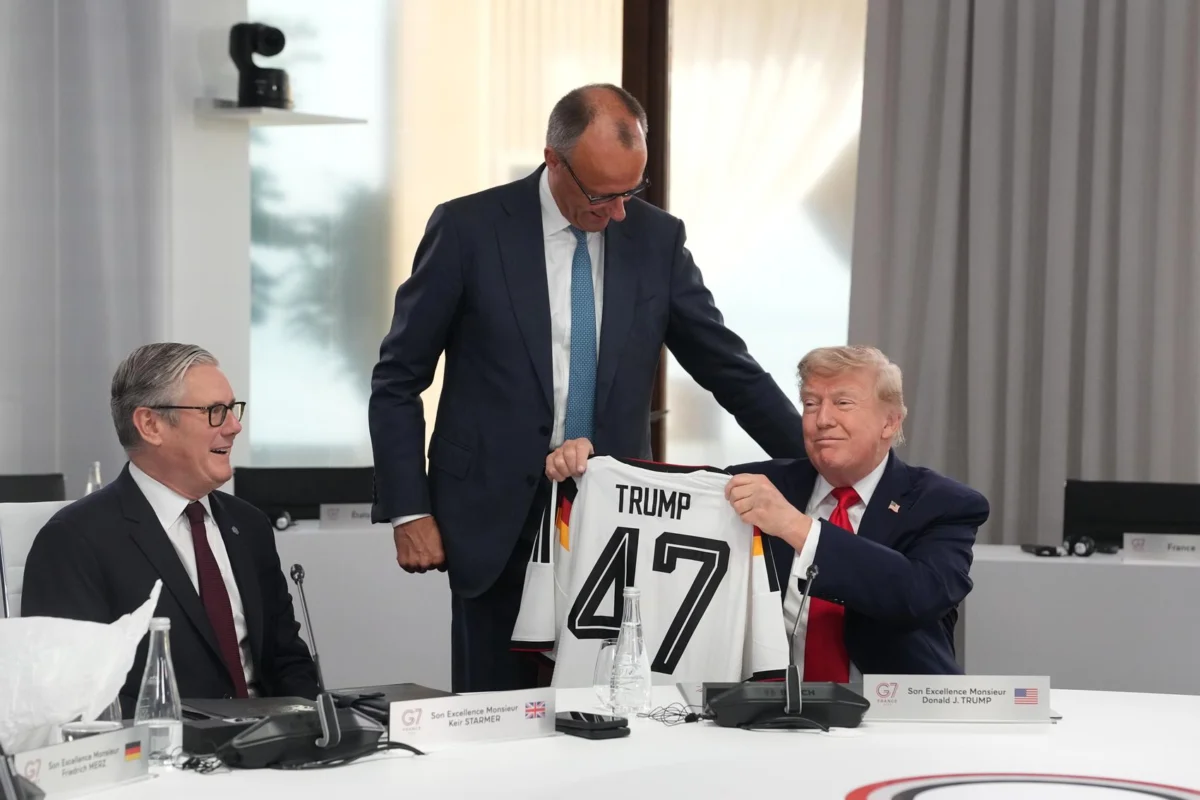
By Global Affairs Correspondent
The G7 summit, traditionally defined by high-stakes negotiations, formal communiqués, and the heavy burden of addressing geopolitical instability, took an unexpectedly candid turn this week. As the world’s most powerful leaders gathered at a secluded lakeside resort to deliberate on the crises of war, economic trade, and international security, the veneer of diplomatic protocol was occasionally punctured by the unfiltered reality of "hot mic" moments.
While the formal sessions remained focused on the weighty tasks of governance, the periphery of these discussions—captured by sensitive audio equipment—revealed a fascinating, often humorous, and deeply human side of the leaders who hold the world’s future in their hands. From discussions on personal health and nicotine cravings to the nuances of global sports fandom and the cryptic resurgence of territorial ambitions, the summit provided a rare window into the interpersonal dynamics that define modern international relations.
The Human Element: A Focus on Health and Habit
One of the most widely circulated exchanges of the summit centered on Italian Prime Minister Giorgia Meloni’s personal journey toward wellness. The topic arose on Tuesday as leaders mingled before a formal session. German Chancellor Friedrich Merz, demonstrating a degree of familiarity common among the G7 cohort, inquired about Meloni’s smoking habits, asking whether she had indulged that morning.
In a candid admission that drew immediate support from her peers, Meloni revealed she had remained nicotine-free "since the first of May." The announcement was met with a chorus of applause and congratulatory remarks from the leaders of Canada, the United Kingdom, Japan, and the European Union. Meloni, visibly energized by the support, raised her hands in a gesture of triumph.
The exchange took a practical turn when Canadian Prime Minister Mark Carney interjected with a question that resonated with anyone who has attempted to quit a habit: "Do you have a patch?" he asked, gesturing to his own arm. This brief, relatable interaction served to underscore the reality that even the most powerful individuals on the planet face the same struggles with discipline and personal health as their constituents.
Sports Diplomacy: The Global Language of Fandom
If diplomacy is a game, then the leaders in attendance were clearly distracted by the games happening on the global stage. With the World Cup currently underway across the United States, Mexico, and Canada, soccer dominated much of the informal conversation, transcending national borders and political ideologies.
During a working lunch, the air was filled with chatter about the tournament. French President Emmanuel Macron was seen engaging in spirited banter, with one attendee overheard shouting "Allez les bleus," the rallying cry for the French national team. Conversations also touched upon the recent success of Paris-Saint-Germain in the Champions League, highlighting the degree to which these leaders are influenced by the same cultural phenomena that drive their populations.
UK Prime Minister Keir Starmer offered a moment of levity during a discussion on the tournament’s upsets, marveling at Cape Verde’s historic 0-0 draw against the reigning champion, Spain. "Quite remarkable, I have to say," Starmer remarked, capturing the collective shock of the international soccer community.
Meanwhile, U.S. President Donald Trump pivoted to a different kind of combat sport. Trump, who recently hosted a UFC event at the White House, spoke at length about his admiration for Dana White, the CEO of the organization. Having attended the event ringside on his 80th birthday, Trump’s enthusiasm for the sport provided a stark contrast to the more traditional sports interests of his European counterparts, underscoring the divergent cultural touchstones present at the table.
Intrigue and Ambiguity: The Greenland Question
While much of the leaked audio captured harmless banter, a moment involving President Trump and European Council President António Costa sparked significant political intrigue. In a brief, fragmented exchange caught on microphone, Trump was heard leaning toward Costa and stating, "You understand? Greenland."
The comment, while brief, carried the weight of historical tension. In previous years, the prospect of the United States attempting to acquire Greenland—a semiautonomous territory of Denmark—has been met with vehement opposition and diplomatic outrage from European capitals. By resurrecting the topic in such an informal and cryptic manner, Trump reignited concerns among European politicians regarding U.S. territorial interests in the Arctic. While the context of the conversation remains unclear, the mention of Greenland was enough to send ripples of speculation through the press corps, serving as a reminder that even in moments of levity, the specter of geopolitical friction is never far away.
The Lighter Side: Lost Watches and Gift-Giving
The atmosphere at the summit was punctuated by moments of genuine humor, particularly regarding the personal effects of the attendees. When President Macron departed from a working lunch, he inadvertently left his wristwatch behind. Canadian Prime Minister Mark Carney noticed the abandoned item, prompting a lighthearted call-out: "He’s left his watch here. We’ve got his watch."
President Trump, sensing an opportunity for a joke, chimed in with, "Give me it if he left, gimme," an interjection that reportedly drew laughter from the gathered leaders. Such moments, while trivial in the scope of international policy, are crucial for humanizing the figures who are otherwise seen as untouchable icons of political power.
Furthermore, the summit was marked by a series of deliberate, symbolic gestures of gift-giving. Macron presented each of his seven counterparts with personalized bicycles, a gesture intended to promote the upcoming Cycling World Championships in the French Alps. The gift served as a subtle nod to the importance of sustainable transit and international sporting events.
However, the gesture also highlighted the varied personal interests of the G7 leaders. President Trump, who has frequently joked about his preference for golf over aerobic exercise, did not offer a public reaction to the bicycle, leading to speculation about how the gift would be received. In contrast, Chancellor Merz used the opportunity to make a political point, presenting Trump with a German national team soccer jersey emblazoned with the number 47.
Merz later shared a photo of the exchange on social media with the pointed caption: "After all, we’re on the same team." The gesture, while ostensibly friendly, was widely interpreted as a deliberate attempt to signal unity following recent diplomatic spats between Berlin and Washington regarding the war in Iran.
Implications for Global Relations
While the G7 summit is fundamentally about the serious business of international stability, these "hot mic" moments serve as a critical reminder that diplomacy is essentially a human enterprise. The ability of these leaders to pivot between discussing the defense of the international order and sharing tips on quitting smoking or discussing soccer scores suggests a degree of comfort and familiarity that is essential to the functioning of global alliances.
However, the inclusion of topics like the potential acquisition of Greenland and the symbolic posturing through gifts like soccer jerseys demonstrates that these personal interactions are rarely disconnected from political strategy. Every word spoken, every gift given, and every joke shared is part of a complex tapestry of international relations.
As the summit draws to a close, the focus will inevitably shift back to the formal agreements reached on trade, climate, and security. Yet, the memories of this week will likely be shaped as much by the camaraderie and the unintentional revelations of the "hot mic" era as by the official policies finalized behind closed doors. The 2026 G7 summit has proven that even in the highest circles of power, the personal remains inextricably linked to the political.
© Copyright 2026 The Associated Press. All rights reserved. This material may not be published, broadcast, rewritten or redistributed without permission.


 Neng Nana
 Asro
Asro